
At night, lying on my back, I stay awake and listen to the rattling of my lungs.
A wheeze, a strange resonating noise—like damp leaves—if mold had a sound, if abandoned rooms with winds spoke.
I insist I am okay.
I’ve always said, “I’m okay.”
From my youth, my father’s glare, to now, the groan of my lungs.
But I knew now I wasn’t; my body was revealing signs of sickness.
When had climbing a flight of stairs become a challenge?
Why was I losing weight?
Why did I wake up in the morning without the will to start the day?
The cravings of a young man—sexual longings, morning erections, and pleasuring myself in the stillness of the night—these were memories.
Someone my age shouldn’t be dealing with these issues, right?
I am a young man, strong and proud with rugged New England blood, generations of good health, and a life without doctors.
I kept telling myself, ‘Everything is okay.’
I kept repeating, “Everything will be okay.”
But it was never just an irritation in my throat.
The cough wasn’t just spring allergies.
“Hello,” I say.
“You are closer now.”
The wind through an open door has achieved form.
You have become a presence, a physical form I can’t ignore.
“Hello, Jeremiah.”
You’re in the hallway as a guest now, and you’ve even taken off your shoes.
How could I not welcome a guest?
A caller who had been inside, who had been within, was now at my door.
Cradling me as I sit on the shower floor, coughing blood into the drain.
Wrapping me in the steam of a scalding shower that never warms.
You are the fading winter, the arriving spring, and the buds on trees along West Thorndale.
You’re sitting next to me on the L.
Tag: art therapy
The “What-ifs”

The weight carried,
the what-ifs upon bent backs –
(in) worry and (in) wondering,
“now? if not now, when?”
survivors hold this question;
they live in the moment
of continued burden.
how do I share the weight of gathered
memories?
how do I convey these worries?
I add them singly,
one by one,
layering them,
and bend my back to their weight,
asking,
“if not now, when?”
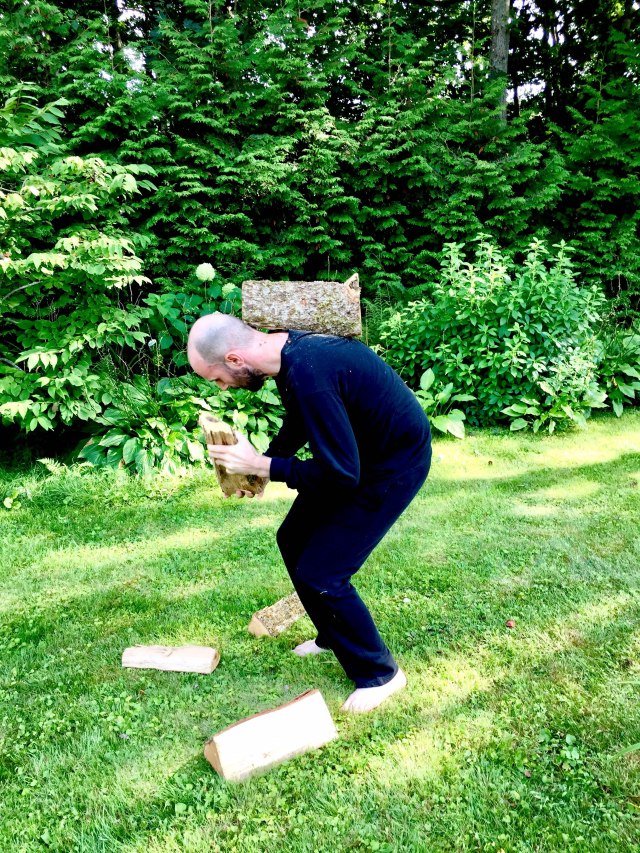
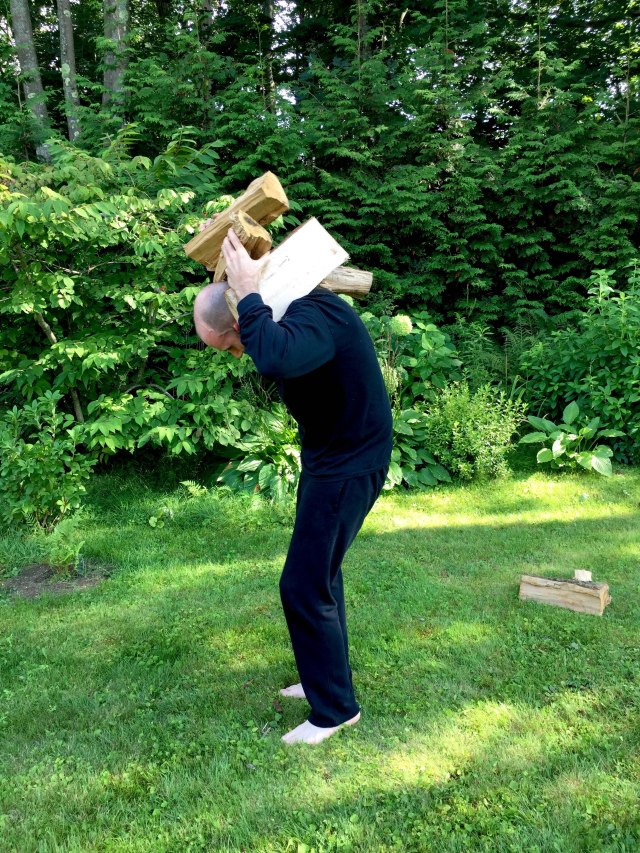
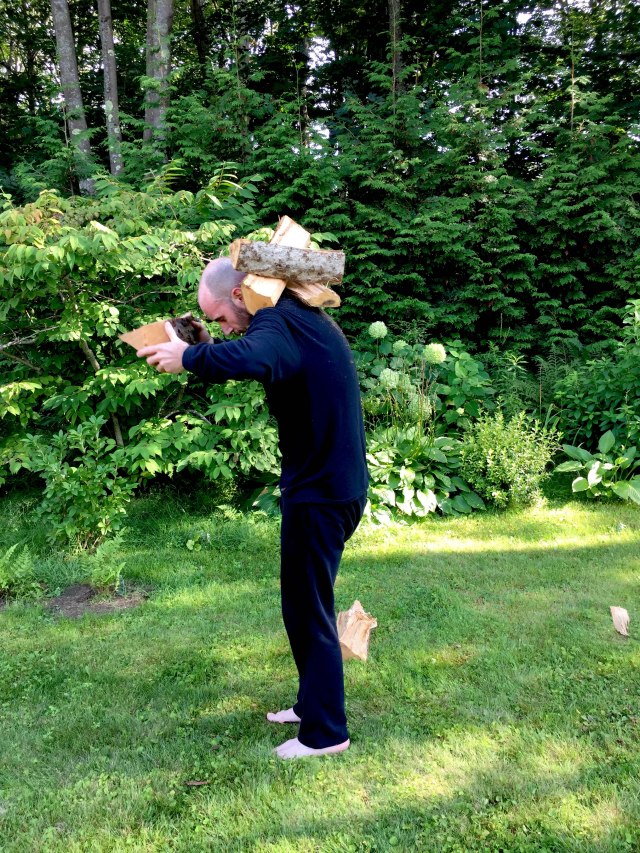

For the majority of my life, I have relied on art in one way or another
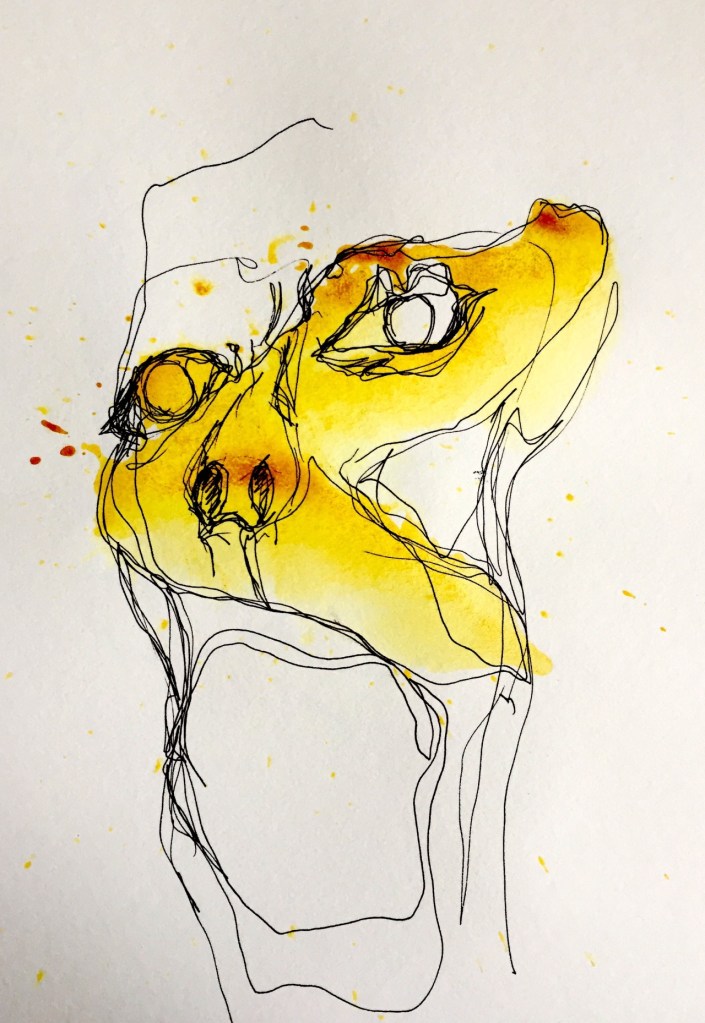
I have found that, over the years, I have become more and more incapable of fully expressing myself with words. I fancy myself a bit of a wordsmith; however, when I re-read some of my writings, as proud as I am of them as individual pieces, I find that they lack something — some core piece I have yet to extract. When looking back at my regard my emotional and nervous breakdown, the one regarding my time in France and the subsequent “breakdown,” I wonder if that which I was trying to pull from my chest, the substance that was within me, was not a metaphor for trying endlessly to put words to my feelings and emotions. in many ways this makes sense; i didn’t understand what it was then, but i am starting to consider this. Since this occurrence, I have been presented with dreams, little fragments of this particular image. I am standing, open-mouthed, releasing only air while pulling the stringy substance from my chest.
i have relied on art throughout the years — in fact for the majority of my life i have done so. i distinctly remember one pottery class i took when i was 7 or 8 years old. We crafted simple coil pots, glazed them, and, at the next class, looked at our finished works fresh from the kiln. When I was glazing mine, I spent most of my time on the inside of the piece. I remember not paying attention to the work as a whole but working with a sort of feverish intensity on the inside. i have such a vivid memory of painting and painting, glazing and glazing the inner walls of the coil pot. i wanted the walls and, even more o the bottom, to be, upon firing, smooth, glass-like. I recall the bottom of the pot had accumulated so much glaze that a tiny puddle formed.
Of course, I look back now and place all these ideas and theories on why I was doing so, what I was trying to convey, etc. A part of me can’t help but look into this, to study this, not the actual piece; god knows it was that of a child but at my intention. Now, after 6 years of formal art training, most of which consisted of getting my ass kicked when my work was being torn apart during critique sessions, I certainly can’t help myself. The beauty of children, in terms of expressing and creating, is that they don’t drag so much theory and conceptual nonsense into it; a drawing of a dog is just that, a drawing of a dog. A coil pot with a puddle of glaze at the bottom is just that… a coil pot with a puddle of glaze at the bottom.
i wanted the inside to look good. I remember thinking this. There is no theory or conceptual bullshit attached; this is what I remember wanting to do; I was curious about how it would look post-firing. I was also interested in how it might look to others; a coil pot with a bottom rich in color (I chose a deep blue) and as smooth as glass.
Most of the time, I fumble for words. My sister and I have a back-and-forth about this; she wants me to talk, open up, and express what I need now and how said needs can be met. i am left frustrated, trying to manage these emotions upon which i can’t place a label — even though i so desperately want to! Even with my psychologist, with whom I’ve been working weekly since diagnosis, I find myself lacking the appropriate words. Often, we will spend many sessions working through emotion or thought, and then, after a laborious undertaking, we find the words needed… or, rather, some of the words needed.
More often than not, I speak too quickly. Not necessarily in terms of speed, though i did struggle with a stammer as a child as my brain was moving too fast and i couldn’t formulate the words to match the momentum. But I speak without forethought. i fire off a thought without considering how it will be taken or interpreted. This has fucked up more relationships … I cringe now at some of the things I’ve inadvertently said. They weren’t meant to be harsh or cruel, as this is never my intention; they were just unfiltered, unrefined, unpolished, rough-around-the-edges, etc., etc., in an attempt to understand someone or probe a bit to gather more information, I’ll muddle things up to the point of no repair. Equally, I hope to find the appropriate words to express my thoughts or feelings. It’s as if I’m casting a line and doing so in real-time, hoping I’ll reel something closely resembling my current state of mind, my emotions. This, too, can end poorly; going along and sharing, prattling on, seeking words on the fly … …
Then, boom!… the realization of my faux pas is crystal clear.
In my opinion, this is getting worse. i asked my neurologist about various aspects of this in terms of toxicity (multiple chemo agents specifically designed to penetrate the blood/brain barrier) and other physiological damages to the actual brain tissue itself, such as scar tissue, narcotic tissue, etc., not to mention all the psychological shifts that undoubtedly impair various parts of my overall being. His response was reassuring but slightly disheartening. “it’s no wonder you’re functioning as well as you are, jeremiah.”
These psychological (and emotional!) shifts are events, especially considering the recent experience in France and the “breakdown” I experienced there.
After the recent experiences in France, as well as all these experiences as a whole, i am left with so many emotions, almost all of which i can’t articulate. i am left with pain and other emotions i can’t share because i simply don’t have the words! I hope these portraits might, in some small way, express all that I so desperately want to share. They are already revealing so much to me; things are emerging bit by bit, line by line.
For the majority of my life, I have relied on art in one way or another. Now, more than ever, I am turning to it not only as a place of refuge during these times but to aid in my understanding of self and expressing and communicating that which is just under the surface and in need of release.
That which is already being revealed to me through my work, these ink drawings, through these portraits, are little steps toward further healing.
The Day
As part of my psychotherapy, I was asked to write about the initial seizure and subsequent diagnosis from the 3rd person’s perspective. I have buried a lot; I haven’t wanted to return to that particular day, but I know it is present. It is there, in my mind, lurking. It appears in dreams; it presents itself when I let my guard down. In my unconscious states, the presentation in these moments is sometimes cloaked in metaphors and surreal imagery, but I wake knowing where it is tethered. This is human nature; this is our survival mode kicking in.

Jeremiah did not feel well upon waking. Perhaps it was stress or another late night of working on his thesis… he could not tell.
After a shower, he felt slightly better, but there was a tiredness that he could not shake and a queasy feeling in his gut.
He exited his basement apartment and stood on the stoop. The dappled sunlight flooded over him. The air was still cool, as it was barely April, but the sun was growing strong. He closed his eyes and stood still, ‘yes,’ he thought, ‘sunlight will nourish me.’
Stepping down, he dodged the uniformed children making their way to an elementary school just west of his apartment. He noticed, almost daily, that their uniforms had a military look to them. Neatly pressed shirts and pants, leather shoes, etc. They didn’t look like the catholic school uniforms he had worn in his youth.
Jeremiah arrived at the corner of Broadway and Thorndale. It was a busy morning, and, like the school children rushing to make their classes, the cars that whizzed past had an urgency to them. Jeremiah didn’t have such an urgency. He stood on the corner and let the unhindered sun fall over him. The traffic and pedestrians danced around him. He seemed to be at a standstill; he was, in fact, and this made him seem out of place within the whirlwind of the morning commotion.
He had no real urgency, he had none in fact. That morning, his only plan was to go to the park and meet Eda. They had arranged to soak in the sun in Millennium Park. It was, he noted again, a perfect day for such an occasion. Also, he wanted to see more of Eda, she was attractive, intelligent and a good conversationalist. They were still in the early stages of getting to know one another. He liked this time, the explorative and exciting time of a potential relationship.
Part of Jeremiah’s attention was preoccupied with the lingering feeling he had had since he awoke. It wasn’t nausea per se, and he knew the sensation of stress; thus, he could also rule that out. The other part simply wanted to enjoy the sun. He remained in a neutral zone, letting neither sensation nor desire pull the entirety of his attention.
Jeremiah had waited through two rounds of red lights & two rounds of green crosswalk signals beckoning him to join the others in their haste. He decided to go across Broadway to the Thorndale Red Line Station and join in the morning rush. He disliked these morning commutes but loathed the afternoon and evening ones. Depending on the day, the northbound trains leaving downtown anytime between 4 and 8pm were like cattle cars. The morning commute was less crowded; Thorndale was only a few stops before the end of the red line, a perk of living so far out of the city.
The schoolchildren ran past him as he stepped out to cross the four lanes that made up the intersection of Broadway and Thorndale. Broadway was one of those streets that ran a great distance, miles and miles of ever-changing facades; CVS pharmacies, mattress stores, seedy restaurants, the flip side being trendy coffee shops, hipster bars, Whole Foods, etc. Jeremiah was used to New England streets, even the city streets like those in Boston, that curved around this way and that, intersections that confused tourists and locals alike, and one-way streets that began randomly. The city had no real planning and just grew with the expansion of the population, which grew due to the Industrial Revolution and the massive changes it brought with it. It was as if the city reached out in all directions, sending runners here and there that shaped the city with some chaotic beauty. On the other hand, Chicago was systematic; streets would run for miles and miles, and the flatness of the Midwest let them stretch to no end.
The sound of the schoolchildren became slightly muffled, as if there was some sort of ringing in his ears or that they had water in them. Sunlight bounced off of a storefront window and blinded him. It was a flash, like an explosion, a bolt of lightning. The schoolchildren ran about, laughing gleefully. Looking down Jeremiah saw the shadows of everyone going to and fro, it was an insane dance upon the sidewalk; bodies blending and merging, figures morphing into multi-limbed creatures that split apart, multiplying and dividing. Again, an explosion as the sunlight bounced off another storefront window. He had kept his gaze down, mesmerized by the multi-limbed shadows. As the blast of light occurred, the shadows dispersed as if running from it, as if scared. Then, when the lightning flash passed in the blink of an eye, the shadows returned and resumed their odd dance.
Overhead, the northbound Red Line slowed at the station. The thunderous wheels rolled to a stop and then began again, generating this metallic cacophony that quickened until it was swallowed up by the southbound train. The two sounds were dissonant and jarring. The northbound train was picking up speed as the southbound train began to slow. The sounds pulled at one another, tearing an ugly hole in the peaceful morning.
Clack clack claclaclaclaclaclclcl the northbound train ran away.
A hiss of sorts sounded out; there, above him on the trestle that stretched over Thorndale, was the southbound train. It stretched many cars and seemed to loom almost imposingly above him. The doors opened and then closed, and it moved south like its northbound counterpart as if tugged by some unknown force. The sunlight broke through the train cars; at first, it was slow, shadow-light-shadow-light. Then, as the train increased speed, the timing generated a hypnotic sensation even behind closed eyes, shadow-light-shadow-li-sha—l-sh-l-s.
Jeremiah’s stomach turned, the queasiness rose up inside him, and there was almost this desire to wretch. He was unsure at that moment if he was standing still. Was he moving? Others around him took no notice; they flowed about him like a river moving around a large rock. Unlike the rock holding its own in the torrents of raging water, he began to give way, to slip. A sneaking sensation of paranoia crept up within him. It crawled up his spine and filled his mind with questions: Are you ok? Are these people aware of you? Are you having a panic attack? His awareness of self made his eyes move about pinpointing someone or something that might be an anchor he could hold. There was no one. There was nothing.
The feeling of queasiness moved from his gut to his head, and there became a pressure. As it ventured from his gut to his head, it curled its fingers about his throat, then wrenched his jaw open with such force. It felt dislocated, swinging there, disjointed, resting on its hinges. Then, the fingers crawled into his brain. His eyes fluttered. They fluttered again. The two trains arrived simultaneously, northbound and southbound, directly across from one another on the narrow, wooden platform that separated the two trains. The doors opened at the same time, and both departed at the same time. The metallic clanging was almost symphonic and then again became dissonant as the two ran off in separate directions, each moving at different speeds.
His unhinged jaw swung open and locked in that position, ajar and painful. His stomach burned, his legs unsteady. Jeremiah’s right hand began curling inward, fingers to palms. He had no control of this movement, none whatsoever. The southbound train arrived, and the shadows flickered until they slowed to a stop. His eyes fluttered in a syncopated rhythm; eye open, shadow, eye closed, light, etc.
His ears filled with every sound, every car, every child running off to school, every footstep, every flash of light… Then, there was not a single sound at all. Like the shadows upon the ground that moments before had transfixed his attention, so too did the motion of everything and everyone, just a blur of beings and objects in various colors and shapes, coming in and out of lights and shadows. Then there was stillness and just a whooshing sound in his ears.
His curling hand turned inward and was drawn upward towards his open jaw, then further to his head. He cupped it as best he could with his rigid hand. It wasn’t pain that he felt; he didn’t know the words. There was simply a lack of control. He could not say no to stop this, to return his hand to his side and close his jaw. The whooshing sound disappeared, but the world still remained motionless. A sound came from him, from within him. It wasn’t a word or a plea for help. It was a word to him yet outside his vocabulary. A moan escaped him as a sigh, as a yawn might. A long, extended moan. Then his body fell, his legs gave way, and his being slipped downward into some hole, into some sort of abyss that opened underneath him, a trapdoor in the earth.
Where was he? Who was he? Just blackness that engulfed him; rich, thick darkness in which no light was present, no words were uttered, nothing. His sigh had left, the morning commotion had gone, and the trains no longer sounded out. Nothing. No one.
This is a memory I hold dear

I had another seizure yesterday. We’re attempting to get the medication right, and I stopped one and increased another. Yesterday, however, I wasn’t at the target dose. That’s the only logical explanation. Regardless, it has left me, as all my seizures have, physically and emotionally worn.
It happened while on a woods walk with my mother. Luckily, she was there. I had enough of a warning that I was able to indicate its arrival. She, in turn, sat me down safely… then it arrived.
I distinctly remember the cold earth underneath me when I started to come around. Though we were in a place along the path with no snow, the earth was cold and damp.
My mind was a jumbled mess, as it always is afterward, but somehow, we managed to walk back to the car. In a post-seizure state, at least for me, nothing adds up for a while.
Today, I realized what was going through my mind as I came to that damp earth: the memory of being a child of about 3 or 4. Evidently, I had asked my mother if, when the snow melted, I could play in the mud. So, I did just that. I sat in this puddle of mud, & plastered it upon my legs. The most vivid part of this is the cool dampness that soaked through the legs of my pants.
I have been told I have the memory of an elephant. Though, I think this was initially meant as an insult, as I tend not to forget things. It isn’t that I choose to remember the positive over the negative, or vice versa, I just remember things. During treatment, the traditional “chemo brain” affected certain cognitive functions, but my memory held strong. They became little islands I could swim to when the storm raged.
I believe in memories and their potent influence to transport someone.
Two years ago today I went to my dear Friend Jose and his partner’s house for dinner. I immediately felt this sense of warmth and comfort in their abode, feeling welcomed. They both exuded this; it came from them as individuals.
I love Chicago. I wish I had left on different terms and not for medical reasons, but such is life. I didn’t, however, enjoy the graduate program I was in there. I feel privileged to have studied there and received my MFA from such a school, but the program, or my home department, didn’t agree with me on many levels.
Jose was one year ahead of me in his studies there, and we became friends. He had a very older brotherly feel, and I felt comfortable sharing ideas and speaking openly about several things. This comfort, naturally, was part of the welcoming energy that greeted me for dinner that night. We sat casually in their kitchen, had delicious homemade vegetable stew, drank sparkling juice, and talked about life and art. I clearly remember walking up several flights of stairs to their condo entrance and, once at the top, wheezing and being winded. It was strange and disconcerting to be so breathless from just a few flights of stairs. The dry cough appeared a few times that night, too. A few weeks before our dinner meeting, Jose and I met at Starbucks and decided to take a little stroll after our tea and coffee. In mid/late March, Andersonville has such a nice feel — spring is just oozing out of everything and ready to pop overnight. The dry cough was present then, and I said I didn’t know what it was from, but I couldn’t get rid of it.
This nagging cough didn’t prevent us from having a lovely dinner a few weeks later. I hadn’t met Jose’s partner, now husband, but I enjoyed his honesty about art. It was a breath of fresh air to step away from the heady, overly conceptual art-school realm and just hear someone speak openly about what they thought and how they perceived the work. We talked about my thesis work, and I was excited to tell Jose how I did, eventually, decide to have this large painting I was working on split into two. I say “painting,” but it was a gestural study that consisted of ritualizing rubbing carbon dust onto linen. When we had last met I hadn’t decided if splitting it into two was the best move for it on a conceptual level. I finally opted to do so because the two, in my mind, divided time, past/present.
The division of time… I haven’t considered this phrase before for the various circumstances that would occur very soon. The following day, the most definitive division of time occurred in my life; I awoke and felt nourished by the delicious soup and conversation, happy that I had discussed my thesis work and received feedback. I was still full, literally and figuratively, from the evening. I felt positive that the end of this chapter in my life coming to a close — I was ready to move on from grad school. However, the cough was more present, and I began to feel worse as the morning went on. It was a bodily feeling, this heaviness, this burden that seemed to rest upon me. This pervasive feeling that something wasn’t right deep inside of me. Sluggishly I prepared myself for the day. Outside, the weather was glorious, and I stood for a few moments in the sun to soak it in. I envisioned the sun’s powerful rays penetrating my being and ousting whatever was causing the cough and the feeling that seemed to weigh on me. I felt even worse as I approached the red-line stop closest to my apartment. I thought it’d be best to return home and rest, to let my body be still for the day, put aside the demands of school and work, and just rest. I turned around and made it just a few paces before my body contorted in a way I had never experienced. This lack of control spread across my face and rendered me incapable of calling for help. It ran down my arm, bent my fingers inward, and took the strength from my legs, and I collapsed, then… darkness.
I hold onto memories as a means of self-preservation. I think, oftentimes, about how I would describe something in a book or how it would appear in a play, how I might see it and hear it from an outside perspective. By description and recall, there is a solidification, a movement from, perhaps, a fleeting moment in time and space to a solid foundation upon which something can grow and be constructed. How would I describe the kindness I felt entering Jose’s for dinner? How would I word the fear I felt when I had my first seizure? In remembering, in actively assisting in the solidification of memories, one can access the warmth during the cold and recreate the laughter during the flow of tears. One can nurture compassion and love for those struggling. Being sick has taught me this. I held onto memories before, well before my original diagnosis, without any real understanding as to why. Like the matriarch of the herd of elephants who leads the other members miles and miles to a certain watering hole during times of drought, memories can save us; they can nourish us.
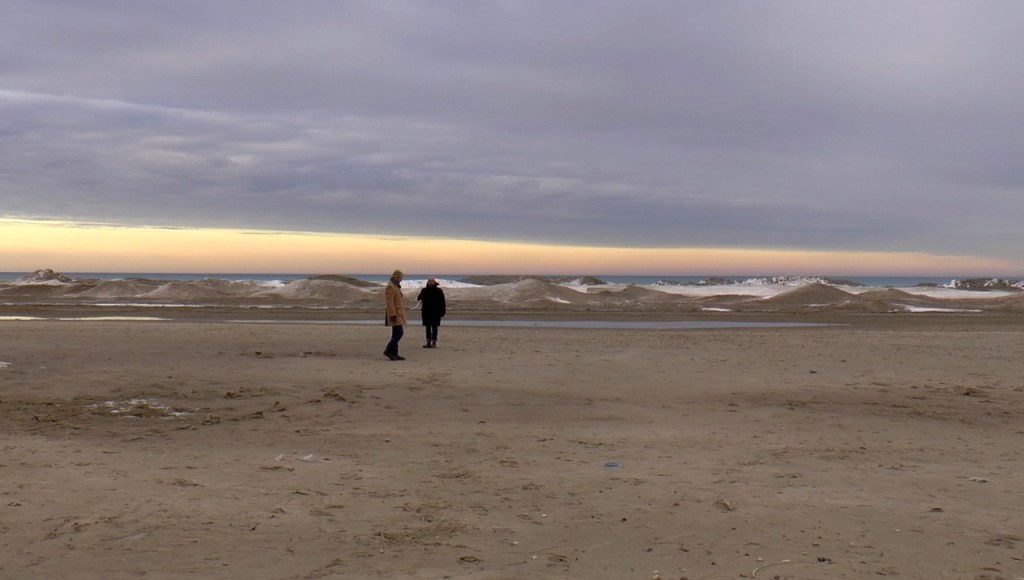
The photo attached is a still from a performance video Jose and I collaborated on. I’ll refrain from drowning you all in the ‘heady, overly conceptual art school” BS I am happy to have left behind. The basic premise; two beings tethered by a length of rope, each takes a turn walking while the other remains the grounding center, a place of pivot. One can walk as little or as much as they wish. The other merely witnesses and rotates with them. It, for me, was about an exchange of guidance and care… it was about trust.
This is a memory I hold dear.
 healing is a circular path