
i waited for you in the park.
when you arrived,
you held me,
and your cold nose pressed against my neck.
you nuzzled me,
and our skin quickly
adapted to one another;
mine cooled, or yours warmed
i’m not sure.
i was happy and
excited about what we might become.
the sun and an early spring day
marked the passage of time
and life moving forward.
these were early days—before
waiting became an annoyance,
before illness,
when i didn’t understand what
holding my breath truly meant.
the anticipation of test results slowed time,
and hours in the treatment chair
felt like lifetimes.
after my first seizure,
when the illness forced my world apart,
time shifted.
you found me
coming to the emergency room
to gather the pieces.
fresh from outdoors,
from the chill of an early
chicago spring day,
remembering this:
your cold nose
pressing into my neck,
i can still feel it as time slowed.
and why can’t these moments
be eternity?
when two bodies
seek a common temperature,
can’t this search last forever?
Tag: cancer story
The wind through an open door
At night, lying on my back, I stay awake and listen to the rattling of my lungs.
A wheeze, a strange resonating noise—like damp leaves—if mold had a sound, if abandoned rooms with winds spoke.
I insist I am okay.
I’ve always said, “I’m okay.”
From my youth, my father’s glare, to now, the groan of my lungs.
But I knew now I wasn’t; my body was revealing signs of sickness.
When had climbing a flight of stairs become a challenge?
Why was I losing weight?
Why did I wake up in the morning without the will to start the day?
The cravings of a young man—sexual longings, morning erections, and pleasuring myself in the stillness of the night—these were memories.
Someone my age shouldn’t be dealing with these issues, right?
I am a young man, strong and proud with rugged New England blood, generations of good health, and a life without doctors.
I kept telling myself, ‘Everything is okay.’
I kept repeating, “Everything will be okay.”
But it was never just an irritation in my throat.
The cough wasn’t just spring allergies.
“Hello,” I say.
“You are closer now.”
The wind through an open door has achieved form.
You have become a presence, a physical form I can’t ignore.
“Hello, Jeremiah.”
You’re in the hallway as a guest now, and you’ve even taken off your shoes.
How could I not welcome a guest?
A caller who had been inside, who had been within, was now at my door.
Cradling me as I sit on the shower floor, coughing blood into the drain.
Wrapping me in the steam of a scalding shower that never warms.
You are the fading winter, the arriving spring, and the buds on trees along West Thorndale.
You’re sitting next to me on the L.
Discourse
I had a recent and brief exchange with my uncle after a recent post about life, its potential pointlessness, and the struggle to find meaning.

(Chris)
Interesting ruminations! I think that Tolstoy’s outlook is pretty pessimistic. I believe that life has a purpose, but I don’t necessarily
believe that your illness has anything to do with it. Your purpose may be to help someone later in life, maybe to have kids, work with people experiencing poverty, invent, write, or draw something important. Maybe this three-year period is just a detour that has nothing to do with that. I don’t know!!!
much love,
(Jeremiah)
His outlook certainly was pessimistic… but I feel that was the impetus for his spiritual pursuits/awakening. He had to fall into that place of despair to arrive. I guess, the way I look at it, I was already en route to these things; in my last semester of grad school, I was going through interviews with the Peace Corps to work (with people with low incomes, perhaps) in Albania. I was writing … I was drawing. I think that a detour that goes on for three years is a bit excessive. It isn’t the physical journey but that of the mind, psyche, etc. As I have written, the toll that all this has taken is very significant. Yes, my oncologist can say, “You look great!”
But he doesn’t see the damage on the inside. Of course, his objective is to treat the patient, so externally, I look “great.” I don’t know where I am going with this. I do that this illness, and the longevity of it, MUST have something to do with it / with life. I have to think like this; otherwise, what’s the point? If all my struggling physically and psychologically was all for naught … I can’t go that route in thinking… I spiral out of control…
Chris
Naturally, everything we go through leads us to be who we are at any moment. So you are, and will be, a very different person than you would have been had you not gotten cancer. But that doesn’t mean (in my mind) that it is directly related to your purpose in life.
“Living one day at a time…”

I have had quite a few appointments in the last couple of weeks. I met with my oncologist, and we spoke about the recent MRI. The swelling of the initial lesion in my brain is still stable! As with before, stability is good — excellent! We’ve scheduled another MRI for two months out (mid/late February). With this continued stability, it is unlikely to swell, or continue to swell, more. Though, I am not entirely sure.
I also had a meeting with my neurologist. This was more revealing than the MRI results. As you recall, I wore the ambulatory EEG for 72 hours. All the diodes on my head were connected to a small box I wore around my waist. If any “strange” sensations or feelings arose, I was to press a tiny button on the side of the box. On the EEG reading, this will simply make a note of a specific time, and then, when the neurologist goes over the entire reading, they can go directly to these points and “see” what sort of brain activity was occurring at these specific times.
I pressed the button a total of 33 times over 72 hours. If, for example, I felt slightly dizzy or even disoriented, I pressed the button. I often have these moments when the world seems very distant, or I seem removed from the world. This is very, very difficult to explain. I have tried to articulate it several times. I have taken a step back and am watching the world — an “out of body” experience. This sensation has been so unnerving in the past that I have gone to the emergency room several times.
I was curious how these moments (the “out of body” sensations) would appear on the EEG reading. I was sure that these were some sort of petit mal seizure activity. According to the epilepsy foundation, petit mal seizures, an older term for “absence seizure”, are a type of seizure that causes a sort of lapse in awareness. “Absence seizures usually affect only a person’s awareness of what is happening at that time, with immediate recovery… The person suddenly stops all activity. It may look like he or she is staring off into space or just has a blank look.” This, more or less, sums up the feelings and sensations wherein I am removed from the world, that “out of body” sensation. When I wore the ambulatory EEG (72 hours), I experienced several of these occurrences.
However, nothing on the EEG reading indicated any abnormal brain activity. For 72 hours, everything appeared as it should. Granted, over these 72 hours, there was no reduction of anticonvulsant medication or any other means that, during an inpatient stay for monitoring, a seizure would be provoked. Nonetheless, during these times of “unnerving” sensations (again, the “out of body” experience), nothing out of the ordinary appeared.
This came as a total shock to me. I explained these strange feelings to my neurologist, as I have done in the past, but he again confirmed the results of the ambulatory EEG reading — a reading reviewed by several doctors.
This being the case, he wants to hold off on the inpatient stay for monitoring. “Let’s leave ‘well enough alone,’ Jeremiah.” Again, I pressed him, trying to find answers. I wanted him to pinpoint the reason behind these sensations and explain what was going on within me in plain and simple terms. “… anxiety, most likely, stress, PTSD… a sort of ‘depersonalization'”. This is also the theory of depersonalization that my psychologist holds.
These terms seem so vague. I was expecting to go to my appointment and hear that reading was indicative of these factors; an inpatient stay for monitoring was next in line, and then, after confirmation of particular, definitive activity, brain surgery would follow. My oncologist assured me I didn’t want brain surgery, as does my neurologist. In fact, my neurologist stated rather bluntly that I was to “leave the brain alone!” I insisted that brain surgery wasn’t frightening or an issue as I’ve already had it once. Due to my lack of any formal medical training, my pleas went unheard.
I understand why. Of course, who wants to tamper with the brain — especially this left frontal lobe area where the former lesion is located? When a neurologist and neurosurgeon insist that surgery isn’t an option or an option they are very reluctant to consider, who am I to offer an argument?
It isn’t so much that I want to be seizure-free, though that would be ideal; it is that I want answers. I want to know why; why this and why that. The seizures are just one thing I can fixate on when the larger question is, “Why did any of this happen in the first place?” I want to know why! Why can’t one of these doctors give me a solid answer with all their (western) medical knowledge and years of experience?
I am learning acceptance. I have come a long way in letting go and embracing the unknown over these years. On certain days, today, for example, I can sit with tea in hand and watch the sun slowly migrate across the wall, and there is this peace here.
American theologian Reinhold Niebuhr wrote a sermon concerning this. Though it is best known for its initial/opening lines, it is the second part that, upon rereading it, really strikes a chord with me.
“Living one day at a time,
Enjoying one moment at a time,
Accepting hardship as a pathway to peace…”
I am desperately seeking reasons for this hardship. In doing so, I fear this endless pursuit will overshadow life’s most straightforward, profound, and poetic aspects.
Today, as mentioned, with tea in hand and watching the sun gain its strength each day, I am okay with it — with everything.
A Return

I ventured to the woods the other day. These were the woods wherein my seizure occurred last March.
My mother waited in the car. I had to go alone. I needed the time to be there, process, and allow whatever might arrive.
The season had changed since my last visit. The snowmelt was no longer pooling here and there along the trail, and neither was the chilly bite in the air that remained for some time, even after spring’s arrival. The summer passed without a visit, and I was too frightened to be in the woods — particularly these woods. I was worried a panic attack might trigger a seizure.
When last there, the trees held tiny buds awaiting the perfect, though often invisible, moment to arrive. They had blossomed and were beginning to turn, on the verge of exploding with such vibrant colors as they do so beautifully here in autumn months in New England. Had it indeed been so many months since I was here?
I felt annoyed that the seasons had passed so quickly, but more so that fear had prevented me from returning here — to MY woods. The day was overcast, and I thought it might rain. I was alone with just my thoughts and memories.
After maybe a ½ mile, I rounded the bend in the path and came upon the place where my seizure occurred. Before this, when I walked in, I tried to stroll and be calm, though I could tell my heart rate was increasing steadily; a thin layer of sweat sprouted on my forehead even on this relatively cool day. I nearly turned around and headed back to the car, to the safety it represented, to my mother, and to the security she conveyed.
Ever-present change is more evident in the woods than most anywhere. This may be why I love the woods; perhaps this is why I am in love with the woods. In March, when I last visited them, they exposed themselves openly. The barely present buds left them almost entirely bare, letting the eyes easily pass through the thickets, thin conifers hoping to grow as tall as their brethren, and a few deciduous trees here and there that seemed out of place. Then, in March, just off the footpath, the untrodden snow still lingered, allowing the shadows of the trees to fall upon the ground, shifting with the daylight. These skeletal structures made them appear even more vulnerable. Soon, they will again return to this place of nakedness, letting their leaves blush and climax in such a way I oft wonder if one is worthy enough to witness it. The autumn rains, winds, or the process of the seasons will again reveal the depths into which one can peer… if one is so inclined.
I have not let the woods teach me anything. Instead, I let them teach me everything and then discarded this knowledge. I’m too damn stubborn to accept the reality and pure honesty of it; Nothing. Remains. Constant. Everything. Changes.
It took me several months to return to the woods, to MY woods. I almost forgot their ability to adjust so quickly to change and what message this might hold for me should I be a willing pupil ready to accept the wisdom I desperately seek. I held onto everything cancer had taken away from me; I roped in everything I could think of, from my first seizure in Chicago to the most recent setback, and said, “This is why I can’t return to you!” The woods seemed like the most logical entity I could blame; after all, who else could I point the finger at?
The woods graciously accepted my anger and sadness, my bitterness and tears. They held no hard feelings. When I walked into them and found the location of my seizure, a soft breeze moved through the branches, showing signs of the fast-approaching season. The gentle wind amongst the trees spoke softly, never demanding to know where I had been. Instead, as the wind tossed the branches, they said, “Welcome back, we’ve been waiting for you.”
I lit some sage, pulled the tendrils inward to my being, and then pushed them away to the woods, trying to cleanse something inside me.
Mystery to reality (a stem cell transplant)

To me, a stem cell transplant is still a mystery. I understand it theoretically, but it still seems like some sorcery. When I spoke briefly via phone with the doctor in charge of bone marrow/stem cell transplants at Mass General Hospital (MGH) before my appointment (April 20), it sounded like he wanted me to start the procedure the following day. There was this sense of urgency. I was, and am, ready. I needed the time (since being told of the recurrence) to accept and come to terms with it and thus prepare myself (on every level) for the next steps. Being “ready” on a purely medical level is accepting what is and the facts. Being “ready” on every other level only acknowledges the work and tasks ahead.
When initially diagnosed, I didn’t have time to think about everything, seek out other opinions, or talk to survivors and current patients in treatment. It was a seizure, hospitalization, surgery, and treatment. I understand that some of me was in denial when informed of the recurrence. Naturally. I also knew, from the crash courses I had given myself in oncology & cancer treatment (etc.), that, this time, I did have some time. As aggressive as my cancer may be, I knew I owed it to myself (and my body/mind!) to seek advice. Since all signs keep pointing back to this route, that of high-dose chemo with tandem stem cell transplants, I feel a sense of readiness. Also, and most importantly, I needed the time from my meeting with my oncologist (February 2) until I met with Dr. Einhorn (April 5) to not only research and explore but also cry, scream, and walk in circles in the woods (literally) to grasp it. In doing so, I unblocked and addressed some of which I didn’t have time to deal with initially when I was first diagnosed. Looking back, I am thankful for this time. Not only did I get to explore and look into the vast world of alternative therapies (clinical trials, studies, etc.). But I also had the pleasure of meeting (by phone, e-mail, or in person) some beautiful folks. On top of this, and perhaps most importantly, I got a better look at some of the emotions I “didn’t have time” to address before.
Anyways… those next steps, the preparatory stages, are even more complex than the (stem cell transplant) procedure itself, or so it seems. I suppose this makes sense, being that the very nature of a stem cell transplant (2 transplants in all) is so involved and brutal on the body that there needs to be adequate preparation. It’s not just relatively basic and seemingly simple stuff, like having my dentist sign off stating that any routine work has been done in their professional opinion is that my teeth are fine and ready, etc. It’s more timing and lining everything up so that it all is methodically prepped and in place that, like clockwork, it follows a pre-determined, pre-planned, pre-mediated schedule with such exactitude. I’ll break it down by posting updates as things move along.
Right now, the plan is to receive a single infusion of Etoposide on May
5th. Etoposide is a chemotherapy drug. I received it in various regimens during my initial treatment. The idea behind a single, stand-alone dose is to push the body into generating white blood cells to initiate a sort of overdrive in production. This is the body’s natural response under normal conditions while undergoing conventional chemo. Even though etoposide has cancer treatment and maintenance “benefits,” we’re using it to jump-start white blood cell production. After a two-day pause, just after the etoposide has flushed from my system and right when my body is in white blood) cell production, I will start giving myself daily white blood cell booster injections. I had these before; however, this was after the week of cisplatin-based therapy when my white blood cell was deficient & dangerously so. After 10 days of forcing my marrow into overdrive production, I’ll go in for harvesting.
Before high-dose chemo, which destroys my marrow, harvesting is done so there are adequate platelets to replenish that which is killed off by the high dose of chemotherapy.
Currently, all of these procedures will be done at MGH. I won’t be inpatient until I start high-dose chemo, as this will require a sterile, germ-proof environment.
“2nd line chemo”
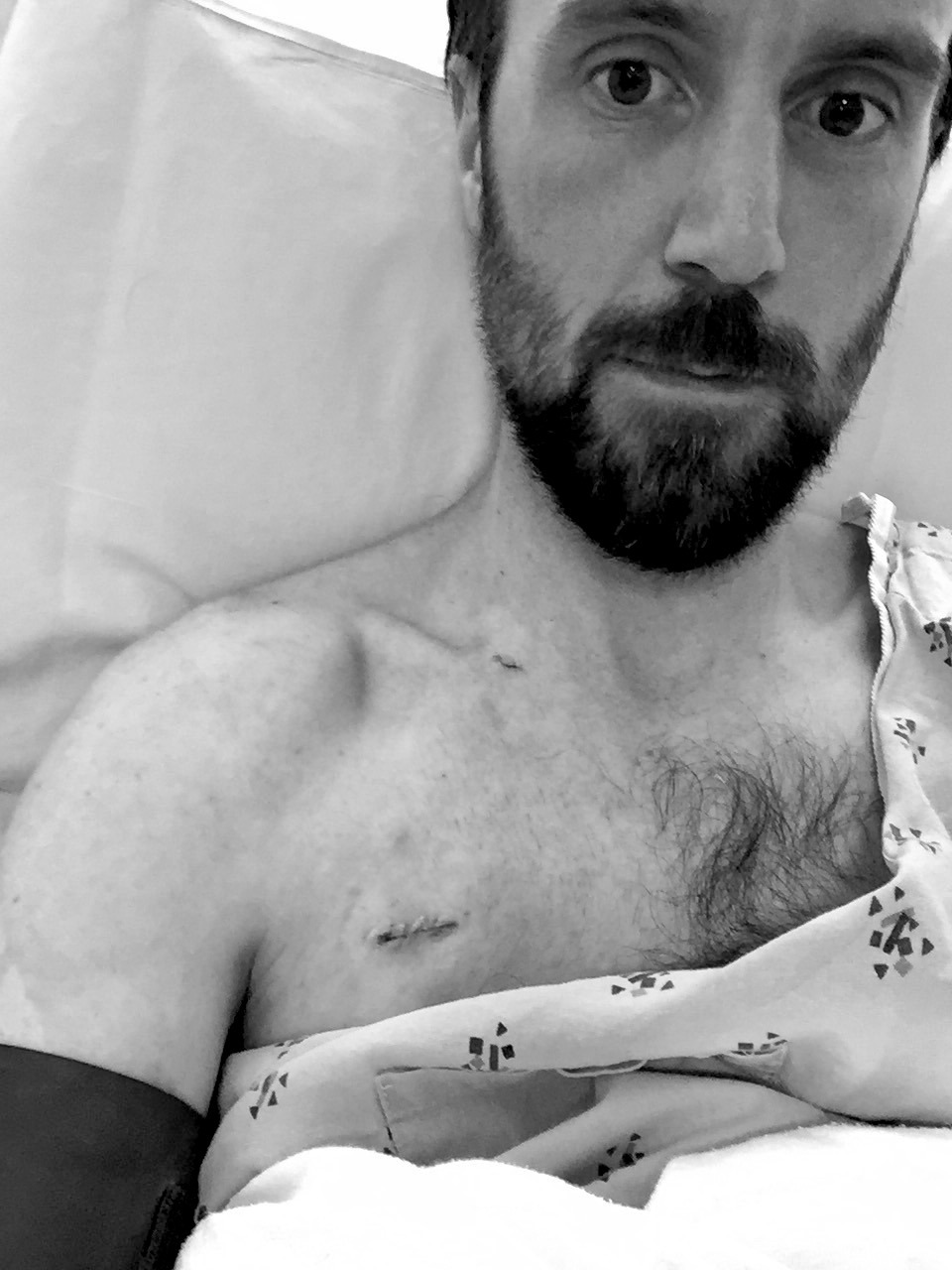
Tomorrow, March 13, 2017, I will begin salvage chemotherapy (AKA “2nd line chemo”). I had my “Smart Port” placed on Wednesday. Initially, I was scheduled for a PICC line, as with prior treatment, but the port requires much less maintenance.
I spent the better part of this past month researching alternative routes. Naturally, more chemo was the last thing I wanted. … but this is it. Yes, there are phase II or II studies, but as such, these wouldn’t be covered by my insurance. Also, since some are still in the relatively early stages of development, the outcome is even less specific than salvage chemo / high-dose chemo/stem cell transplant.
I am trying to refrain from looking that far ahead.
I have to begin with this option, at least. Trust me; I was tempted to buy a one-way ticket to some random, far-off country. I still entertain this idea in daydreams – I won’t lie. However, I must at least begin this, try it, and hope for the best.
 healing is a circular path