I had a recent and brief exchange with my uncle after a recent post about life, its potential pointlessness, and the struggle to find meaning.
(Chris) Interesting ruminations! I think that Tolstoy’s outlook is pretty pessimistic. I believe that life has a purpose, but I don’t necessarily believe that your illness has anything to do with it. Your purpose may be to help someone later in life, maybe to have kids, work with people experiencing poverty, invent, write, or draw something important. Maybe this three-year period is just a detour that has nothing to do with that. I don’t know!!! much love,
(Jeremiah) His outlook certainly was pessimistic… but I feel that was the impetus for his spiritual pursuits/awakening. He had to fall into that place of despair to arrive. I guess, the way I look at it, I was already en route to these things; in my last semester of grad school, I was going through interviews with the Peace Corps to work (with people with low incomes, perhaps) in Albania. I was writing … I was drawing. I think that a detour that goes on for three years is a bit excessive. It isn’t the physical journey but that of the mind, psyche, etc. As I have written, the toll that all this has taken is very significant. Yes, my oncologist can say, “You look great!” But he doesn’t see the damage on the inside. Of course, his objective is to treat the patient, so externally, I look “great.” I don’t know where I am going with this. I do that this illness, and the longevity of it, MUST have something to do with it / with life. I have to think like this; otherwise, what’s the point? If all my struggling physically and psychologically was all for naught … I can’t go that route in thinking… I spiral out of control…
Chris Naturally, everything we go through leads us to be who we are at any moment. So you are, and will be, a very different person than you would have been had you not gotten cancer. But that doesn’t mean (in my mind) that it is directly related to your purpose in life.
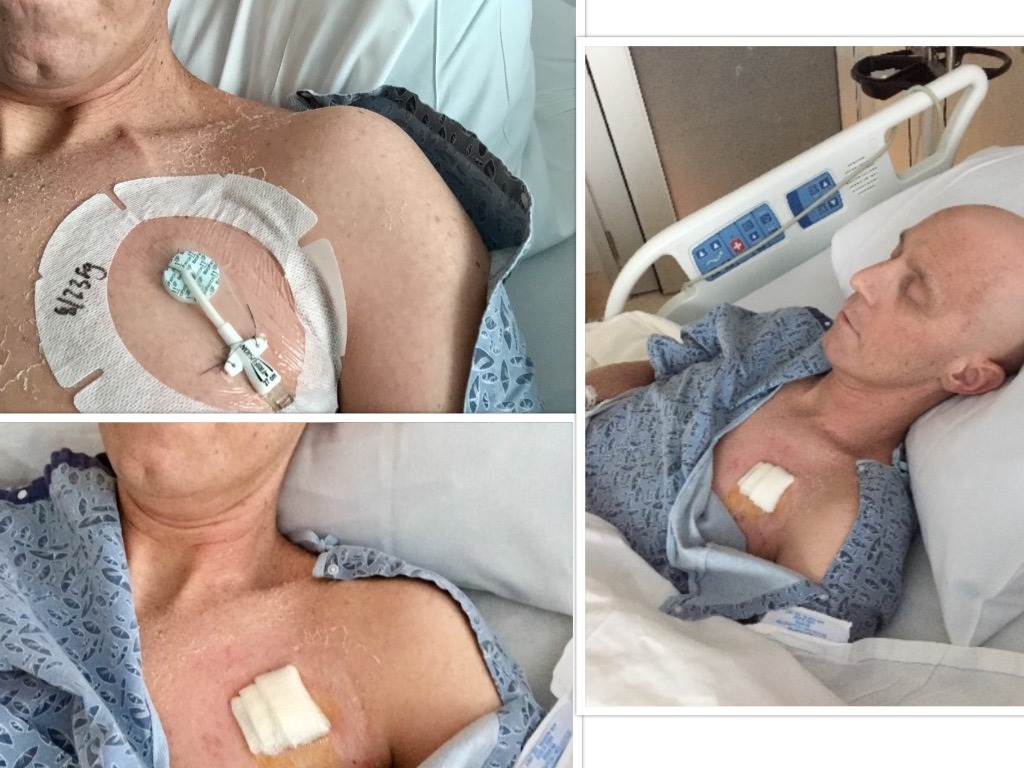
The irony of being diagnosed with advanced cancer on April Fools’ Day doesn’t escape me. Though I had been told I “might have” cancer several days prior, the diagnosis didn’t actually arrive until this day in 2016. The doctor at the walk-in clinic said that it might be cancerous, but I would need a biopsy to be sure. It wasn’t denial so much as prioritization; I had a thesis to write, a show to install, exams to finish, etc. I assumed a biopsy could wait. Several days later, I woke up in the back of an ambulance, completely disoriented and unaware of my own name. After multiple tests, surgery, etc., I was informed that, yes, it was, in fact, cancer. After such news, under such circumstances, priorities change; a thesis, exams, papers… these would have to wait. Obviously.
I replay this scenario again and again. All of it, not just the initial diagnosis… but every aspect of the last three years. It’s not so much rumination as it is an attempt to understand and make sense of it all. I am looking for something tangible, some meaning…
The truth is, there is none.
Tolstoy said, “The only absolute knowledge attainable by man is that life is meaningless.”
Initial consideration of this philosophical mindset might lead one into deep despair. However, I must agree wholeheartedly.
Tolstoy, however, did find meaning in his life. After publishing Anna Karenina, Tolstoy slipped into a great existential crisis and became increasingly paralyzed by the fear of death. This fear was all-consuming, but perhaps it was a catalyst, pushing him toward finding meaning. He pursued religion and spirituality with the same intensity and fiery passion with which he wrote. His beliefs leaned towards Christianity, but he found that the church, which in his eyes was a corrupt institution, was falsifying the teachings of Jesus. He was inspired by many saints, notably St. Francis of Assisi and others who forsook wealth and worldly goods to pursue a deeper kinship and connection with god.
I want there to be meaning within this, within my journey. I want to find meaning. Looking back over these three years, I am not in a good place tonight. Sitting here trying to pull a couple threads of sense out of the insane tapestry draped before me. That’s all I want; a couple of strands to grasp hold and say, “Look here, I found two reasons! Here are two reasons why!”
I suppose, like Tolstoy, I will have to find my own meaning within all this — to make meaning from it. Maybe one day, when time has softened all this, I’ll find those two strands of meaning and begin to weave my tapestry.
After drinking one liter of contrast dye and being poked numerous times to place an IV, my chest/abdomen/thorax show stability! No new developments – things are as they were and have been – stable!
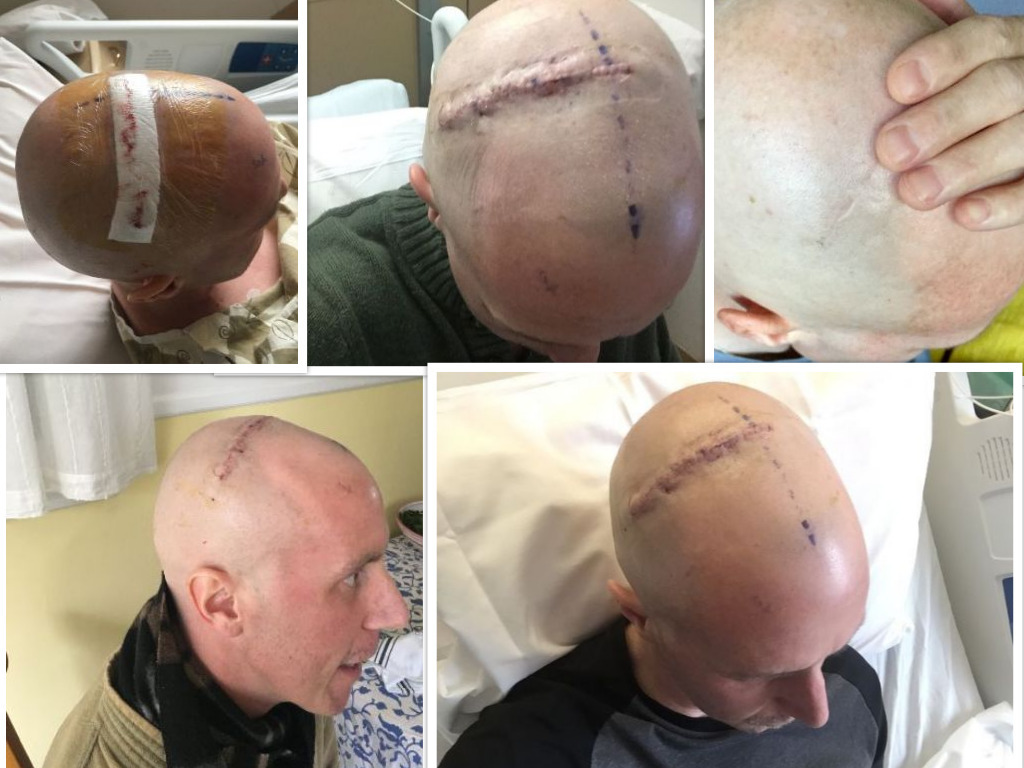
Now, the task is sorting out these seizures. My anticonvulsant med has been increased, so we’re hoping this holds. However, if it doesn’t, the next step would be inpatient epilepsy monitoring. Several months ago, this was the initial idea; however, my neurologist didn’t want to jump into that. As he said, “Let’s leave well enough alone.” At the time, it had been a few months since my last seizure, and the hope was that the medication was holding. After my recent seizure, however, it was decided that, should another episode occur, I would enter the EMU (epilepsy monitoring unit) at Maine Medical Neuroscience Institute to get a very clear idea of the seizure activity.
Part of me wants to enter the unit right now to really understand the root cause of these debilitating seizures. The flip side is that I am exhausted, and the thought of being impatient for any reason makes me angry and sick to my stomach.
I want to return to normal, and this bullshit idea of this being the “new normal” greatly annoys me! This mentality is far too easy to put forth from people who haven’t spent 3 years trying to stabilize themselves, right themselves, adapt, and readjust every moment of every day.
The positive news is that my lungs/thorax/etc. Are stable overjoys me… but I celebrate halfheartedly, always wondering what might be lurking, waiting for me to let my guard down. History has shown that with every up, with every moment of elation, is followed by a horrific down, a paralyzing fall. What is seen as pessimism, or something similar, is me trying to minimize the letdown, the fall from too great a height. Being in this constant state of emotional and psychological neutrality is a shame.
As part of my psychotherapy, I was asked to write about the initial seizure and subsequent diagnosis from the 3rd person’s perspective. I have buried a lot; I haven’t wanted to return to that particular day, but I know it is present. It is there, in my mind, lurking. It appears in dreams; it presents itself when I let my guard down. In my unconscious states, the presentation in these moments is sometimes cloaked in metaphors and surreal imagery, but I wake knowing where it is tethered. This is human nature; this is our survival mode kicking in.
Jeremiah Ray, untitled, 2013, oil, acrylic, charcoal, dirt, on canvas
Jeremiah did not feel well upon waking. Perhaps it was stress or another late night of working on his thesis… he could not tell.
After a shower, he felt slightly better, but there was a tiredness that he could not shake and a queasy feeling in his gut.
He exited his basement apartment and stood on the stoop. The dappled sunlight flooded over him. The air was still cool, as it was barely April, but the sun was growing strong. He closed his eyes and stood still, ‘yes,’ he thought, ‘sunlight will nourish me.’
Stepping down, he dodged the uniformed children making their way to an elementary school just west of his apartment. He noticed, almost daily, that their uniforms had a military look to them. Neatly pressed shirts and pants, leather shoes, etc. They didn’t look like the catholic school uniforms he had worn in his youth.
Jeremiah arrived at the corner of Broadway and Thorndale. It was a busy morning, and, like the school children rushing to make their classes, the cars that whizzed past had an urgency to them. Jeremiah didn’t have such an urgency. He stood on the corner and let the unhindered sun fall over him. The traffic and pedestrians danced around him. He seemed to be at a standstill; he was, in fact, and this made him seem out of place within the whirlwind of the morning commotion.
He had no real urgency, he had none in fact. That morning, his only plan was to go to the park and meet Eda. They had arranged to soak in the sun in Millennium Park. It was, he noted again, a perfect day for such an occasion. Also, he wanted to see more of Eda, she was attractive, intelligent and a good conversationalist. They were still in the early stages of getting to know one another. He liked this time, the explorative and exciting time of a potential relationship.
Part of Jeremiah’s attention was preoccupied with the lingering feeling he had had since he awoke. It wasn’t nausea per se, and he knew the sensation of stress; thus, he could also rule that out. The other part simply wanted to enjoy the sun. He remained in a neutral zone, letting neither sensation nor desire pull the entirety of his attention.
Jeremiah had waited through two rounds of red lights & two rounds of green crosswalk signals beckoning him to join the others in their haste. He decided to go across Broadway to the Thorndale Red Line Station and join in the morning rush. He disliked these morning commutes but loathed the afternoon and evening ones. Depending on the day, the northbound trains leaving downtown anytime between 4 and 8pm were like cattle cars. The morning commute was less crowded; Thorndale was only a few stops before the end of the red line, a perk of living so far out of the city.
The schoolchildren ran past him as he stepped out to cross the four lanes that made up the intersection of Broadway and Thorndale. Broadway was one of those streets that ran a great distance, miles and miles of ever-changing facades; CVS pharmacies, mattress stores, seedy restaurants, the flip side being trendy coffee shops, hipster bars, Whole Foods, etc. Jeremiah was used to New England streets, even the city streets like those in Boston, that curved around this way and that, intersections that confused tourists and locals alike, and one-way streets that began randomly. The city had no real planning and just grew with the expansion of the population, which grew due to the Industrial Revolution and the massive changes it brought with it. It was as if the city reached out in all directions, sending runners here and there that shaped the city with some chaotic beauty. On the other hand, Chicago was systematic; streets would run for miles and miles, and the flatness of the Midwest let them stretch to no end.
The sound of the schoolchildren became slightly muffled, as if there was some sort of ringing in his ears or that they had water in them. Sunlight bounced off of a storefront window and blinded him. It was a flash, like an explosion, a bolt of lightning. The schoolchildren ran about, laughing gleefully. Looking down Jeremiah saw the shadows of everyone going to and fro, it was an insane dance upon the sidewalk; bodies blending and merging, figures morphing into multi-limbed creatures that split apart, multiplying and dividing. Again, an explosion as the sunlight bounced off another storefront window. He had kept his gaze down, mesmerized by the multi-limbed shadows. As the blast of light occurred, the shadows dispersed as if running from it, as if scared. Then, when the lightning flash passed in the blink of an eye, the shadows returned and resumed their odd dance.
Overhead, the northbound Red Line slowed at the station. The thunderous wheels rolled to a stop and then began again, generating this metallic cacophony that quickened until it was swallowed up by the southbound train. The two sounds were dissonant and jarring. The northbound train was picking up speed as the southbound train began to slow. The sounds pulled at one another, tearing an ugly hole in the peaceful morning.
Clack clack claclaclaclaclaclclcl the northbound train ran away.
A hiss of sorts sounded out; there, above him on the trestle that stretched over Thorndale, was the southbound train. It stretched many cars and seemed to loom almost imposingly above him. The doors opened and then closed, and it moved south like its northbound counterpart as if tugged by some unknown force. The sunlight broke through the train cars; at first, it was slow, shadow-light-shadow-light. Then, as the train increased speed, the timing generated a hypnotic sensation even behind closed eyes, shadow-light-shadow-li-sha—l-sh-l-s.
Jeremiah’s stomach turned, the queasiness rose up inside him, and there was almost this desire to wretch. He was unsure at that moment if he was standing still. Was he moving? Others around him took no notice; they flowed about him like a river moving around a large rock. Unlike the rock holding its own in the torrents of raging water, he began to give way, to slip. A sneaking sensation of paranoia crept up within him. It crawled up his spine and filled his mind with questions: Are you ok? Are these people aware of you? Are you having a panic attack? His awareness of self made his eyes move about pinpointing someone or something that might be an anchor he could hold. There was no one. There was nothing.
The feeling of queasiness moved from his gut to his head, and there became a pressure. As it ventured from his gut to his head, it curled its fingers about his throat, then wrenched his jaw open with such force. It felt dislocated, swinging there, disjointed, resting on its hinges. Then, the fingers crawled into his brain. His eyes fluttered. They fluttered again. The two trains arrived simultaneously, northbound and southbound, directly across from one another on the narrow, wooden platform that separated the two trains. The doors opened at the same time, and both departed at the same time. The metallic clanging was almost symphonic and then again became dissonant as the two ran off in separate directions, each moving at different speeds.
His unhinged jaw swung open and locked in that position, ajar and painful. His stomach burned, his legs unsteady. Jeremiah’s right hand began curling inward, fingers to palms. He had no control of this movement, none whatsoever. The southbound train arrived, and the shadows flickered until they slowed to a stop. His eyes fluttered in a syncopated rhythm; eye open, shadow, eye closed, light, etc.
His ears filled with every sound, every car, every child running off to school, every footstep, every flash of light… Then, there was not a single sound at all. Like the shadows upon the ground that moments before had transfixed his attention, so too did the motion of everything and everyone, just a blur of beings and objects in various colors and shapes, coming in and out of lights and shadows. Then there was stillness and just a whooshing sound in his ears.
His curling hand turned inward and was drawn upward towards his open jaw, then further to his head. He cupped it as best he could with his rigid hand. It wasn’t pain that he felt; he didn’t know the words. There was simply a lack of control. He could not say no to stop this, to return his hand to his side and close his jaw. The whooshing sound disappeared, but the world still remained motionless. A sound came from him, from within him. It wasn’t a word or a plea for help. It was a word to him yet outside his vocabulary. A moan escaped him as a sigh, as a yawn might. A long, extended moan. Then his body fell, his legs gave way, and his being slipped downward into some hole, into some sort of abyss that opened underneath him, a trapdoor in the earth.
Where was he? Who was he? Just blackness that engulfed him; rich, thick darkness in which no light was present, no words were uttered, nothing. His sigh had left, the morning commotion had gone, and the trains no longer sounded out. Nothing. No one.
This was originally posted on Instagram and is unfinished for a WordPress setting. As such, it will be updated.
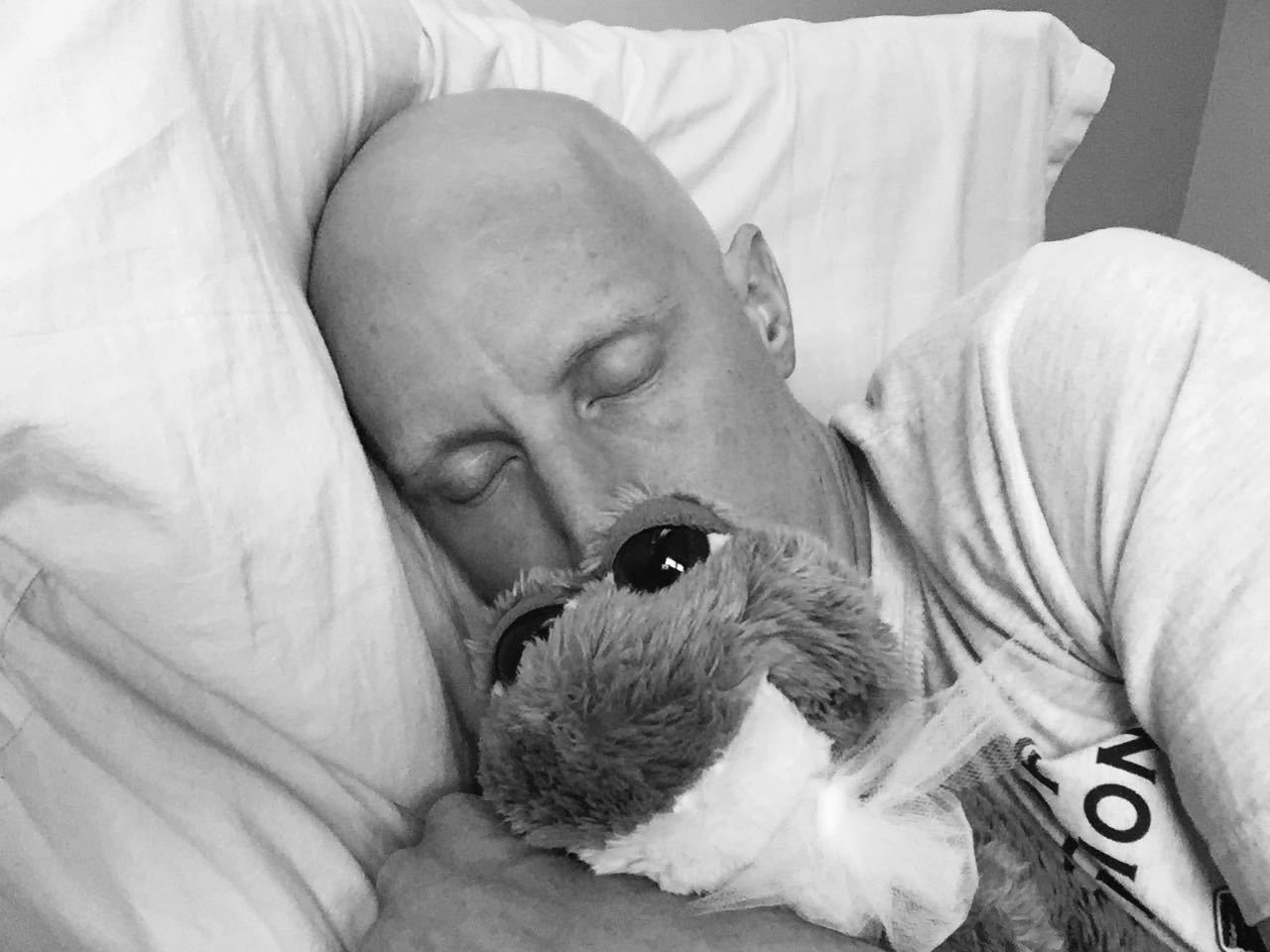
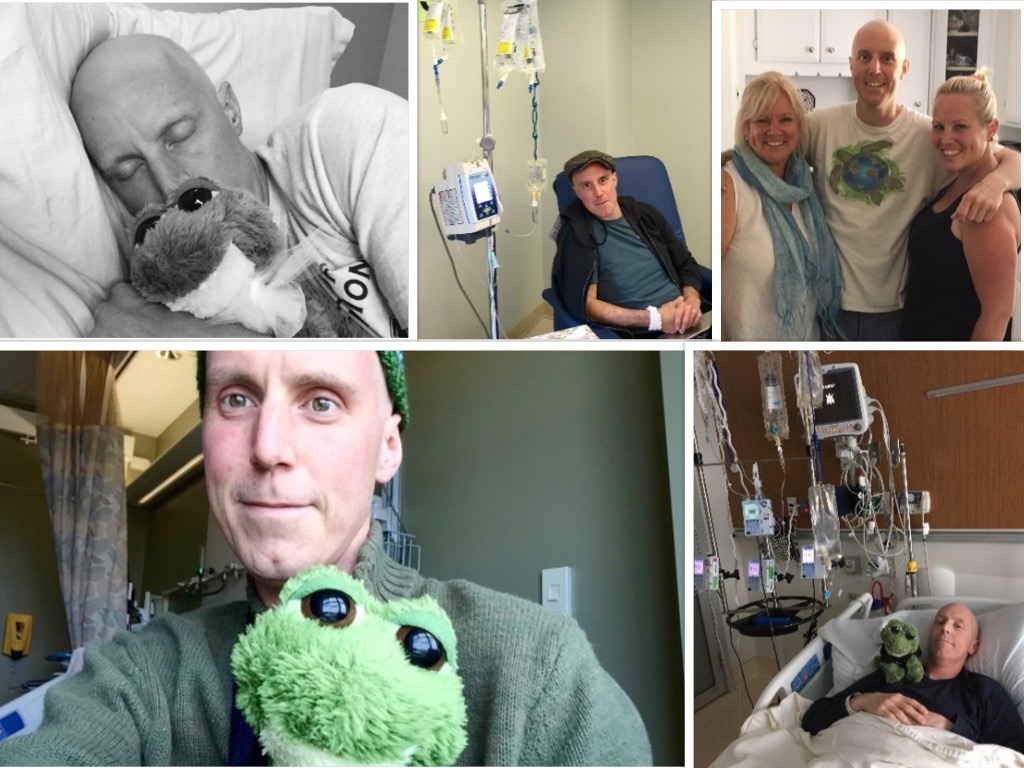
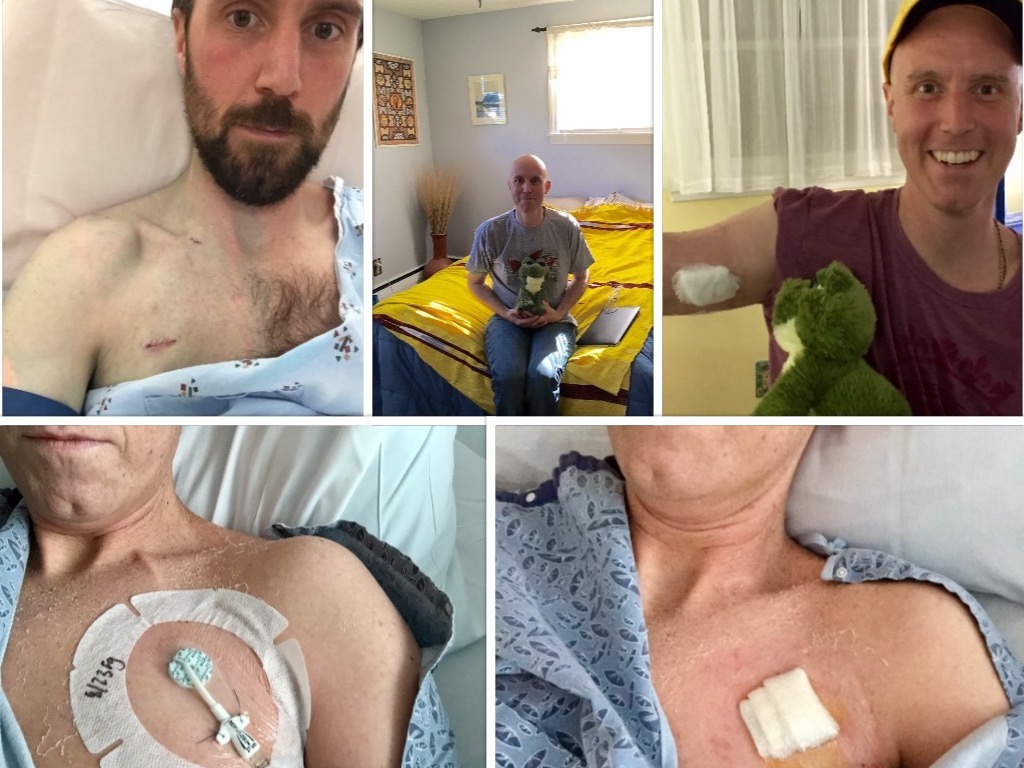
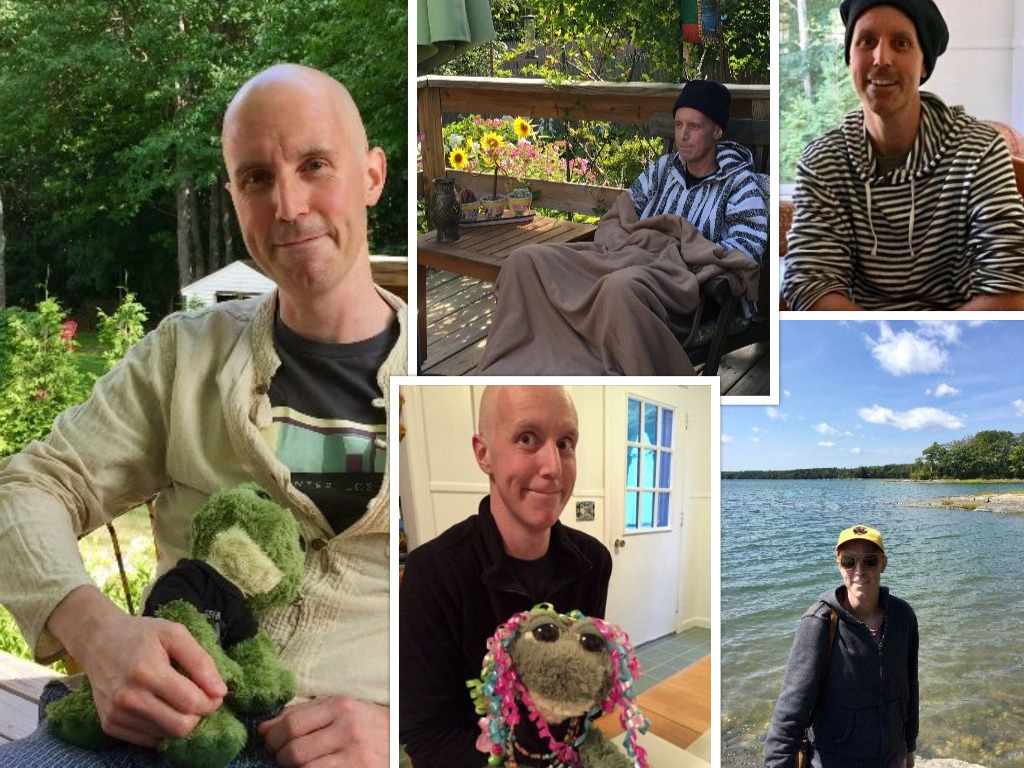
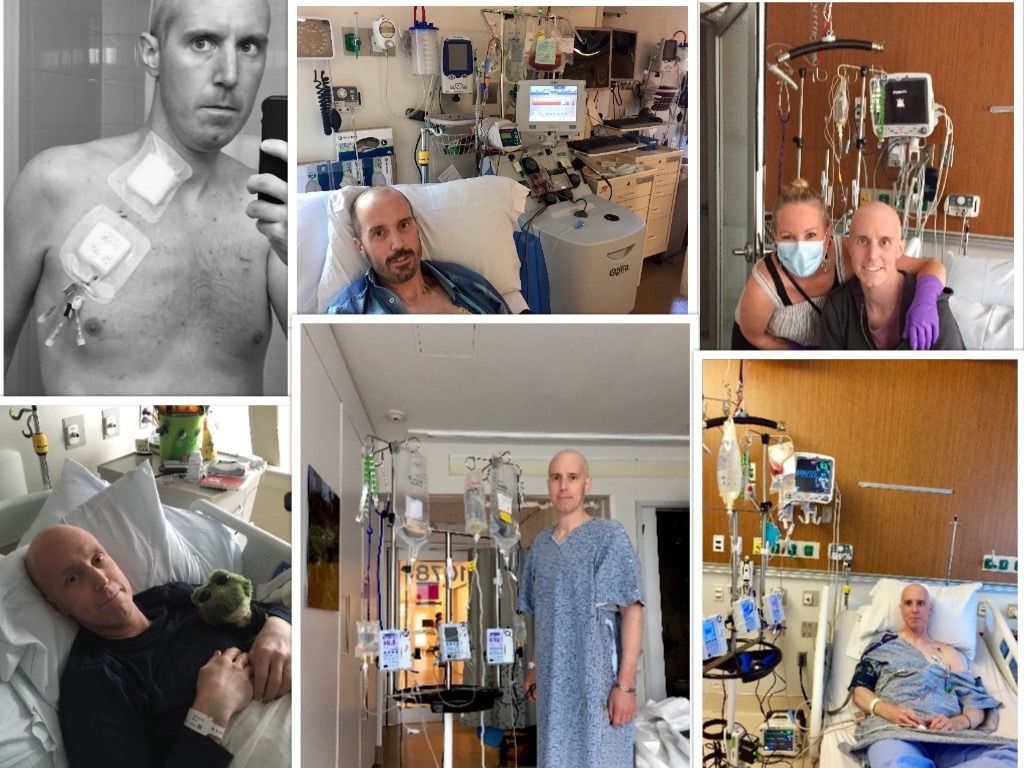
Today marks my 1,000th (Instagram) post. For 1,000 days, save for a few days when I was too sick to post, I have posted an event in Froggie’s life. In early April of 2016, I was diagnosed with advanced (stage IIIc) cancer. Shortly after my treatment began, shortly after my entire life was brought to a screeching halt and then flipped upside down, a friend came to visit and brought with her Froggie. I immediately clung to Froggie; he became an extension of me. As my life spiraled into a nightmarish realm, Froggie kept me safe and sane. Post-treatment days, days spent in a hazy, sick, tear-filled & angry state, Froggie was a lifeline. I was living vicariously through him, through his life, his innocence, his oft strange and slightly dark humor. Froggie arrived from Froglandia and was new to my world, just as I was new to the world of cancer & treatment. We met each other halfway, two tourists in very new and often frightening worlds. Froggie joined me to every treatment, every hospital visit, and every appointment with various specialists and medical professionals. He was there, always. He also accompanied me to my places of refuge, the local beaches and woods, where I would walk and let the horrors of my life slip away. 6 months after my initial treatment ended, my cancer returned. The treatment intensified, as did my need for Froggie and his love, his kindness, as well as his wit and sarcasm. I spent weeks inpatient while going through two stem cell transplants; Froggie was there, always. All the attractive nurses that came into our room, which was sealed off from the rest of the world due to my immune system, or lack thereof, fell in love with Froggie. Each time they came in for vitals or to change bags of fluids, etc., he would get tongue-tied and giggly when they would inquire about how he was doing. Cancer treatment is only a small step in the arduous journey of recovery. When the physicality of it ends, when the nausea leaves and the fatigue slowly subsides, one must begin with an even longer and more difficult journey of regaining psychological and emotional equilibrium. Once again, Froggie’s daily posts and snippets of his life became a focal point for me. My day wasn’t complete until I had, once again, lived through him and his take on this weird yet beautiful world in which we humans exist. It has almost been three years since my diagnosis. These years have taken their toll on both of us. He is floppy. I am tired. Again, however, we’re meeting each other ½ way, exchanging various forms of strength to help us carry on.
I have been in a fight with cancer for 3 years. It has, as you can imagine, altered my life. I keep looking back, gazing longingly at the past, and thinking, ‘It was much better then; life was easier then.”
I catch myself and feel angry and guilty for thinking about this. Even during meditation, I’m annoyed thinking that life was more straightforward then.
Can you offer some advice about being gentler during such a rough time?
Many thanks,
Jeremiah
Hello dear friend Jeremiah,
Thinking about how things were more accessible and better in the past is a natural part of grieving what you have lost. However, what you lost was not your health but your innocence. It was easier then because your problems seemed of a lesser magnitude than your problems now. You still have plenty of innocence, and you still don’t know what the future holds, but when you live with cancer, you have all your other life problems plus cancer. You have a much deeper perspective that can’t ignore the fragility of life. Looking back at your earlier self, you can think, Lucky me, I didn’t know what was coming. You still don’t know what is coming, but you don’t feel as lucky, or you may feel unlucky or cursed. Yet, you are vibrantly alive. It is outrageously courageous of you to sit meditation. Meditation is where your deepest fears vie for the light of your attention. It is where your mind processes your grief. Thinking about a simpler time is a fine thing to do. Wishing for past and future health is a big part of the
process. Feeling guilty and angry for having thoughts is a reaction.
When you notice those reactions, practice responding.
A response is an intentional reaction. When you respond, you can include compassion. Meditation is a time to let go of thoughts. As your attention is on your breath, there is no other thought. You think about the past and notice the thought, then bring your attention to your breath. Feeling guilty for having a thought you didn’t want is another thought, so notice that and bring your attention back to your breath. Your getting angry is another thought; notice that and return to your breath. You don’t need to sort your thoughts into good or bad, right or wrong; you just have to notice them and bring your attention back to your breath. That is repeatedly throwing out your mind. When you finish meditation, you can let your thoughts run again, but meditation is a time to practice dropping off your thoughts.
If dropping off thoughts isn’t working for you. Practice a more active form of mediation. Practice thinking about gratitude. Practice loving-kindness meditation for all of the people in your life. Imagine how others suffer; breathe in their suffering; peace and wellness for them. If you are in the hospital with other people, practice healing them. Breathe in their sickness, and breathe out peace and wellness for them. That kind of thing occupies your mind more than a more open form of mediation.
Walking meditation is also good for that. You move and drop your thoughts off as you focus on your feet, touching and leaving the ground.
Overcoming a pervasive fear takes a lot of practice. Fear digs in and spins off things like guilt and anger. With practice, though, you can change your pervasive habit.
It is still essential to embrace not knowing. Not knowing brought happiness before you knew it, and you must remember that you still don’t know. As you await test results, remember you don’t know. Not good, not bad, just don’t know. As you experience the joy of a positive test result, notice the nirvana of the fears going away. Pain comes and goes. When it goes, that is bliss.
Tumor markers were drawn last week, a few days prior to my MRI. After receiving the results I was a little concerned as there was an elevation in one (of three) tumor marker levels. I was riding the wave of positive news regarding my MRI results, so didn’t want to fixate too much on the blood work. Long story short, the labs are fine! The rise in one of the markers, which is slightly above the normal range, is totally normal (according to my oncologist) and has a tendency to fluctuate. I can rest easy now – and I certainly am. After the news regarding my MRI and blood work I am completely drained, yet blissfully happy!
Waiting for an MRI or CT scan results is no fun whatsoever. Honestly, there is something about bloodwork that feels worse, more challenging, more painful. Perhaps because of the speed at which labs are drawn and the agonizing waiting period. An MRI, as well as a CT scan, require some form of preparation. Blood labs are quick: in / out / get out. I can’t speak for other facilities/clinics, etc., but there is a lengthy waiting period for results. I say “lengthy” because when you’re pacing around like a nervous wreck waiting on results, even if just for a few days, every second feels like an eternity. I had my labs drawn on Friday, February 1, 2019. So, considering the time delay with the weekend, I might not hear until mid-next week.
When I was first diagnosed, I was asymptomatic. As I have mentioned in numerous updates and blog posts, my only symptom was what I thought was a chest cold (cough, slight wheeze, etc.). When the recurrence was noted, I had absolutely no symptoms – none! At the time, I was shoveling snow off my roof, stacking wood, and going on lengthy treks in my beloved woods. There wasn’t a single indicator that something was even remotely amiss.
I don’t trust my own body. It is a sad thing to admit, but I don’t. I wrote a poem about this shortly after diagnosis, in which I kept repeating the line, “body, tell me things!” I was pleading with my being, physical or otherwise, to give me a sign, speak up, and present to me in waking life or dreams that something wasn’t right.
I know my body will eventually heal. “You are powerful, Jeremiah,” my oncologist recently told me. Without wishing to sound pompous, I know this – I already knew this.
In this manner, trusting my body to heal, I know it will always recover. Even after multiple, multiple rounds of cell-killing chemotherapy, a drenching so great I am surprised I survived my two stem cell transplants after the chemical bath I received during my initial treatments, my body bounced back. But somewhere, somehow, it doesn’t communicate what I need to know beforehand, which is most important.
Body, tell me things!
Germ cell tumors, i.e., ovarian and testicular cancer, are hard to detect. Thus, they have often been called the “silent killers”. 19% of ovarian cancer cases aren’t detected in the early stages of development. Testicular cancer, being in the same family, is very similar. A “chest cold” is the symptom of metastatic lesions throughout my lungs; a seizure was my body finally communicating with me that the cancer had reached the end of the line.
Body, tell me things!
I want to trust my body. I want to know what is going on and developing within me. I am paranoid now. One day, I will exercise, usually in the form of cathartic dance/movement, and the following day my thighs hurt. Naturally, this makes sense; I had been dancing ecstatically 24 hours before. My mind, however, is wondering what else might be there or lurking below the surface.
Body, tell me things!
Sitting here waiting for results, I am in that place of treading water again. My MRI is scheduled for February 5, requiring a long wait. I don’t feel this is a life — no, I know it isn’t. Scans are three months apart. So, for 1.5 months, I have been delighted, I have been resting, I have been gaining strength, etc. The next 1.5 months are a time of wondering… questioning… fearing… dreading, sleepless nights, and days walking around trying to retain what’s left of my sanity.
Body, tell me things!
I want to slip back into that blissful state of nativity. The days, the years, all 33, when a chest cold was just that, when sore thighs resulted from exercise. The years in which I didn’t wake up in the middle of the night and dread the darkness because of all the unknowns it might hold.
One of my biggest fears now, and since my diagnosis, is having a seizure. Obviously, I don’t want to have one anywhere/anytime, but my fear is that of having a seizure in public. The vulnerability I feel when in the post-seizure state (“postictal”) is horrific. I don’t know where I am, who I am, who the people are around me, etc. Once, after a particularly intense seizure, both my mother and sister were sitting on my bed. Luckily, I was in bed at the time, so I didn’t hurt myself after losing consciousness. I frightened my sister so much and undoubtedly saddened her as well because, for the longest time, I just stared at her, unable to recall who she was. A lot of the trauma I am currently working through with the help of my psychologist is the initial seizure. Currently, I can feel a seizure coming on. There are indications I’ve learned to recognize, often referred to as auras; these help me to take precautions so as not to fall and injure myself. In Chicago, when the first seizure occurred, I had no idea what was happening. I simply hit the deck. When I awoke, I could feel a rocking sensation and the hum and vibration of what I had come to understand as an engine. This knowledge didn’t help, as I had no sense of identity. The paramedics had rummaged through my belongings and found my ID. This helped them understand who I was, but when they said “Mr. Ray,” I was unsure who or what they were referring to. “Mr. Ray, have you been doing drugs?” They asked this question repeatedly. I struggled, as I often do when regaining consciousness, and since they had no idea if I was, in fact, on drugs, they had me strapped down to the ambulance stretcher. Later, when in the ER, I discovered the cuts on my wrists from having struggled so much while in transport to the hospital. Again, they asked, “Mr. Ray, have you been doing drugs today?” I began to cry. “Mr. Ray, do you know what year it is?” I mumbled something, but I was unsure of what year it was. When I began to come around and gain a greater sense of who I was and where I was, I told them I was a graduate student studying in Chicago. I am sure the latter was evident in Chicago, but this helped them understand more. Finally, one of the paramedics said, “Ok, Mr. Ray, we’re going to untie your arms, ok?” Sometime later, well after I was in The ER, one of the paramedics came to see me. I didn’t recognize him, obviously. “Hi. Mr. Ray,” he said. I am sure he had found out, after inquiring about my toxicology report, that the only drug in my system was caffeine. I currently wear a medical ID. This simply states that I suffer from grand mal seizures. This isn’t enough for me; I want it obvious that my medical condition is such that I was a cancer patient, and one of the ongoing ailments, perhaps an ailment for the remainder of my life, is seizures. … I purchased the credit card-sized ID badge and a lanyard. As I gain more emotional and psychological confidence and the much-needed physical stamina, I hope to continue my walking routine, an oft-daily event that I greatly miss, which helps me process much of the events that have occurred over the past few years. I want the ID to be so evident that, should I have a seizure when out and about, my medical condition will be event, glaringly so. I have faith in my fellow man/womxn that, in such an event, I will be comforted and cared for until I regain a sense of who I am… The thought of waking without knowing who I am, or even what I am, haunts me. The fear of being strapped down during this postictal time is even more so. The vulnerability, as mentioned, is so great that this prevents me from my outings — any outings, be they a trip to a cafe, to take in a movie, etc. I don’t want this fear to become so great that I avoid leaving the house. Currently, I can see this is where my fear and the ever-growing feeling of vulnerability are leading me. The aluminum, bright red ID card, which I’ll wear around my neck on the outside of my clothing, will hopefully let me inch out more and more and break this paralyzing fear encroaching upon my life.





 healing is a circular path