Perhaps this is survivor’s guilt.

Our situations were identical in almost every way. 

He was diagnosed with testicular cancer. His staging was the same as mine. He, too, experienced a recurrence that presented as a brain lesion and opted for a stem cell transplant. 

This is where our paths split apart. Shortly after his high-dose chemo treatment commenced, prepping his body for the transplant, he became increasingly confused and disoriented. After sets of scans were performed, it became evident that, though the heavy rounds of treatment were well underway, several more lesions had presented themselves in his brain. The decision was made to stop treatment and return home, enter hospice care, and be around loved ones. Shortly after he decision was made, he passed away. 

Even in writing this, I don’t know where to begin opening up my emotional state regarding his journey and mine and where they veered off and split from one another. I shudder thinking about the fact that my lesions could have multiplied, too. Or, for that matter, the one that did present itself could have been in such an area that it was deemed inoperable, leaving me with more complications than just a stroke and a paralyzed arm. (“Just a stroke…”) What damage could my tumor have caused had it been slightly to the left, to the right, etc? Was I naive to postpone my 2nd round of salvage chemo and head out to visit Dr. Einhorn in Indianapolis to get a second opinion? Was this delay dangerous in such a way that… it’s too much to think about. 

These questions haunt me. They wake me in the middle of the night. Even more so is one I can’t escape asking repeatedly: why am I here and he isn’t? Why am I alive and he … and he isn’t? 

I never understood survivors’ guilt. I had heard about it but never truly understood it. Yes, on a larger scale, anyone who survives cancer thinks about all those who haven’t and, in one way or another, has that feeling. In most cases, guilt might be too harsh, but this particular scenario is apt. 

I loop my posts back around. With my last sentences or so, I always seek to return to the overall idea. Is this good writing? I’m not sure. I do so to keep everyone along the way. My writing tends to drift a little far out, so bringing things full circle will hopefully lead people to say, “Oh, now I understand why he wrote…”  However, with this post and the subject matter herein, I can’t. How do I bring this back around? What closing line or thought can I inject here? Nothing can sum this up or deliver on one’s need for coherency as none of this makes sense… 

Perhaps this is survivor’s guilt. Maybe it isn’t so much about feeling remorse for those who have passed at the hand of this insidious disease, but rather the inability to make sense of it, to articulate it to ourselves and others. As with this post, I want to bring it back around so it feels wholly desperate and there is some understanding to accept the madness of this life and the injustices that rear their heads. But I can’t. Everything is left hanging, nothing but loose ends, dangling strands that I keep tugging at…   

Be well on your journey, Alex

June 13, 1994 ~ June 30, 2020 (age 26)
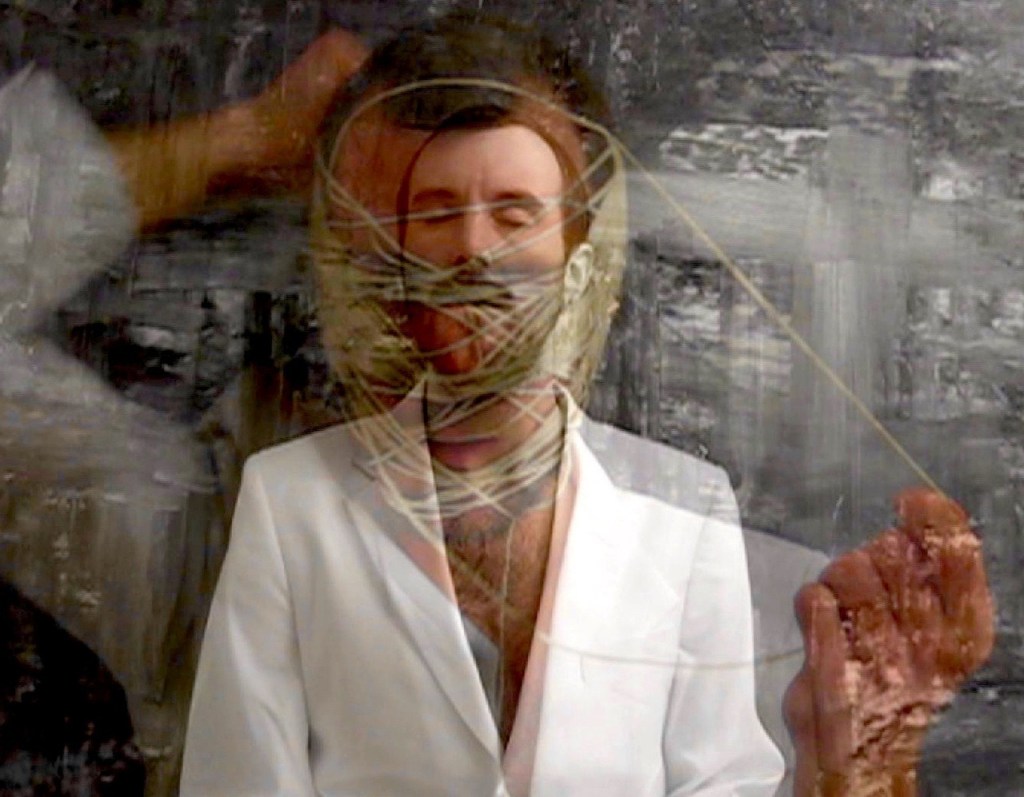
The body

For years, I didn’t like my body. For the majority of my life, there was this sense of guilt or shame about how I looked and felt. As a result or product of, I am not sure, there was an internal struggle, a sort of emotional and spiritual dissonance within that which I can only refer to as the soul. 


The body and soul were awkward, each attempting to adjust to one another, the physical and metaphysical working their way into a partnership of sorts. In one’s formative years, this is a time of great physical and emotional/spiritual strife. From my childhood until recently, this lingering sensation of turmoil always seemed to be. 


Much of this stems from the labels and ideas thrust upon us by the society and culture into which we are born. It is hard to adjust and figure out our way through the swamp of ideals and morals, beliefs and philosophies that aren’t necessarily our own – in fact, they seldom are, as we soon discover, they are simply handed down piece by piece. In such a way, they become like the game a telephone might play as a child. One person starts a phrase, and it is passed around or down a line. The end product is usually some bastardized version of the initial statement. The awkwardness of soul and body, this feeling of discontent, eventually brings us to the point of either acceptance of the societal and cultural default settings or forces us to step out in hopes of discovering that to which we are drawn by some force and/or inner seeking. Both take courage, neither one can be deemed good or bad, right or wrong etc. 

Amid treatment, during the first rounds immediately following my diagnosis, I stepped out of the shower one morning and stood before the mirror fixed to the opposite wall. There, in front of me, was my naked body. My hair had long since fallen out on my head and my entire physical being. I looked like some prepubescent boy with the face of a middle-aged man – a face exponentially haggard by exhaustion, stress, anxiety, etc. My eyes were sunken, tired, and sad. They, my eyes, have always held every bit of my worry, fear, joy, passion, etc. I looked at myself; I stared at the body before me. I stood still and let the feelings and sensations (some of which I haven’t found a suitable word for) pulsate from my core. 


I stood there. My fingers traced various lines and ran over my bloated body, puffy from steroids and other drugs administered during active treatment.


The orchiectomy incision looked back at me. I hadn’t looked at it since the operation and commencement of treatment. There was a part of me that didn’t want to look at it, to admit that it existed, or to deny the fact the surgery had taken place. 


Afterward, I let my fingers wander over my body, from the top of my bald head to the sunken sockets holding my eyes, over my flabby belly, and along the scar that marks the right side of my groin. I let my arms fall to my sides. I remember distinctly looking at myself – really looking at myself. I never wanted to. The body, my body, was just something. Embarrassed as I am to say this, I viewed it as some form that I had been plagued by. 


Beyond the fleshy, bloated being is where my gaze eventually fell, where it entered. How could it not? That is where all the lines I traced on my body were leading. As with the physical body, I didn’t think I was ready to honestly look or hold myself in that manner. But given the circumstances, the nand tire situation I was in, how could I not?


I have always been curious about the soul. The notion of it as a thing, for lack of a better word, fascinates me. I see it as something continuous, an ongoing form of energy, something that doesn’t end when the physical body holding it passes. The idea of the soul as something “eternal” stems from my catholic upbringing. As with my physical body and the shame and embarrassment I felt towards/about it, I felt something similar towards my soul. My physical body might lead to sin – to enjoyment and lust. My soul was a mere breath or thought away from damnation. 
Damned might I be should I enjoy my own flesh, my body – the sacred house of my soul! Damned might I be should I steer my soul on a course of my own choosing to embrace the free will I was taught so much about. 

It took me nearly 3 decades to look at myself and appreciate the strength of my body and soul. It took almost 3 decades to look at myself, to behold myself, body and soul, and to give thanks.

Despite the anger and bitterness, and sadness, gratitude exists. Though I might struggle daily with my mental and emotional well-being, I’d be genuinely damned without appreciation.

The photo is a still from a performance video I made in 2012. Through my visual art I was always trying to articulate my feelings and beliefs about the physical and metaphysical. Through art I sought to examine this relationship and express that visually which alluded me in every other form of expression and means of communicating. In this video we have two beings; one that remains still, eyes closed. The other worked furiously to wrap and eventually unwrap their head with string. The being with their eyes closed is actually the one seeing, the one that is fully aware of what is going on internally and externally. The other being, the one wrapping their head with the string, is the being trying to figure out their place within everything, to literally untangle the mess and confusion in which they find themselves.

Things change

This post contains images that some viewers might find disturbing.

Had things not changed, had everything stayed on course, I would have begun my first of two stem cell transplants today at Mass General Hospital (MGH). it is hard to believe it was over a week ago today I was rushed to the ER. Today, I clearly understand what is happening. At the time, however, I  was in tears to the paramedics while en route trying to explain my health history in one long-winded sentence, as well as explain that currently, I couldn’t move my left arm.

… why am I still so surprised how fast things can & do change?

When I first met the neurosurgeon, he was optimistic that the 3.2cm lesion in my brain was merely causing swelling, pressing against a supplementary motor cortex (voluntary movement HQ). He was optimistic. However, his tone changed after steroids, administered to help decrease swelling when the lesion was discovered, didn’t assist in bringing back the slightest movement in my fingers or arm. I can hoist the weight of my arm using my shoulder, but there is no grip or dexterity in my fingers, hand, wrist, etc. & bending it at the elbow isn’t entirely possible on my own/without extra guidance from my right arm. It is the strangest thing to be looking at my fingers and telling them, asking them, and pleading with them to move, but they don’t. I still have sensations and can detect touch, warm/cool temps, etc. This is where the hope will reside for recovery of mobility & use.

Rather than just swelling from the lesion causing pressure, the surgeon feels part of the lesion (part of it) was pushing against one of the primary motor cortex bands that run along this particular section of the brain. I am still trying to wrap my head around this… but it explains the extremity’s continued immobility.

Future stem cell transplant steps are being postponed for a few weeks.

Naturally, there is a lot of healing to do in the meantime, and any immune-compromising regimen can’t be undertaken until later in the month. Even then, they may want to opt for radiation therapy, similar to what was used to address the first brain met, before moving forward with the stem cell transplant.

This physical limitation is proving more challenging to deal with than all the chemo hangovers thus far experienced.

1.5 months difference

I found the contrast between these two photos so striking! It is truly amazing how quickly the body begins to heal and repair. Even while my old hair was still falling out, I could already start to see new growth. There is a difference of about 1.5 months between these two photos.

Though my physical body is well on the road to recovery, the emotional and psychological aspects of my being are encountering new hurdles every day.