
At night, lying on my back, I stay awake and listen to the rattling of my lungs.
A wheeze, a strange resonating noise—like damp leaves—if mold had a sound, if abandoned rooms with winds spoke.
I insist I am okay.
I’ve always said, “I’m okay.”
From my youth, my father’s glare, to now, the groan of my lungs.
But I knew now I wasn’t; my body was revealing signs of sickness.
When had climbing a flight of stairs become a challenge?
Why was I losing weight?
Why did I wake up in the morning without the will to start the day?
The cravings of a young man—sexual longings, morning erections, and pleasuring myself in the stillness of the night—these were memories.
Someone my age shouldn’t be dealing with these issues, right?
I am a young man, strong and proud with rugged New England blood, generations of good health, and a life without doctors.
I kept telling myself, ‘Everything is okay.’
I kept repeating, “Everything will be okay.”
But it was never just an irritation in my throat.
The cough wasn’t just spring allergies.
“Hello,” I say.
“You are closer now.”
The wind through an open door has achieved form.
You have become a presence, a physical form I can’t ignore.
“Hello, Jeremiah.”
You’re in the hallway as a guest now, and you’ve even taken off your shoes.
How could I not welcome a guest?
A caller who had been inside, who had been within, was now at my door.
Cradling me as I sit on the shower floor, coughing blood into the drain.
Wrapping me in the steam of a scalding shower that never warms.
You are the fading winter, the arriving spring, and the buds on trees along West Thorndale.
You’re sitting next to me on the L.
Tag: mass general
Threads


My sister purchased sweatpants and a cozy sweatshirt for me during the first few weeks of my initial treatment in mid-April 2016. Initially, I didn’t want to wear them to treatment; I wanted to attend each grueling session dressed in a button-down collared shirt and trousers that blurred the line between dress and casual. I liked to look presentable—I needed to.
I arrived at the treatment clinic directly from Chicago, where I worked on completing an MFA, actively attended daily classes, wrote my thesis and art history paper, and generated visual work in general. As such, I consciously dressed in a way that, I hoped, exuded professionalism and spoke to my qualities. There was, however, another very conscious act; I wanted to maintain this daily dress code as a ‘fuck you!’ to cancer.
My work week was, in fact, a full-time job; I was in the treatment center Monday through Friday from 8 am to 4:30 pm. I often arrived before my oncologist and was in my chair, books, and laptop set up and ready to power ahead and finish an art history paper while they were still mixing up my toxic chemo cocktail. On one occasion, I heard my oncologist ask my nurse, “What is he doing over there?” she replied, “he’s working.” As I said, it was my full-time job; I was going to dress the part, grind away, and flip the bird to cancer.
But treatment took its toll.
The nurse who at one time informed my oncologist I was working was now mainlining me with Ativan because the 40-hour week was causing such severe panic attacks.
“It’s Friday; we expect you to be like this,” she said.
Was that a carte blanche to unhook my IVs and run screaming from the clinic? Perhaps, but I didn’t have the energy to do so. Instead, I requested a blanket from the warmer, curled up, and cried.
The following week, I began wearing my new sweatpants and sweatshirt.
No one took a second look at my attire. In fact, I received more attention when I showed up for treatment dressed like I was going in for a day as a data analyst than when I appeared in sweatpants, prepped for an 8-hour treatment cycle. The clothing I usually would only sleep in became my new go-to look on most days.
But it was more than a look, obviously, and more than physical comfort, which became increasingly important as the weeks dragged on. The ease of shedding one pair of sweatpants for another can’t be overstated when depleted of all energy sources.
Since 2016, I have worn the same few pairs of sweatpants to bed when lounging around the house and even while walking on the treadmill. After each washing, I am surprised that they remain intact.
Recently, when I visited my sister, she saw the state of my sweatpants and immediately ordered new ones. She’s like that; without hesitation, she will act in a way that might be simple but can change a person’s entire day – usually for a lot longer.
When I returned home from my visit, the package arrived within a day with various items, and yes, including sweatpants.
With their arrival, I knew it was also time to part with the old pairs. I folded them neatly, ceremoniously, as if I were going to lay them to rest somewhere sacred and not put them in the trash as I did. When I returned to my room, I saw the new sweatpants and, though I partly expected this, became incredibly emotional. For undeniable reasons, there is an aspect of sentimentality brought about by years of owning something. However, when a particular thing has wrapped you up, encased you, and held you literally in its fibers during your most vulnerable times, its presence surpasses sentimentality. That, paired with the endless generosity of my sister, made giving up the old apparel and welcoming the new bittersweet.
It is human nature to want the reassurance that something or someone will catch us if we fall; if we stumble, somebody will help us. The unconscious knowledge comforts us on some primordial level, that a hand will reach out and grasp us and that we can let go.
After trying on my new sweatpants, feeling that strange pleasure of fabric that is both too crisp and refreshingly new, I understood that the garments my sister initially gave in 2016 were indeed that hand reaching out. Somewhere between ceremoniously discarding the well-worn apparel and snipping the tags off the new threads, I understood that the tiniest gesture holds the most significant importance.
I had to remain in the car when my sister purchased the first set of various items for me. I was too ill to go into Old Navy. I sat curled up on her car’s front seat, craving the comfort of my bed, the relief an anti-nausea medication would bring. Her return with multiple bags containing an assortment of clothing was her way of offering me comfort; it was one of many, but this particular gift came during the first stages of my treatment when I felt particularly rough.
We arrived home, and though it was several years (and another lifetime) ago, I can remember the comfort of my new sweatshirt. Though I have since parted with the pants, I refuse to leave behind the sweatshirt and all the memories, good and bad, that it conjures up.
I move forward in this place
Over the past few months, various events or things have triggered me.
Some are minuscule, such as a sound or smell that will set off several memories. Others are more significant, a bodily sensation, an ache, cough, or the like that provokes a more powerful emotional/psychological response.
I note these reactions, a tactic I use to help ground myself. From there, I can move forward, understanding more about it (the trigger) and my relationship with it. If I can, witnessing myself is the trick; detecting what is occurring before being consumed.
The milestone of the five-year cancer-free mark is not an exemption from fear and worry. Sometimes they peak at the same level they did while amid treatment – periodically even more so.
Nights are difficult. Anyone who has experienced a tumultuous and life-altering event can attest that this is when the little dark fears emerge from the woodwork.
A few weeks ago, I returned from Samsø, Denmark (see the previous update here or blog post on thiscyclicallife.blog). A small island with under 4,000 inhabitants, nestled snuggly off the Jutland peninsula. Though it has several adorable little towns, the 40-something square mile island is used primarily for agricultural purposes. To say that it is a walkers’ paradise is an understatement.
When I am state-side, I often sit with these “little dark fears” only to a certain point. It wasn’t a bold pursuit or some other brave endeavor that granted me the time and pace to do so on Samsø; it happened as if on its own.
One night, awoken by worries and fears, I dressed, grabbed my raincoat, and walked. It was almost a knee-jerk reaction. As I joked to a few people, the beautiful thing about an island is that you can’t get lost; you ramble through fields and upon well-worn tractor paths, and sooner or later, you’ll encounter the ocean.
Every evening I filled my rucksack with: a rainjacket, another base layer, extra socks, a flashlight, a field recorder, and bread, butter, and honey, just in case. Then, I’d begin walking if I woke in the night, regardless of the time and conditions, to discover that the fears were present.
State-side, if my worries and fears become too great, and my audiobook or music doesn’t cut through the mix, I’ll bust out trusty ol’ Netflix. I didn’t have such distractions there. Though I purchased a Danish SIM card for emergencies, I didn’t carry my phone or bring my pre-downloaded audiobook.
Bringing the field recorder was the best decision. I didn’t intend to record myself, but I’d sit on some slight rise or the beach and try to collect my thoughts and gather my ideas while talking aloud – a practice I began while in school as it helped me work out ideas. My words were wandering much in the way I was rambling physically.
I have a project in mind for the recordings. Though what follows are some excerpts and snippets I pulled that I found revealing.
*
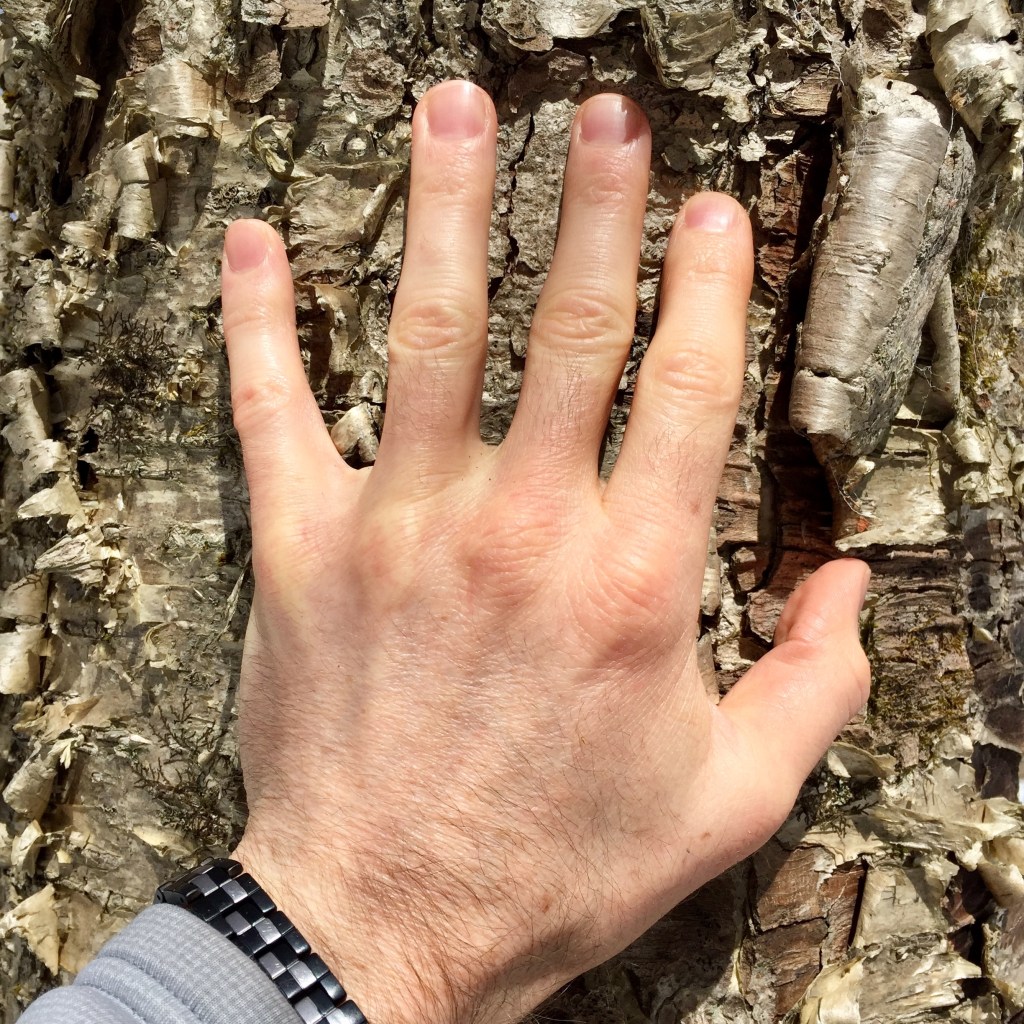
I move forward in this place (of recovery)
A beacon pulling / a signal drawing
Being held – here
I have learned to live with the memory of you [cancer], as one does with something that echoed, a thing that came.
The lights of Aarhus could be another world – a gentle glow (western paling sky). Aarhus could be Boston from here – Mass General could be anywhere. I could be anywhere. I am here.
Birds; two, then three, then 4, and 5 (a dance that says ‘we are together in this; we heal together.’)
I observe the passage of time by the jar of dirt I keep in my closet.
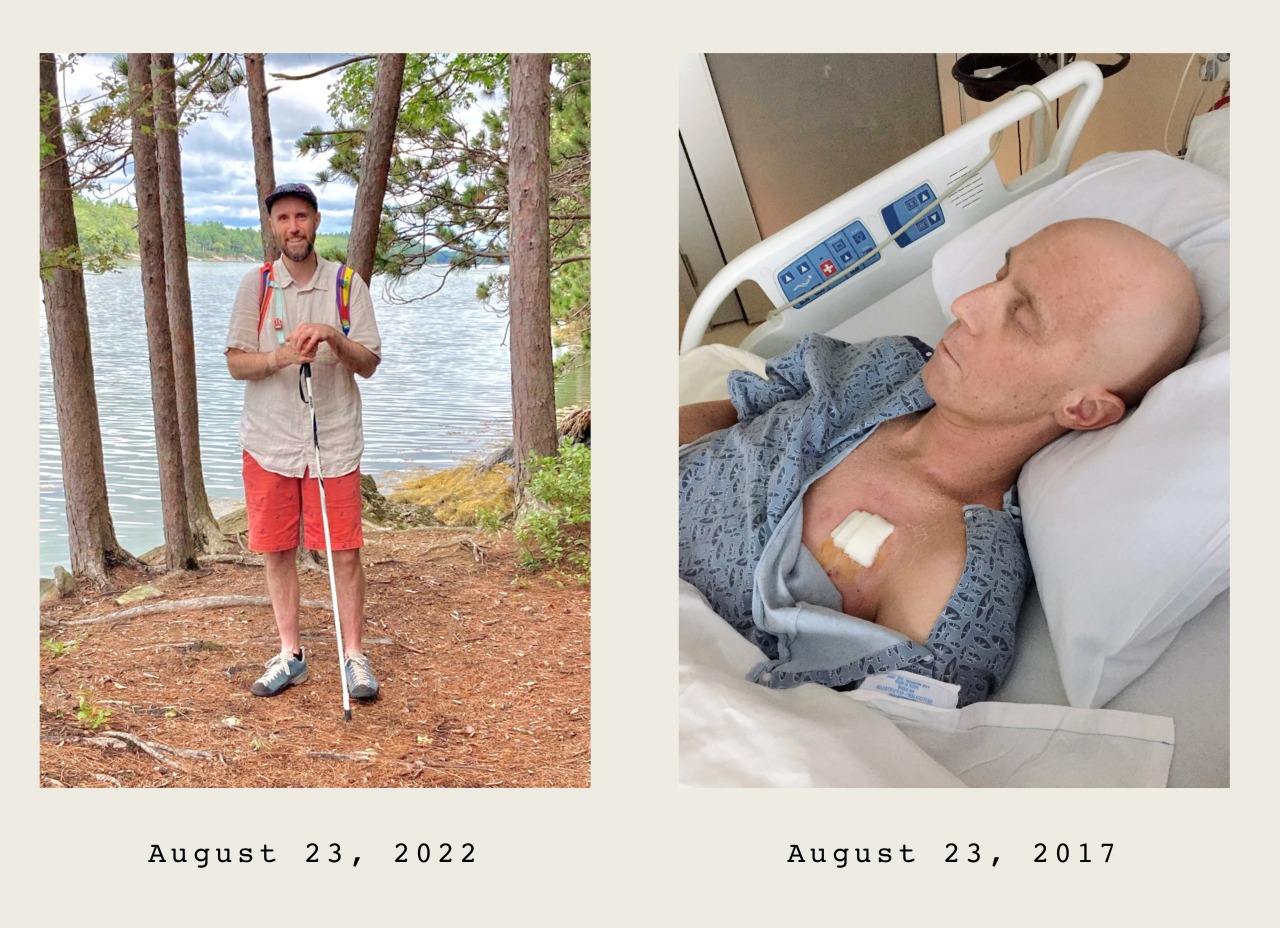
Between September 2015 and December 2015, I worked as a volunteer fieldhand on Samsø, a small Danish island off the Jutland Peninsula. The island was flat and windswept and, due to the waning tourist season, becoming quieter and quieter. The sun set earlier each day; the island was turning in for the winter. In other words, it was an ideal place for an artist seeking solitude and a reprieve from the hecticness of the city from which I had just left.
On the morning before I left to catch the ferry back to the mainland, which would, in turn, take me back to Copenhagen and onward to Chicago, where I would spend my last semester of grad school, I walked out into a barren field and filled a glass jar with dirt. Though I had only spent three months there, the land had become very important to me, nurturing and fulfilling in a way that so few things had been.
I turned from the field, took the ferry back to the mainland, took the train back to Copenhagen, and took various flights back to the US before commencing what was supposed to be my final semester before completing my MFA.
The jar of dirt came with me.
I left Samsø in mid-December 2015 and was diagnosed in early April 2016.
From there, my health story winds through various surreal, horrifying, and alarming circumstances, culminating in two stem cell transplants, the 2nd of which ended in late August 2017. As such, I am fast approaching the 5-year mark of being in remission and cancer-free. Having experienced a recurrence six months AFTER my initial treatment, this is a remarkable milestone.
Five years.
I can’t wrap my mind around it. I can’t process it.
It is shocking to consider all that has come to pass since August 2017. It is beautiful to witness one’s strength and humbling and frightening to be continually reminded of one’s fragility.
But it all doesn’t add up to five years.
I measure time by the jar of dirt in my closet, the container that survived my rapid exodus from Chicago when I scrambled to return home to Maine for treatment. Dazed by the news of my diagnosis, the surgery, the multi-day stay in the hospital, and the concoction of medication in my system, I still made sure to grab the jar of soil off the shelf in my room. So while other things, such as clothing, books, etc., found their way to the dumpster behind my apartment, the jar of earth stayed close at hand.
This is time.
On Samsø, I stopped carrying a phone. Time lost a feeling of importance and urgency. Towards the end of my work-stay, we’d start work when it was barely light and end when dusk was well upon us. I started learning how much can be understood by the land and how the light fell on it. I realized that I was beginning to comprehend the seasonal shifts of the earth, just as I knew the passing of the day by the soil and how my hands and body felt with it.
This is time.
I observe the passage of time by the jar of dirt I keep in my closet. Sometimes I open the lid and inhale the dwindling scent that carries the history of seasons and crops with it. Now and then, I pour a small amount onto my palm and consider how lucky I am to have known time in two drastically different formats; the abstract form that tells the seasons to shift and the crops to grow and the concrete structure that allows me to understand the significance of this five-year anniversary.
Butterfly

We named a Spotify playlist “Butterfly.” We did so because one of our last meetings before I fell ill was at the Peggy Notebaert Nature Museum in Chicago. There we watched the butterflies as they fluttered about. The children giggled as they landed on their heads and arms. We all became child-like in that place – even the adults tittered and held out their index fingers, eager for one to take respite there. It was pure glee, but I can’t help but wonder if the butterflies knew what was in store, what epic migration, one of the most significant natural events, awaited them come fall.
One of the first songs I put on the playlist was Raign’s rendition of “Knocking on Heaven’s Door,” mind you, not “Knockin’ on Heaven’s Door,” as the original version by the great Bob Dylan goes. In my mind, I cannot separate that song and the butterflies; their graceful movement, which I had seen just a few weeks before returning home for treatment, is synonymous with this track. Even now, when sitting with my coffee and gazing at our butterfly bush in our backyard garden, I watch them and mentally hear that synthy-laden, electronic drum version. Her potent, albeit angelic voice is layered and drenched in thick reverb. I initially heard it, as mentioned, just weeks after my return to commence my very 1st round of chemo (2016). So, there is an extra layer of chemo-drug-induced and emotionally consumed intensity.
The mind is extraordinary. I woke up today (August 5th) and wished my sisters a happy “Cinco de Mayo.” I was jarred awake by a landscaping crew, and in my mind, the rhythm of their compactor sounded like an MRI machine. In this hazy mental place, it wasn’t August 5th, 2021; it was May 5th, 2017, the date I was supposed to enter Mass General to begin 1 of 2 my stem cell transplant. (This was the original date, but that was pushed back by a month because of my brain surgery.) In texting them with good wishes for Cinco de Mayo, I wanted them to feel a sense of normalcy that I didn’t have on this particular date. (It is my nature to try to protect and cacoon people, especially regarding my health saga.)
It took a strong cup of coffee to pull me into the now. First, I began thinking about my strange wake-up and where I was in mind and heart. Then, as it has been a while since I have listened to it, I put on Raign and sipped more coffee.
Little did I know then that the Peggy Notebaert Nature Museum was this sacred little bubble. Not only for me, though for obvious reasons it was, but it seemed that way for everyone there. The laughing children, the adults who regressed to a child-like place, all stepped away from the world. Then, as my mind does, at least when it’s fully awake and has a bit of coffee, I thought about the people in that blissful bubble and the butterflies fluttering about. Who was giving whom a respite from life; was it the humans gazing in awe at these gorgeous little beings, taken away from their worries and stresses, even if just for a minute. Or was it the butterflies developing a divine connection with a human by landing on their index finger or soaking in the gleeful laughter of children before embarking on a migration of epic proportions?
I will undoubtedly wake up again in a place and time far from here within the next few days. This isn’t solely for the benefit of others, to grace them with a feeling of normalcy, but also for me. I have routine bloodwork in a week (August 11th) and an oncologist appointment two days after.
Maybe I will wake up thinking I’m a butterfly.
“Once upon a time, I dreamt I was a butterfly, fluttering hither and thither, to all intents and purposes a butterfly. I was conscious only of my happiness as a butterfly, unaware I was myself. Soon, I awaked, and there I was, veritably myself again. Now I do not know whether I was then a man dreaming I was a butterfly or whether I am now a butterfly, dreaming I am a man.”
Chuang Tzu (c. 369 BC – c. 286 BC)
The Wordsmith
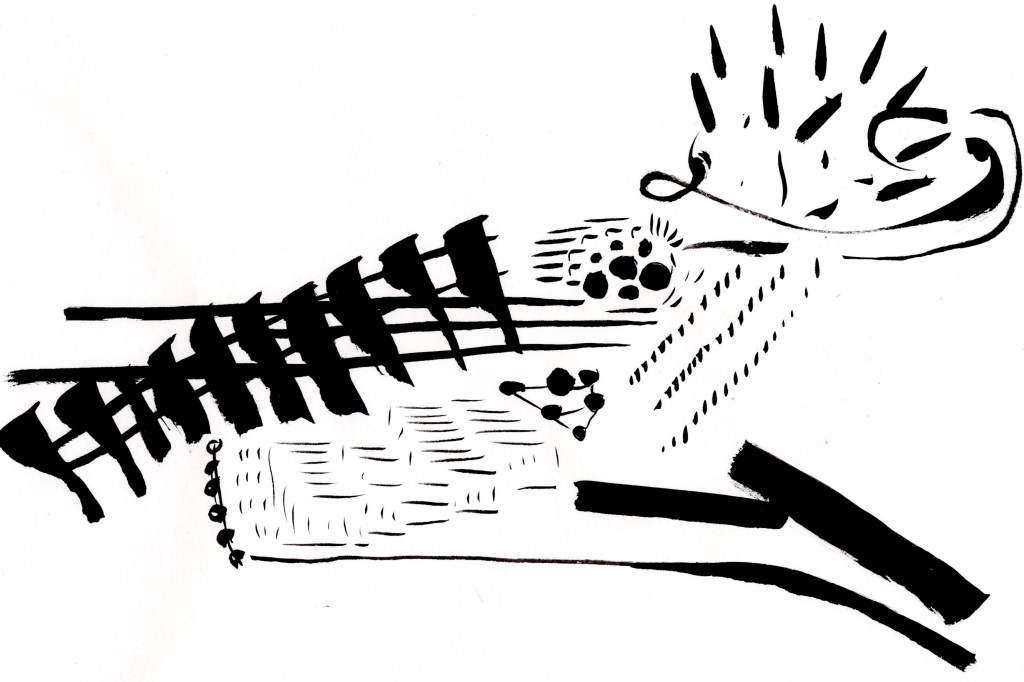
I fancy myself a bit of a writer, a wordsmith. I never had the confidence I do now to write. I was always worried about my grammar and punctuation. More than anything, I was worried about opening up and spilling it all out, letting the floodgates open and setting for a deluge of emotions, feelings, and thoughts that would potentially leave me exposed to criticism or judgment. After diagnosis, I stopped caring. The last thing I would concern myself with was grammar. Next in line, or perhaps going hand in hand with grammar, were the thoughts of others. I was already emotionally raw on so many other levels; I might as well leave it all wide open.
Today I met with my oncologist, and, as I expected, it was decided to “keep an eye” on things. The recent MRI showed hemosiderin deposition in the brain, which isn’t as bad as it sounds. These deposits transpire after bleeding has happened, which can occur after any traumatic injury to the brain. The bleeding leaves behind stains and, in time, is broken down by the body and left behind as iron deposits. This is my basic understanding. There is some question as to whether or not this could be residual neoplasm, leftover cancer cells. This raised the question in my mind as to whether or not this is why my tumor markers are rising ever so slightly. But, as stated, we’re just going to keep an eye on it.
keep an eye on it. keep an eye on it. keep an eye on it. keep an eye on it. keep an eye on it. keep an eye on it. keep an eye on it. keep an eye on it. keep an eye on it. keep an eye on it. keep an eye on it.
This is when the longing to be a wordsmith falls away.
The old and young. Young and old. What a madhouse here. No rhyme or reason at the cancer clinic. I sometimes want to ask, in a clandestine whisper, ‘Hey you, ya you! whatcha in for?’ ’cause that’s what it’s like. I’ve never been in jail, but I can imagine what it is. I’ve been in a different kind of prison for four years, or has it been longer? I can’t remember. That’s the problem with these days that blend into months and then merge into years; they all look and feel the same. It’s worse in treatment. It’s always worse in treatment. Even today, a beautiful day, and I swear it was May, yet I wrote March 24 on my intake paperwork. “So, doc, ain’t I done good?” I ask as he studies my file and randomly looks up at me. “I’ve been good, I swear! I’m free to go, right?” I want something. I am seeking something; everyone is seeking something in treatment or after treatment. Craving the words, “You’re good!” Oh yes, they call us survivors; what a strange name. I’ll know what this something is, what it’ll be once I get my claws sunk into it. “Well, why don’t we keep an eye on it.”
I schedule a follow-up, bloodwork and scans for a later date. But it wasn’t me. I planned them for my body to be aware of my physical being and its course. But emotionally and psychologically, cancer is no longer.
To be clear, emotionally and psychologically, cancer no longer has me.
Follow-up scheduled: COMPLY (Y/N) Y
Current objective: to be and enjoy being? COMPLY (Y/N) Y
Worrying Overridden: COMPLY (Y/N) Y
Outer Stability Seeking: COMPLY (Y/N) N
Inner Stability Seeking: COMPLY (Y/N) Y
(Physical) Cancer Status: Tracking/Monitoring
(Emotional/psychological) Cancer Status: NED (No Evidence of Disease)
My 1st MRI
My first brain MRI was in Chicago after being rushed to the ER. I woke from a seizure stuck inside a device that hummed and rattled with a disembodied voice telling me not to move. As I recall, it wasn’t a pleasant voice. However, in defense of the tech overseeing the procedure, I struggled to free myself. In my defense, however, who the fuck wouldn’t? I was reentering the world from a seizure; I didn’t know who I was or where or, for that matter, what I was. I was there, semi-conscious, with my head stuck inside an unknown object that seemed to be pulsating. “Jeremiah, don’t move! If you do, we’ll have to start the procedure again!” So, I stopped moving; instead, I just cried.

What I remember, even more than the terrifying sounds, the somewhat annoyed tech, and the tears, was my thirst. My god, the craving for water was so intense. My tongue was leather-like in my mouth. When thirst surpasses fear, a new level of a primordial being emerges. That is the creature that remained on that MRI/scan bed, the being who rested motionless and withdrew inward. I do not know any other word to describe the sensation better, but “withdraw” is most suitable. It was as though Jeremiah split into two halves, the person being tested/scanned and the one full of desperation. In between these was where I ended up and withdrew, holing up in a chasm. I remember resting my hands by my side as if I were a windup toy that had just ended its cycle. I’ve always wondered what the MRI tech thought. Did they see me slip into that place, that point between two worlds, the chasm I mentioned?
The “scanxiety” is everpresent; how could it not be? However, I understand that my genuine fear is detaching. I am concerned about stopping as I did before within that gap between the two halves amidst those two worlds. The horror of a potential recurrence is no longer as intense as it was, even with the tumor markers that are trending upwards ever-so-slightly. If it ever does return, I’ll deal with it. I dealt with it when initially diagnosed and again with the recurrence. After numerous hypnosis sessions, it is evident that my worry of withdrawing, psychologically and emotionally disengaging, far surpasses my concern of a recurrence.
As I have discovered, and most already know, cancer can be managed and treated in numerous ways. The withdrawing, the derealization I speak of, isn’t controlled or cured in such a targeted manner. I feel more detached with each MRI. Amid each procedure, the tech, be it for an MRI, CT, etc., needn’t tell me to “stop moving!” as I keep finding my way back to that middle ground, to the chasm.
Patience (the ancient tree)
I have dreamt dozens of times that cancer has returned. Not testicular cancer, not necessarily, just cancer in general.
The other night, I awoke, and, having fallen asleep on my arm, it was numb from the shoulder down. This, too, has happened numerous times, but I am always so shocked and horrified that I sit straight up in bed each time, flop my numb arm over my lap, and await as it comes back, as it awakes as well. I hold my breath. In the middle of the night, I sit in the dark, cradling my arm and waiting. When I feel the gentle tingling sensation return, the soft pins, and needles that signify it has awoken, I lie back, relieved. It is then, and only then, that I realize (the) cancer hasn’t returned. Another lesion hasn’t formed in my brain. I don’t need brain surgery.
Incidents such as this are not uncommon. This is but one example…
This fear lurks; I feel as though sometimes it is stalking me. Other times I know that, at this moment, I am cancer-free, it is out of my system and a thing of the past. I am torn between these two worlds of quaking fear and joyful bliss.
I recently had a conversation about this very feeling, about how I feel that I am often shadowed by cancer, that it is pursuing me. I was unaware of its presence upon initial diagnosis. When struck by the recurrence, I was completely oblivious as with the first time. So much so that when my oncologist told me it had returned, I was in denial. Naturally, anyone would be dismissed, as this is the last thing one wants to hear after being treated once. When I was informed, I felt 100%; my body felt so strong and healthy. I wouldn’t believe it – I couldn’t accept that it had returned. Regardless, it had, and both times it snuck up on me and pounced. I blinked, and it was upon me; claws sunk deep, and I was helpless.
I suppose this is just something that lingers. How long is uncertain. Perhaps it will always shadow me. I hope it will do so in such a way that it is not hunting me, or for that matter, haunting me, but a reminder of what has come to pass.
Patience! I need more patience with myself as I move along this path.
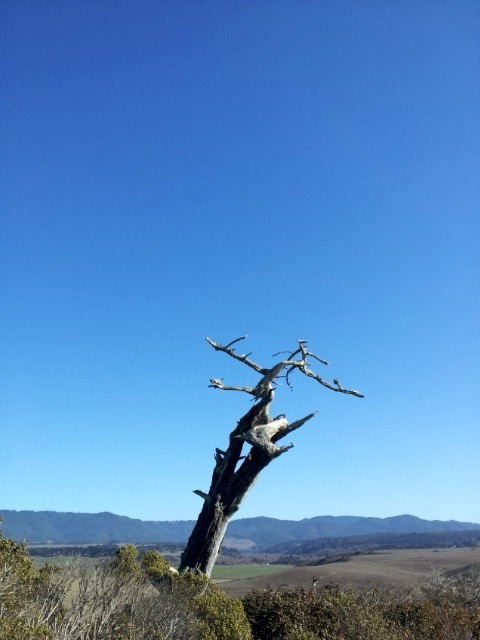
i cannot tell
which is more patient
the tree
like gnarled old fingers
sun-beached and
long since passed
or the days and nights
which move around it
we witness the blue sky
so rich and clear
and mistake our need
we forget tolerance
we say
“get out of the way
you old tree
I want to see the blue sky”
but the tree
is the gentle one
by day
it marks the earth
with the movement
of the sun
across the sky
not rushing it
letting it be
moment by moment
and at night
it stands
almost sentry-like
keeping watch
waiting
it never says
“you are gray today
bring back
your blue sky”
if it is unable
to mark the earth
as a sundial would
it just waits
gnarled and old
like it was yesterday
as it will be tomorrow
Perhaps this is survivor’s guilt.
Our situations were identical in almost every way.
He was diagnosed with testicular cancer. His staging was the same as mine. He, too, experienced a recurrence that presented as a brain lesion and opted for a stem cell transplant.
This is where our paths split apart. Shortly after his high-dose chemo treatment commenced, prepping his body for the transplant, he became increasingly confused and disoriented. After sets of scans were performed, it became evident that, though the heavy rounds of treatment were well underway, several more lesions had presented themselves in his brain. The decision was made to stop treatment and return home, enter hospice care, and be around loved ones. Shortly after he decision was made, he passed away.
Even in writing this, I don’t know where to begin opening up my emotional state regarding his journey and mine and where they veered off and split from one another. I shudder thinking about the fact that my lesions could have multiplied, too. Or, for that matter, the one that did present itself could have been in such an area that it was deemed inoperable, leaving me with more complications than just a stroke and a paralyzed arm. (“Just a stroke…”) What damage could my tumor have caused had it been slightly to the left, to the right, etc? Was I naive to postpone my 2nd round of salvage chemo and head out to visit Dr. Einhorn in Indianapolis to get a second opinion? Was this delay dangerous in such a way that… it’s too much to think about.
These questions haunt me. They wake me in the middle of the night. Even more so is one I can’t escape asking repeatedly: why am I here and he isn’t? Why am I alive and he … and he isn’t?
I never understood survivors’ guilt. I had heard about it but never truly understood it. Yes, on a larger scale, anyone who survives cancer thinks about all those who haven’t and, in one way or another, has that feeling. In most cases, guilt might be too harsh, but this particular scenario is apt.
I loop my posts back around. With my last sentences or so, I always seek to return to the overall idea. Is this good writing? I’m not sure. I do so to keep everyone along the way. My writing tends to drift a little far out, so bringing things full circle will hopefully lead people to say, “Oh, now I understand why he wrote…” However, with this post and the subject matter herein, I can’t. How do I bring this back around? What closing line or thought can I inject here? Nothing can sum this up or deliver on one’s need for coherency as none of this makes sense…
Perhaps this is survivor’s guilt. Maybe it isn’t so much about feeling remorse for those who have passed at the hand of this insidious disease, but rather the inability to make sense of it, to articulate it to ourselves and others. As with this post, I want to bring it back around so it feels wholly desperate and there is some understanding to accept the madness of this life and the injustices that rear their heads. But I can’t. Everything is left hanging, nothing but loose ends, dangling strands that I keep tugging at…
Be well on your journey, Alex
June 13, 1994 ~ June 30, 2020 (age 26)
3rd anniversary of my stem cell transplant

This summer will mark the 3rd anniversary of my stem cell transplant! It is hard to believe that so much time has passed since that long and very trying span of time, from June to August of 2017. So much has come to pass; so much growth on a personal level, so much understanding and acceptance, so much physical and emotional healing.
Even if I look back to just half a year ago I am left scratching my head asking, ‘who was that?’ I suppose this is normal, but I am hyper-vigilant of the passage of time, as I’m sure every cancer survivor is. It isn’t so much that I’m counting every second and rejoicing at every tiny gulp of fresh air I am graced with. No, it isn’t like that. Naturally, I am very lucky. However, I feel graced with, if that’s still the most suitable term I want to use here, with the awareness and shifts within myself. Call it “soul” or “spirit”… whatever word you’d like, I won’t label it so as not to taint one’s vision of how I’m perceiving this “inner” part.
Several months ago, I was experiencing a nervous breakdown and was admitted to a hospital in France. Really, who was that? I needed that, of course. I needed to bottom out. My body was already working on slowly repairing itself, but I hadn’t yet allowed myself to crash on an emotional and psychological level. My inability to hold on slipped and I did… I crashed hard – very hard. As difficult as it might have been, this was when the shifts began to occur.
3 years ago, I was watching fireworks from Massachusetts General Hospital’s cancer ward. I tried to sweet-talk one of the nurses into getting me a beer so I could, like a lot of my fellow Americans, sit and sip a beer while watching the display, all the while exclaiming, “Ohh!” and “Wow!” She said no and gave me another anti-nausea med and an ice cream. The fireworks didn’t live up to their hype. I heard good things; a lovely display of colorful explosions seen from the 10th floor of a building overlooking the Charles River. It sounded amazing. Though various buildings obstructed our view, we couldn’t see The Charles. There were perhaps ½ a dozen patients and nurses. It was an interesting and also eerie sight, all of us in masks and gowns; the patients seemed quiet, in that middle ground of toxicity-induced psychedelia and being fully present. I shouldn’t generalize, but I often found myself in this state, always ready for what I am unsure. All of us were tethered to our IV poles, which pumped an alarming amount of chemo agents into each of our bodies or flooded us with other various fluids. The nurses talked amongst themselves, texting and doing things normal people do. I don’t remember the grand finale. The other patients and I left the room with the promised vista of fireworks overlooking the Charles, wheeling their IV poles alongside us. I heard the muffled explosions from my sealed-off room, just a gentle murmur that was barely audible underneath the continuous hum of the air filtration system.
Every 4th of July I remember this. I remember that room on the 10th floor of Mass General’s cancer ward and the patients wheeling about IV poles, hoping to see a clear view of fireworks but, in the end, not really caring. Or maybe I cared in that way cancer patients care about things that, though they would be nice, weren’t of the highest priority at the moment. Or perhaps, like me, we all wanted to enjoy the goddamn fireworks while drinking some shitty beers and be normal, feel normal… whatever that was at the time. But alas, we all returned to our rooms to resume our treatment or our sleepless nights of nausea and delirium, or the darkness-induced existential terrors, fears, and tears, to everything (everything!) else that takes precedence over fireworks.
I don’t look back on it now, every summer, every 4th of July, and feel a sort of unease or anger, etc. I feel this reaction with other things, naturally. Other dates are inescapable; those, too, have lost their bite. The day after Mother’s Day 2017, I had a stroke, which paralyzed my left arm, postponed my transplant, and sent me to the hospital for brain surgery. I watched the solstice sun (image attached) lazily creep across the sky from my room at Mass General.
These are there and solidified in my personal journey and my personal history. They’re not so much pitfalls anymore in the yearly cycle, so much as pitstops that allow me to recess my place within all this and the growth within myself.
 healing is a circular path