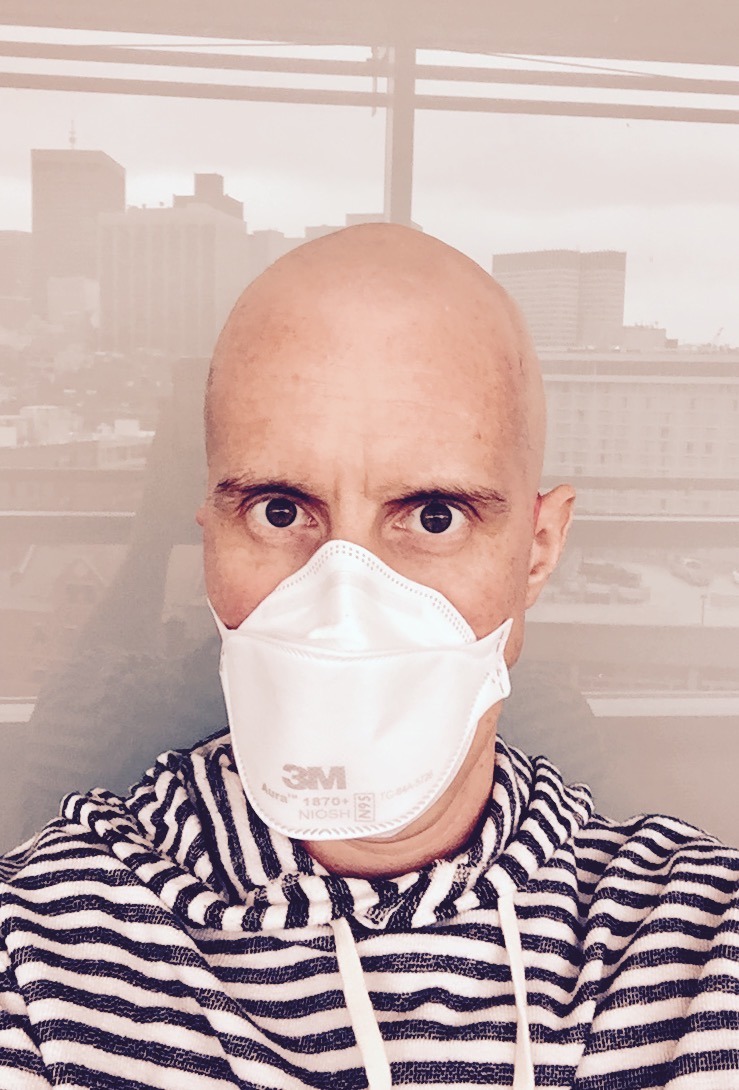
I had a follow-up meeting with my oncologist at Mass General yesterday. Labs were drawn, and blood work shows that things continue to climb upward. I still need to be careful, refrain from going into public places, and wear a mask. I am (just today, July 14, 2017) one week post-release from inpatient care, so it makes sense.
Things were trending upward, so the oncologist was happy. They think I’ll be admitted for round II in the first week of August. They want to see me again in two weeks, and the blood work then will give them a better sense of where I’m at. As for now, I’m under strict orders to rest and get ready. We spoke briefly about the regimen used in the next round. It isn’t set in stone, but one thing they’re confident about is utilizing an agent with a solid/proven track record of good CNS (blood/brain barrier) penetration. Having already had two mets in that area, they want to ensure that whatever regimen is used can access this region. The options are pretty horrific in terms of toxicity. I left the meeting a little frightened about round II as I was guaranteed to feel this round more intensely than the first. Which, according to the oncologist, I “breezed” through.
Where and how do I begin explaining high-dose chemotherapy with (tandem) stem cell transplants? I have been considering how I should go about describing the process. However, I wasn’t even sure I understood it correctly.
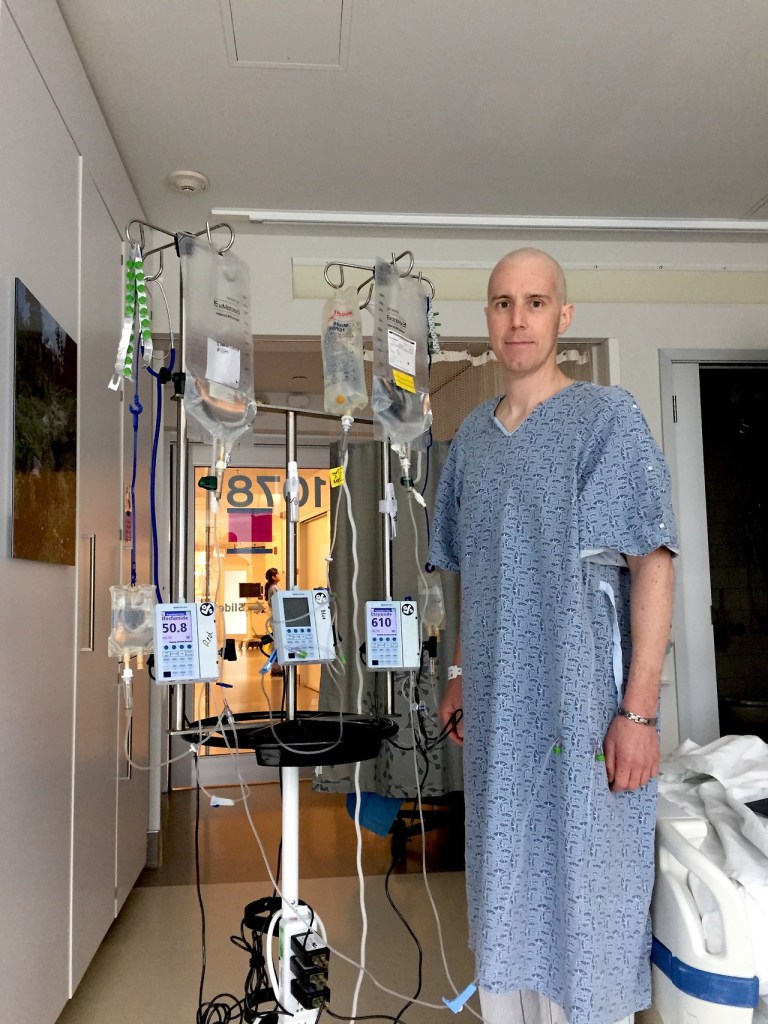
In my case, and this might be the same for other patients, I am not sure, but upon admittance, the clock starts at “day -5” (day negative 5). so “day 0” is when I return my stem cells. Days -5 — 0 are, as you might have guessed, chemo days. By this, I don’t mean normal outpatient days that, in my case, lasted several hours, depending on the regimen. No, I am talking about round-the-clock infusions, IV bags of chemotherapy drugs that run for 24 hours and then are switched out for new bags that run the same length for days and days. The intention, with such long days filled with heavy-duty chemo, is to destroy the current stem cells/marrow & annihilate the existing cancer and then replenish my system with untouched (by high dose chemo) stem cells from which my body will reconstruct itself literally from the ground up.
Along with the continuous stream of chemo, I have also been receiving liters upon liters of fluids. This is to prevent any damage to the liver, kidney & bladder. However, it is often uncomfortable, and, according to the nurse, I am currently retaining 8lbs/3.6kg of excess liquid. Needless to say, I feel uncomfortably bloated.
Between days -2 and 0, I will just be receiving mesna, a chemo protectant, and more fluids to continue to flush my filter organs.
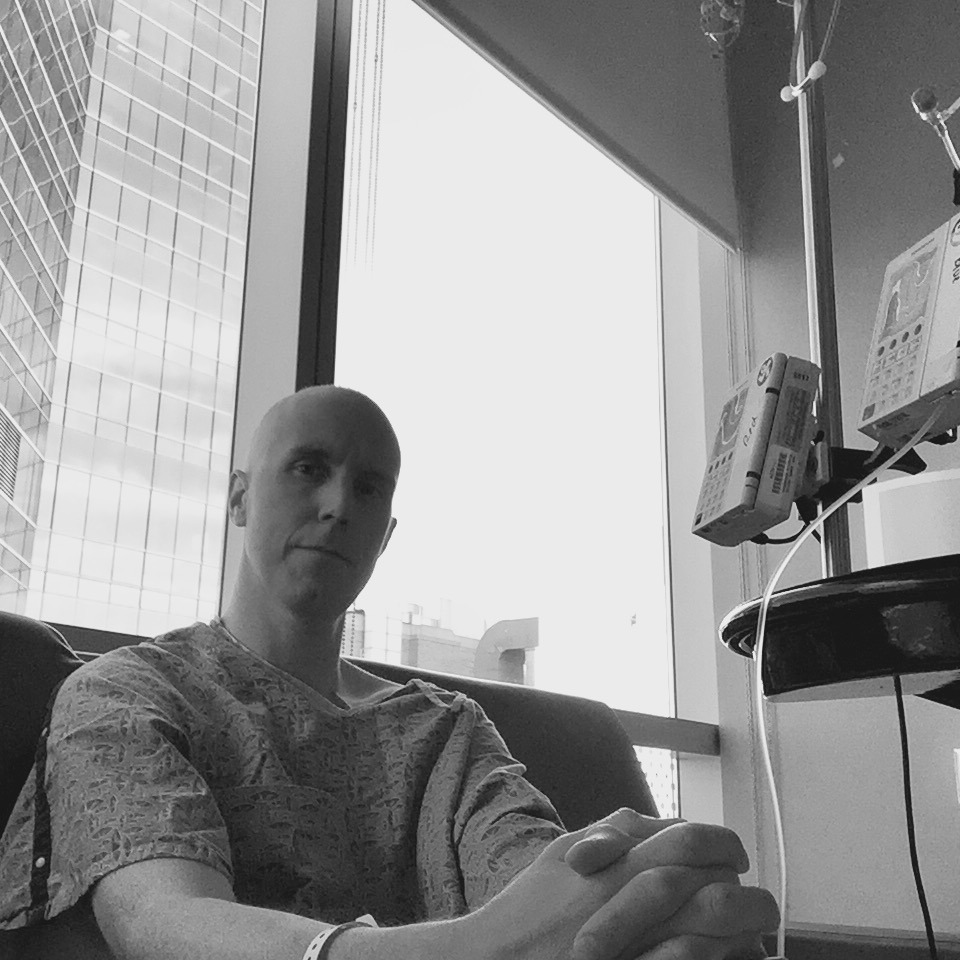
Tomorrow, August 4, 2017, I will return to Mass General Hospital for the second stem cell transplant. I am not ready; I want more time to rest and eat good (nonhospital) food to be “normal.” I don’t want to be inside for 2+ weeks, confined to a hospital floor, gazing longingly out of the windows, trying to imagine what the day feels like from a room that is kept at a constant temperature. In the back of my mind is the repetitive voice of reason explaining how this is needed and how “it’ll be over soon!” etc.
My beard is starting to grow again; it is darker and thicker in some areas and others, just thin indications of hair, translucent almost. Once more, I am surprised at how fast cellular regeneration occurs within the body and, as before, how willing it (the body) is to keep going and growing despite the near-constant bombardment of chemicals. I feel bad that, from tomorrow onward, my body will be fed these toxic chemicals and again will shed the newly grown hairs as the (chemo) agents destroy cells — both good and bad — all cells.
Again, the voice tells me it is for the best, this is about healing, “you’ll be well soon,”… etc.
When I was just a small child, I played in the woods near our house. For some reason, I consumed some berries growing wildly in the forest. As innocent as a child is, I just thought they were harmless and would taste yummy. When my mother heard it, she immediately called the doctor, who had the pharmacist deliver (yes, they delivered!) ipecac syrup. This is used to induce vomiting and administered if something potentially poisonous is ingested. Since my mother didn’t know what type of berries I had feasted upon, she assumed the worst. Naturally, she felt horrible when I vomited up what I could barely remember as a colorful, Pollock-like splatter of colorful berries (amongst other things recently consumed). I now feel the way my mother must have when she was trying to explain to me why I would feel poorly – and that it was for my safety – and that she was sorry – and that she loved me.
At night, or when first waking, I scan my body mentally from head to toe and envision myself embracing my own body as I explain why this must be endured – and that I’m sorry – and that I love it.
I spent the last five days in the hospital. During this time, I was receiving a continuous flow of IV antibiotics in an attempt to nip whatever was lurking in the bud to stay on track with an MGH/stem cell transplant. This didn’t go as planned when the fever spiked, and I missed the stem cell collection scheduled for Wednesday.
That afternoon (on Wednesday), while still hospitalized in Maine, the oncologist whose care I’m currently in at MGH called me. At this point, it seemed apparent that my fever was a result of neutropenia as well as from the filgrastim injections ( http://www.neupogenhcp.com/).
The blood drawn for cultures hadn’t, after 48 hours, indicated a blood-borne infection. The oncologist at MGH was convincing & practically demanded that I get discharged, drive down to Boston that afternoon/evening, and make the 07:00 Stem cell collection already on the books for the following day (Thursday, June 8). to me, this sounded reckless. I didn’t want to be in the hospital longer than needed, but I also was fearful of the big, germ-filled world waiting to sneeze on me and send me back to the ER. I feared that, should this happen, should my fever spike force me to the hospital for another 5 days or more, this would further delay the actual transplant. (something that has been postponed already due to cancer-related issues!) his fear was a different side of postponement & delay – that the small window of opportunity after the nadir (which refers to the lowest point that an individual’s blood cell count
will reach as a side effect of chemotherapy) & the peak reached as a result of the injections, would close on us. He was worried that if I didn’t make it Thursday to collect and thus left only Friday, we were taking a massive gamble as most people need at least two days to collect all the stem cells they will need for a transplant. If I were to wait until Friday and NOT gather all the cells, we’d have to finish on Monday and hope the injections were still assisting in generating the needed stem cells. It’s not only the shots that assist in this generation of cells! The whole reason for undergoing the monstrous round of chemo/etoposide was to send the body (after nadir) into white blood cell count overdrive! Add daily shots to the mix to assist this, and boom – massive (daily, maybe hourly?) jumps in cell counts.
So what did I do? I got discharged (June 7) and made the trip to Boston.
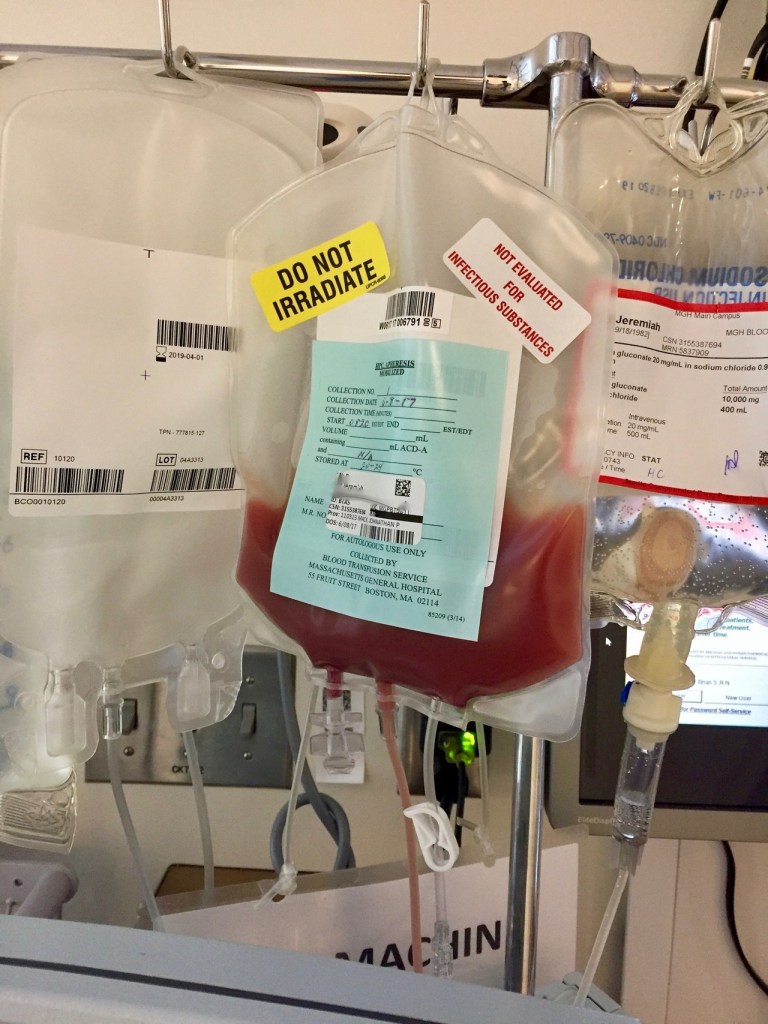
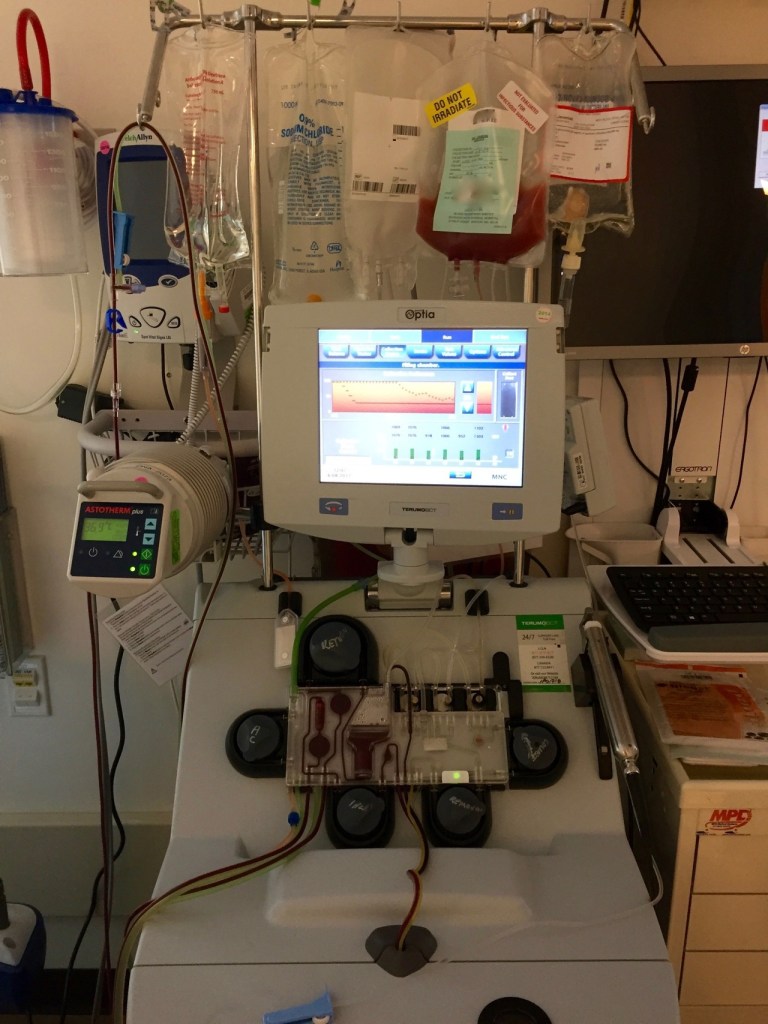
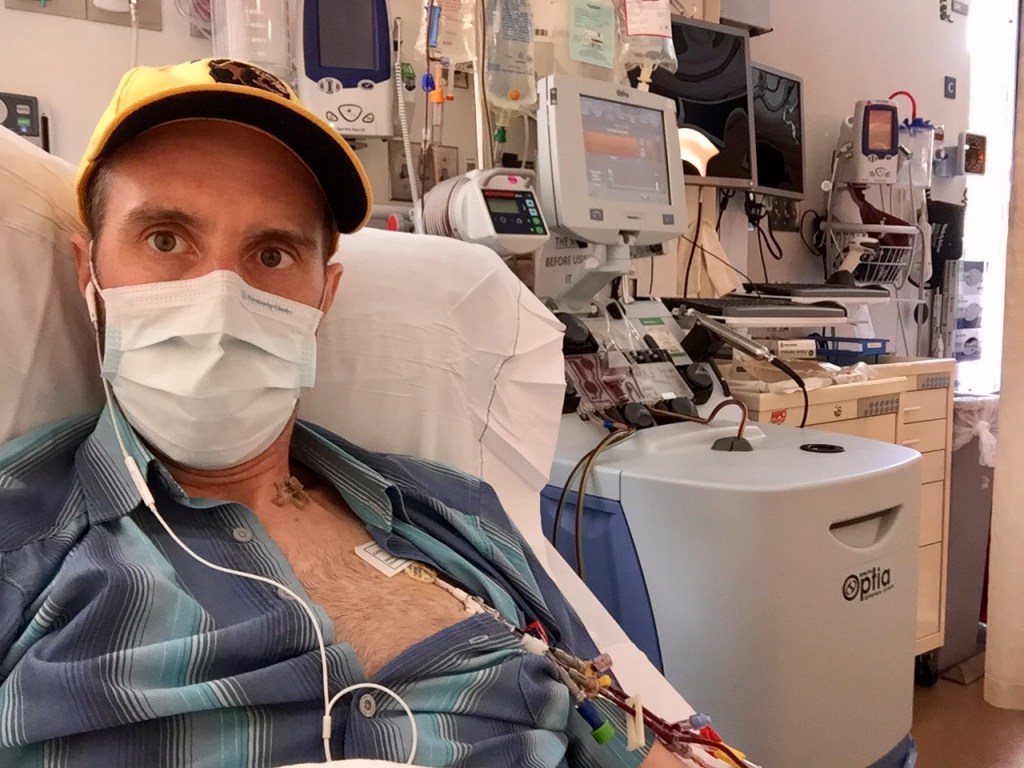
Today, June 8 (2017), at 07:00, I walked over to Mass General Hospital for collection. The process took several hours. My triple lumen pheresis catheter (seen in photos, the line coming out of my chest) worked perfectly!
When I was finally free, I took a much-needed stroll around the area to get fresh air and sunlight. I was awaiting a call from the nurse practitioner to tell me whether or not the collection was successful or if I needed to return the next day to finish up.
The plan worked, and, though one day off schedule, they gathered all the cells needed in one session.
This post contains images that some viewers might find disturbing.
Had things not changed, had everything stayed on course, I would have begun my first of two stem cell transplants today at Mass General Hospital (MGH). it is hard to believe it was over a week ago today I was rushed to the ER. Today, I clearly understand what is happening. At the time, however, I was in tears to the paramedics while en route trying to explain my health history in one long-winded sentence, as well as explain that currently, I couldn’t move my left arm.
… why am I still so surprised how fast things can & do change?
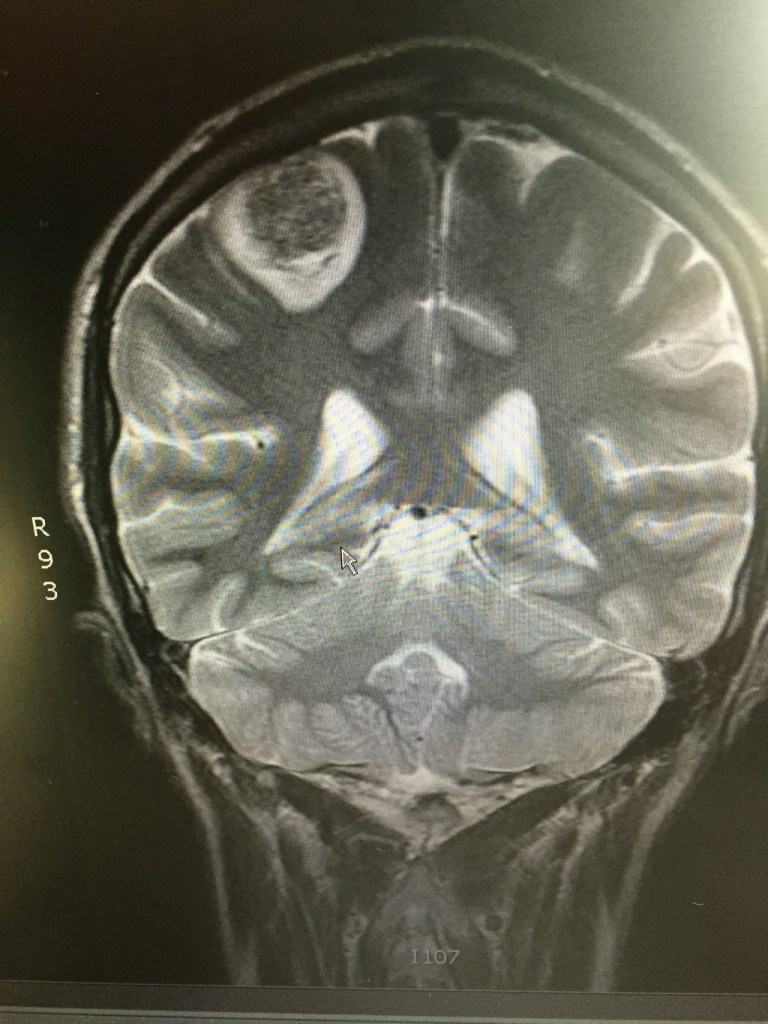
When I first met the neurosurgeon, he was optimistic that the 3.2cm lesion in my brain was merely causing swelling, pressing against a supplementary motor cortex (voluntary movement HQ). He was optimistic. However, his tone changed after steroids, administered to help decrease swelling when the lesion was discovered, didn’t assist in bringing back the slightest movement in my fingers or arm. I can hoist the weight of my arm using my shoulder, but there is no grip or dexterity in my fingers, hand, wrist, etc. & bending it at the elbow isn’t entirely possible on my own/without extra guidance from my right arm. It is the strangest thing to be looking at my fingers and telling them, asking them, and pleading with them to move, but they don’t. I still have sensations and can detect touch, warm/cool temps, etc. This is where the hope will reside for recovery of mobility & use.
Rather than just swelling from the lesion causing pressure, the surgeon feels part of the lesion (part of it) was pushing against one of the primary motor cortex bands that run along this particular section of the brain. I am still trying to wrap my head around this… but it explains the extremity’s continued immobility.
Future stem cell transplant steps are being postponed for a few weeks.
Naturally, there is a lot of healing to do in the meantime, and any immune-compromising regimen can’t be undertaken until later in the month. Even then, they may want to opt for radiation therapy, similar to what was used to address the first brain met, before moving forward with the stem cell transplant.
This physical limitation is proving more challenging to deal with than all the chemo hangovers thus far experienced.
I should know this by now, but I don’t’; things change very quickly– alarmingly so.
The other day, I noticed that typing with my left hand was challenging. It wasn’t easy to access specific keys. Later that day, when attempting to play guitar, I again noticed that the fluidity with which I usually fingered the chords (using my left hand) wasn’t present.
The following day, while driving back from an appointment, I lost complete mobility in my left arm. Unsure if this was a seizure, a stroke…, or a clotting issue, my sister took me to the ER. As most of my ER stories go, they did several tests, the first of which, after vitals, was a head CT scan. What they discovered explained the loss of mobility/motor function in my left arm – a 3.2cm lesion on the back rear (right) lobe in and around the parietal and occipital lobe. (this is what I’m piecing together from the various doctors I’ve met. still trying to grasp the facts.) My MRI on Jan 30 showed no sign of this (what is assumed to be) metastatic spread. Unlike the other brain lesion that was dealt with using solely stereotactic radiosurgery (SRS) in early October (2016), this one will initially be surgically resectioned, and then SRS will be used. The main reason for that is its size.
This will most likely push back the stem cell transplant a few weeks or so, considering the healing time and then the radiation therapy afterward. That & this new and particularly aggressive/fast-growing brain met seem most urgent.
The surgical resection is scheduled for tomorrow, Apr 30, 2017.
To me, a stem cell transplant is still a mystery. I understand it theoretically, but it still seems like some sorcery. When I spoke briefly via phone with the doctor in charge of bone marrow/stem cell transplants at Mass General Hospital (MGH) before my appointment (April 20), it sounded like he wanted me to start the procedure the following day. There was this sense of urgency. I was, and am, ready. I needed the time (since being told of the recurrence) to accept and come to terms with it and thus prepare myself (on every level) for the next steps. Being “ready” on a purely medical level is accepting what is and the facts. Being “ready” on every other level only acknowledges the work and tasks ahead.
When initially diagnosed, I didn’t have time to think about everything, seek out other opinions, or talk to survivors and current patients in treatment. It was a seizure, hospitalization, surgery, and treatment. I understand that some of me was in denial when informed of the recurrence. Naturally. I also knew, from the crash courses I had given myself in oncology & cancer treatment (etc.), that, this time, I did have some time. As aggressive as my cancer may be, I knew I owed it to myself (and my body/mind!) to seek advice. Since all signs keep pointing back to this route, that of high-dose chemo with tandem stem cell transplants, I feel a sense of readiness. Also, and most importantly, I needed the time from my meeting with my oncologist (February 2) until I met with Dr. Einhorn (April 5) to not only research and explore but also cry, scream, and walk in circles in the woods (literally) to grasp it. In doing so, I unblocked and addressed some of which I didn’t have time to deal with initially when I was first diagnosed. Looking back, I am thankful for this time. Not only did I get to explore and look into the vast world of alternative therapies (clinical trials, studies, etc.). But I also had the pleasure of meeting (by phone, e-mail, or in person) some beautiful folks. On top of this, and perhaps most importantly, I got a better look at some of the emotions I “didn’t have time” to address before.
Anyways… those next steps, the preparatory stages, are even more complex than the (stem cell transplant) procedure itself, or so it seems. I suppose this makes sense, being that the very nature of a stem cell transplant (2 transplants in all) is so involved and brutal on the body that there needs to be adequate preparation. It’s not just relatively basic and seemingly simple stuff, like having my dentist sign off stating that any routine work has been done in their professional opinion is that my teeth are fine and ready, etc. It’s more timing and lining everything up so that it all is methodically prepped and in place that, like clockwork, it follows a pre-determined, pre-planned, pre-mediated schedule with such exactitude. I’ll break it down by posting updates as things move along.
Right now, the plan is to receive a single infusion of Etoposide on May
5th. Etoposide is a chemotherapy drug. I received it in various regimens during my initial treatment. The idea behind a single, stand-alone dose is to push the body into generating white blood cells to initiate a sort of overdrive in production. This is the body’s natural response under normal conditions while undergoing conventional chemo. Even though etoposide has cancer treatment and maintenance “benefits,” we’re using it to jump-start white blood cell production. After a two-day pause, just after the etoposide has flushed from my system and right when my body is in white blood) cell production, I will start giving myself daily white blood cell booster injections. I had these before; however, this was after the week of cisplatin-based therapy when my white blood cell was deficient & dangerously so. After 10 days of forcing my marrow into overdrive production, I’ll go in for harvesting.
Before high-dose chemo, which destroys my marrow, harvesting is done so there are adequate platelets to replenish that which is killed off by the high dose of chemotherapy.
Currently, all of these procedures will be done at MGH. I won’t be inpatient until I start high-dose chemo, as this will require a sterile, germ-proof environment.
I’m off to see the wizard, the wonderful wizard of… Indianapolis?
When I was first diagnosed with testicular cancer, I had heard very little about it. Like many, I knew of Dr. E in connection with Lance Armstrong. Even when I told people, the most common response was, “Oh yeah, didn’t Lance Armstrong have that?” Yes, he did. However, had he been diagnosed a few decades prior, the outcome of his battle with testicular cancer might not have been as positive as we all know.
After my diagnosis, I read everything I could about testicular cancer:
From survivor stories to medical journals to crazy, borderline conspiracy theories on why it (cancer in general) exists. I wanted to know – I needed to know. That is my nature, and, admittedly, my curiosity is sometimes to my detriment… it is, at the end of the day, who I am.
Regardless of where my search led, one name kept appearing: Dr. Lawrence Einhorn. Why? Because he changed the game – no, seriously! Before Dr. Einhorn, a testicular cancer diagnosis was essentially a death sentence. He revolutionized how it was treated, and today, oncologists jokingly reassure patients, “If you had to choose one type of cancer to get, testicular cancer is it!” Yes, it’s a strange thing to say. But testicular cancer boasts such amazingly high cure rates, in large part to Dr. Einhorn.
Many people in various support forums and online communities told me I had to write to “Dr. E.” So I did. On Saturday, I sent him an e-mail. It was brief and to the point, highlighting where I was in my journey and that I needed his advice. See, when I was first diagnosed, I handed over the keys, for lack of a better term, to the oncologist. I was sick, very sick, and I put my faith in my doctor and his team. When I was faced with a recurrence, I started to wonder a lot. That is NOT to say I lost faith in the doctor treating me – certainly not! I respect my oncologist’s opinion and genuine care for me very much.
However, I also started to wonder about his approach to dealing with what was being labeled a “recurrence” of the same cancer/germ cell tumor.
When I wrote to “Dr. E.” I expressed these worries. In a straightforward, almost clinical way, I put forth everything from my initial seizure to the recently discovered growing nodule in my right lung.
About three hours after writing to him, my phone rings. “Yes, this is Lawrence Einhorn. May I speak with Jeremiah Ray, please?”
Two days after our phone conversations, I told my nurse, who has to sign off on my treatment, that I will forego chemo this week (what would have been my 2nd week of “salvage chemo”); I’m gathering every a single bit of medical data about my case I can gather on such short notice, having yet another CT of my chest (per Dr. E.’s request for comparison), and booking tickets to Indianapolis.
What I want is reassurance. I want to know that my steps are the right ones. I don’t want to find a fountain of youth or be promised to live until a ripe old age. More and more so, I believe in the here and now. And, here and now, I want to know that we’re not just shooting in the dark hoping to hit something. Here and now, I want to know that the highly toxic chemicals I’m subjecting my body to are the right ones. I want to make an informed decision about my future.
I want the scale to tip: more answers and fewer questions.
It is hard to imagine that one year ago today, I was hospitalized. It wasn’t a year ago that I was diagnosed, no. It was a year ago that paramedics picked me up after losing consciousness in the middle of the street after having a seizure.
I was supposed to meet a friend in the park to soak up some sun.
A friend with whom, over the past few weeks, I was growing closer and closer. You know, the type of “closer and closer” that makes one all giddy, blissful, daydreamy, etc.?
I can still remember that morning. That’s the blessing and curse of a life-changing event, at least in this case, everything is highlighted, stands out, everything is…
Is remembering my way of righting a wrong? Is it to replay it over and over to understand everything? To replay to capture the tiny nuances of the morning and then filter the following 12 months through them to make sense of everything. By “it,” do I mean cancer?
By “it,” I can’t just refer to the seizure; it’s not so simple. I wish it were so simple.
I have heard of “survivor’s guilt.” Survivors of cancer, for example, feel a sense of guilt because they did survive while others, many others, with the same cancer, staging, treatment, etc., did not. I am not at that place simply because I am in treatment again.
My journey isn’t in that place yet. However, I feel a sense of guilt for being diagnosed, for being sick. This word, “guilt,” even written, doesn’t work. But what other word is there?
“Sorry, this turned out like this…” was what I said in the text I sent from the hospital to the woman I would meet in the park, the one I was getting all heart-eyed and giddy about. What other word is there?
“Jeremiah, do you know where you are? Do you know what year it is?” Those are the questions asked by the paramedics. I could feel the ambulance picking up speed as it transported me to the hospital. I could hear one EMS personnel on the radio describe me.
I remember thinking about his description of me, a total stranger, and finding it fascinating.
“Jeremiah, do you know what year it is?” “No, I’m sorry, I don’t.”
Again, “sorry” isn’t the right word. What other word is there?
In the weeks and months to follow, there was (and is) this underlining “I’m sorry”… even though “sorry” doesn’t describe it, just as “guilt” isn’t entirely accurate either.
This is part of the package. The grab-bag that is life… This feeling exists regardless, right? I place “sorry” on it because I lack the vocabulary to express an emotion I still can’t define.
Doesn’t sorry work when I see the tired and worried look on the faces of those closest to me? When I feel their anger and annoyance and pain… Doesn’t it work when I step from the shower and notice various scars that have yet to pale with time? It works, right, when I see my belly bloated from drugs, yet my arms losing muscular definition acquired from dozens of summers working as a laborer? Isn’t sorry appropriate when I can walk a mere 1/10 of the distance I usually undertake in the woods because my leg muscles shake if I go too far?








 healing is a circular path