
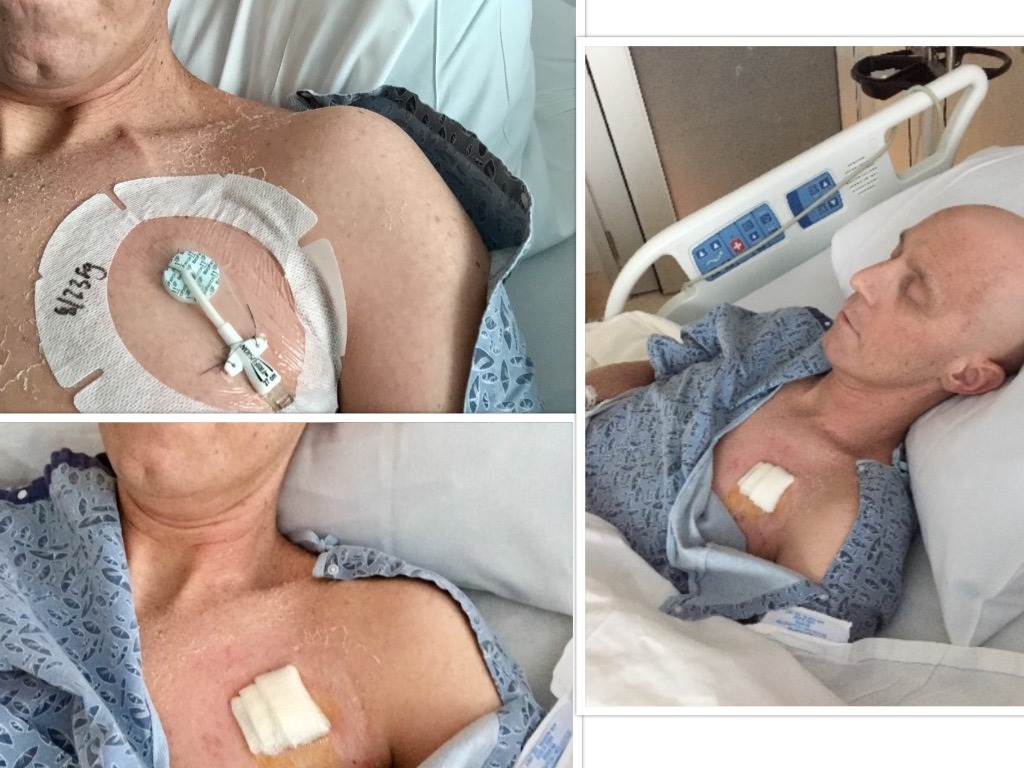
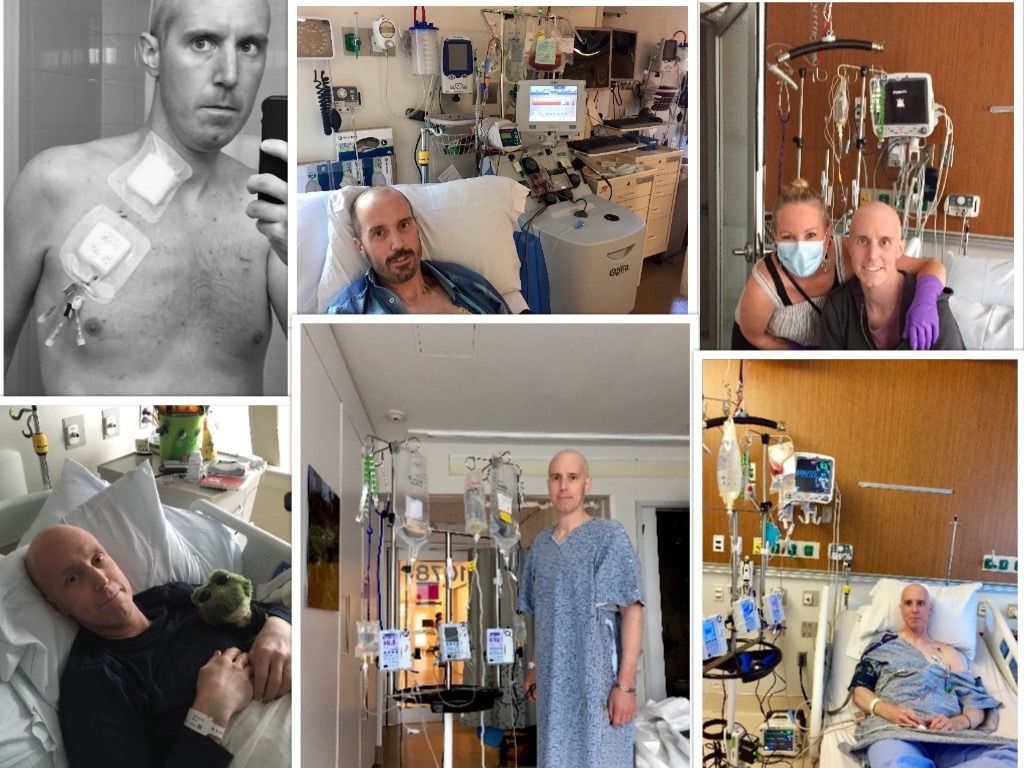
One of my biggest fears now, and since my diagnosis, is having a seizure. Obviously, I don’t want to have one anywhere/anytime, but my fear is that of having a seizure in public.
The vulnerability I feel when in the post-seizure state (“postictal”) is horrific. I don’t know where I am, who I am, who the people are around me, etc. Once, after a particularly intense seizure, both my mother and sister were sitting on my bed. Luckily, I was in bed at the time, so I didn’t hurt myself after losing consciousness. I frightened my sister so much and undoubtedly saddened her as well because, for the longest time, I just stared at her, unable to recall who she was.
A lot of the trauma I am currently working through with the help of my psychologist is the initial seizure. Currently, I can feel a seizure coming on. There are indications I’ve learned to recognize, often referred to as auras; these help me to take precautions so as not to fall and injure myself. In Chicago, when the first seizure occurred, I had no idea what was happening. I simply hit the deck. When I awoke, I could feel a rocking sensation and the hum and vibration of what I had come to understand as an engine. This knowledge didn’t help, as I had no sense of identity.
The paramedics had rummaged through my belongings and found my ID. This helped them understand who I was, but when they said “Mr. Ray,” I was unsure who or what they were referring to. “Mr. Ray, have you been doing drugs?” They asked this question repeatedly. I struggled, as I often do when regaining consciousness, and since they had no idea if I was, in fact, on drugs, they had me strapped down to the ambulance stretcher. Later, when in the ER, I discovered the cuts on my wrists from having struggled so much while in transport to the hospital. Again, they asked, “Mr. Ray, have you been doing drugs today?” I began to cry. “Mr. Ray, do you know what year it is?” I mumbled something, but I was unsure of what year it was. When I began to come around and gain a greater sense of who I was and where I was, I told them I was a graduate student studying in Chicago. I am sure the latter was evident in Chicago, but this helped them understand more. Finally, one of the paramedics said, “Ok, Mr. Ray, we’re going to untie your arms, ok?” Sometime later, well after I was in The ER, one of the paramedics came to see me. I didn’t recognize him, obviously. “Hi. Mr. Ray,” he said. I am sure he had found out, after inquiring about my toxicology report, that the only drug in my system was caffeine.
I currently wear a medical ID. This simply states that I suffer from grand mal seizures. This isn’t enough for me; I want it obvious that my medical condition is such that I was a cancer patient, and one of the ongoing ailments, perhaps an ailment for the remainder of my life, is seizures.
… I purchased the credit card-sized ID badge and a lanyard. As I gain more emotional and psychological confidence and the much-needed physical stamina, I hope to continue my walking routine, an oft-daily event that I greatly miss, which helps me process much of the events that have occurred over the past few years. I want the ID to be so evident that, should I have a seizure when out and about, my medical condition will be event, glaringly so. I have faith in my fellow man/womxn that, in such an event, I will be comforted and cared for until I regain a sense of who I am…
The thought of waking without knowing who I am, or even what I am, haunts me. The fear of being strapped down during this postictal time is even more so. The vulnerability, as mentioned, is so great that this prevents me from my outings — any outings, be they a trip to a cafe, to take in a movie, etc. I don’t want this fear to become so great that I avoid leaving the house. Currently, I can see this is where my fear and the ever-growing feeling of vulnerability are leading me.
The aluminum, bright red ID card, which I’ll wear around my neck on the outside of my clothing, will hopefully let me inch out more and more and break this paralyzing fear encroaching upon my life.


I have had quite a few appointments in the last couple of weeks. I met with my oncologist, and we spoke about the recent MRI. The swelling of the initial lesion in my brain is still stable! As with before, stability is good — excellent! We’ve scheduled another MRI for two months out (mid/late February). With this continued stability, it is unlikely to swell, or continue to swell, more. Though, I am not entirely sure.
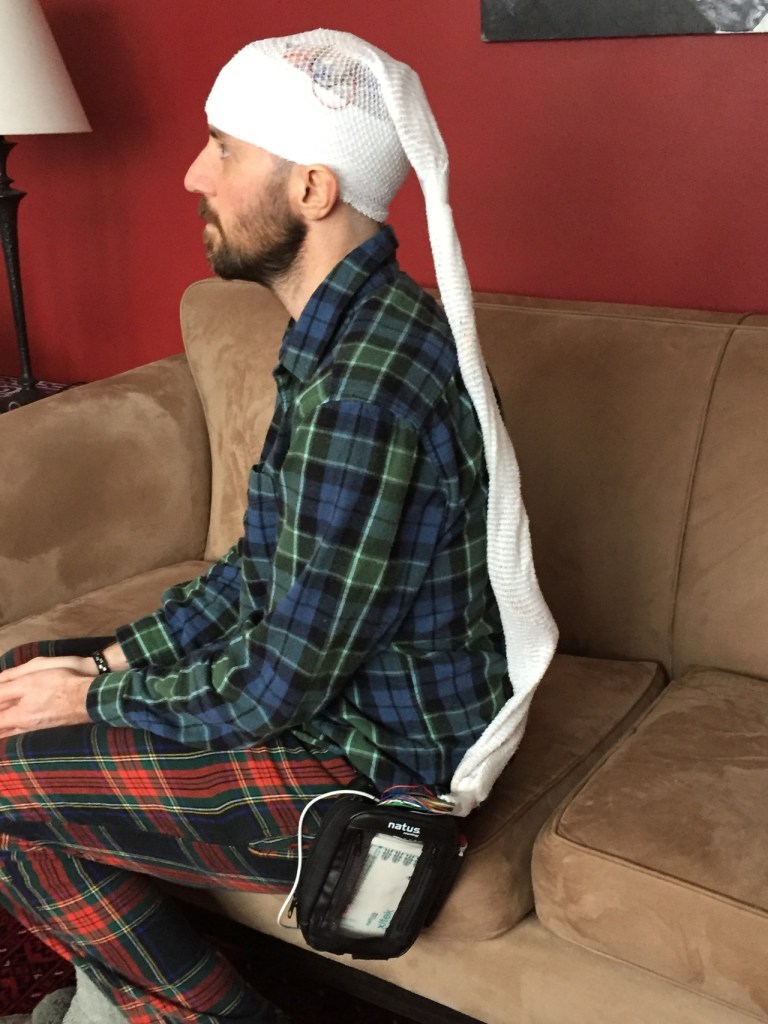
I also had a meeting with my neurologist. This was more revealing than the MRI results. As you recall, I wore the ambulatory EEG for 72 hours. All the diodes on my head were connected to a small box I wore around my waist. If any “strange” sensations or feelings arose, I was to press a tiny button on the side of the box. On the EEG reading, this will simply make a note of a specific time, and then, when the neurologist goes over the entire reading, they can go directly to these points and “see” what sort of brain activity was occurring at these specific times.
I pressed the button a total of 33 times over 72 hours. If, for example, I felt slightly dizzy or even disoriented, I pressed the button. I often have these moments when the world seems very distant, or I seem removed from the world. This is very, very difficult to explain. I have tried to articulate it several times. I have taken a step back and am watching the world — an “out of body” experience. This sensation has been so unnerving in the past that I have gone to the emergency room several times.
I was curious how these moments (the “out of body” sensations) would appear on the EEG reading. I was sure that these were some sort of petit mal seizure activity. According to the epilepsy foundation, petit mal seizures, an older term for “absence seizure”, are a type of seizure that causes a sort of lapse in awareness. “Absence seizures usually affect only a person’s awareness of what is happening at that time, with immediate recovery… The person suddenly stops all activity. It may look like he or she is staring off into space or just has a blank look.” This, more or less, sums up the feelings and sensations wherein I am removed from the world, that “out of body” sensation. When I wore the ambulatory EEG (72 hours), I experienced several of these occurrences.
However, nothing on the EEG reading indicated any abnormal brain activity. For 72 hours, everything appeared as it should. Granted, over these 72 hours, there was no reduction of anticonvulsant medication or any other means that, during an inpatient stay for monitoring, a seizure would be provoked. Nonetheless, during these times of “unnerving” sensations (again, the “out of body” experience), nothing out of the ordinary appeared.
This came as a total shock to me. I explained these strange feelings to my neurologist, as I have done in the past, but he again confirmed the results of the ambulatory EEG reading — a reading reviewed by several doctors.
This being the case, he wants to hold off on the inpatient stay for monitoring. “Let’s leave ‘well enough alone,’ Jeremiah.” Again, I pressed him, trying to find answers. I wanted him to pinpoint the reason behind these sensations and explain what was going on within me in plain and simple terms. “… anxiety, most likely, stress, PTSD… a sort of ‘depersonalization'”. This is also the theory of depersonalization that my psychologist holds.
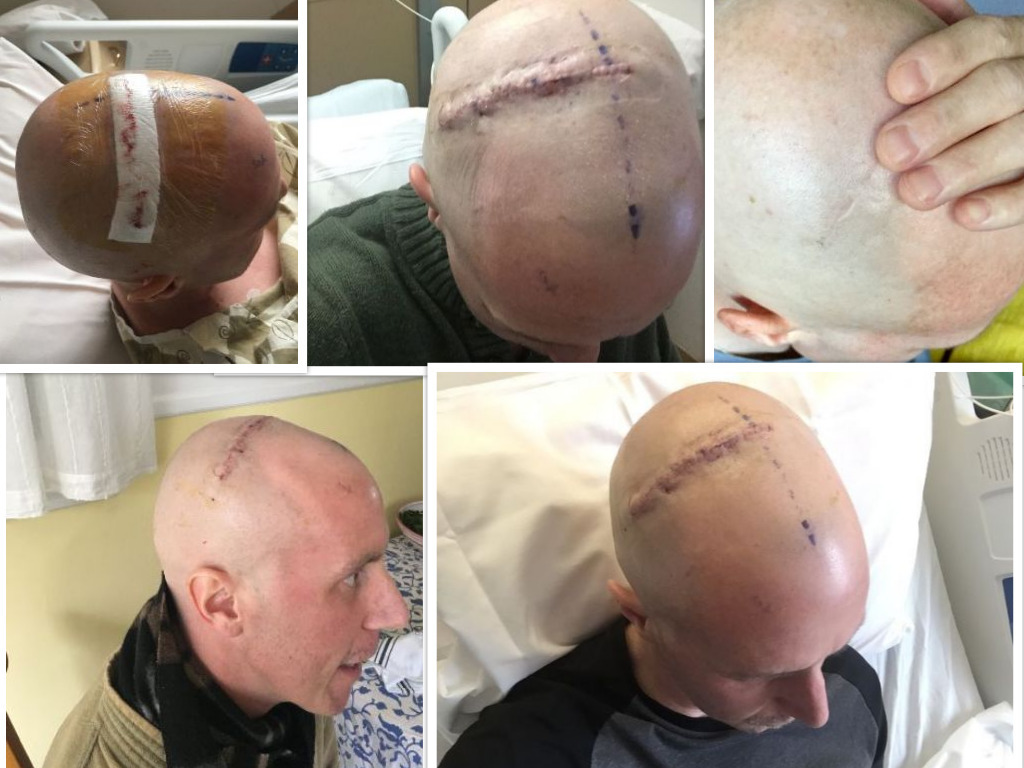
These terms seem so vague. I was expecting to go to my appointment and hear that reading was indicative of these factors; an inpatient stay for monitoring was next in line, and then, after confirmation of particular, definitive activity, brain surgery would follow. My oncologist assured me I didn’t want brain surgery, as does my neurologist. In fact, my neurologist stated rather bluntly that I was to “leave the brain alone!” I insisted that brain surgery wasn’t frightening or an issue as I’ve already had it once. Due to my lack of any formal medical training, my pleas went unheard.
I understand why. Of course, who wants to tamper with the brain — especially this left frontal lobe area where the former lesion is located? When a neurologist and neurosurgeon insist that surgery isn’t an option or an option they are very reluctant to consider, who am I to offer an argument?
It isn’t so much that I want to be seizure-free, though that would be ideal; it is that I want answers. I want to know why; why this and why that. The seizures are just one thing I can fixate on when the larger question is, “Why did any of this happen in the first place?” I want to know why! Why can’t one of these doctors give me a solid answer with all their (western) medical knowledge and years of experience?
I am learning acceptance. I have come a long way in letting go and embracing the unknown over these years. On certain days, today, for example, I can sit with tea in hand and watch the sun slowly migrate across the wall, and there is this peace here.
American theologian Reinhold Niebuhr wrote a sermon concerning this. Though it is best known for its initial/opening lines, it is the second part that, upon rereading it, really strikes a chord with me.
“Living one day at a time,
Enjoying one moment at a time,
Accepting hardship as a pathway to peace…”
I am desperately seeking reasons for this hardship. In doing so, I fear this endless pursuit will overshadow life’s most straightforward, profound, and poetic aspects.
Today, as mentioned, with tea in hand and watching the sun gain its strength each day, I am okay with it — with everything.

After weeks, perhaps months, of trying to decide whether or not to undergo the epilepsy monitoring, I elected to take the needed steps and proceed. Even after registering and meeting the doctor and team of techs I was still ready. Then, however, something shifted and I didn’t feel prepared (emotionally/psychologically) anymore — I even started to wonder if I ever was. Perhaps it was the hospital setting and the rising anxiety that these institutions produce. Or the clinical smell that permeates my unconscious mind, leaving me with a sick feeling in my gut. Or the veggie burger I ate that tasted exactly like the one I would consume at Mass General. Maybe it was the person in the next room who was moaning and crying while amid a seizure and/or experiencing post-seizure horror that caused a terrifying delirium, which is inexplicable. Maybe it was a combination of all these elements, but I decided to postpone the study… in fact, I was almost desperate to leave the hospital as fast as possible.
The process post-study didn’t sound as easy as I hoped. Afterward, Post data collection, I would undergo several neurological tests, i.e., language, cognitive function, etc., to ensure the safety of potential surgical resection. Then, a team of neurologists and neurosurgeons would get together and review ALL the information and decide if I was even a candidate for surgical intervention. This testing/deliberation could take 4-6 months. Though I knew it wouldn’t be so cut-and-dry (no pun intended), I certainly didn’t think it would take that long.
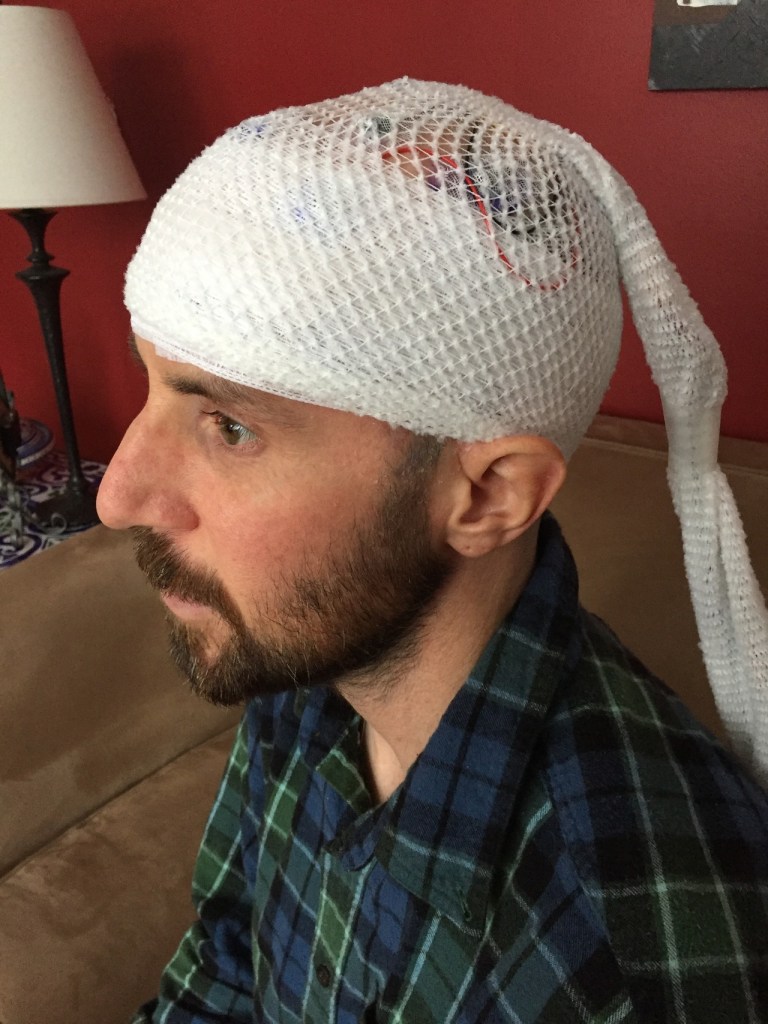
For the time being, I decided to take baby steps. I left the hospital with what’s called an ambulatory EEG. This allowed me to return home to continue resting and healing — both of which are desperately needed after years of treatment and the emotional, psychological, and physical stress this entire ordeal caused. Before leaving the hospital, a dozen diodes were glued to my scalp. These are then connected to a small box that gathers information 24/7. I was also given a camcorder meant to be left on while I’m sleeping, sitting reading, writing, playing guitar, cooking in the kitchen, etc. — basically any place I might be for several minutes. The intention is to capture any possible seizure-like activity via brain waves and on film.
Perhaps this monitoring will shed some light on certain elements and reveal potential seizure activity.
Baby steps. Slow and steady…
I’m trying to race through all these tests, not just those related to the seizures, but every single test (blood labs, CT scans, MRIs, etc.), desperately hoping to return… but to where I know not. There is some kernel of normalcy out there — there must be, right? Although I am trying to find it in the past, I know, beyond a shadow of a doubt, that this normalcy I seek, this peace of mind and, dare I say, acceptance, is found right here and now.
I just haven’t gotten there; I haven’t arrived. Acceptance of what is, that ability to live (more) presently, is just beyond my grasp. I know I could easily take hold it, maybe lean just a little farther out, bravely extending, trusting myself in doing so, but I’m held back. The bitterness and anger pull me the other way, back into the known. I am seeking normalcy in this place, in the past, but all that remains some visions and daydreams lead to the bitterness and anger felt presently. I often wonder, when in a moment of clarity, how much I polish those memories to better serve my current state of anger, sadness, etc. This is where the emotional and psychological exhaustion, or at least the majority, stems from; the continuous construction of a palatial past to which a return is impossible.

I ventured to the woods the other day. These were the woods wherein my seizure occurred last March.
My mother waited in the car. I had to go alone. I needed the time to be there, process, and allow whatever might arrive.
The season had changed since my last visit. The snowmelt was no longer pooling here and there along the trail, and neither was the chilly bite in the air that remained for some time, even after spring’s arrival. The summer passed without a visit, and I was too frightened to be in the woods — particularly these woods. I was worried a panic attack might trigger a seizure.
When last there, the trees held tiny buds awaiting the perfect, though often invisible, moment to arrive. They had blossomed and were beginning to turn, on the verge of exploding with such vibrant colors as they do so beautifully here in autumn months in New England. Had it indeed been so many months since I was here?
I felt annoyed that the seasons had passed so quickly, but more so that fear had prevented me from returning here — to MY woods. The day was overcast, and I thought it might rain. I was alone with just my thoughts and memories.
After maybe a ½ mile, I rounded the bend in the path and came upon the place where my seizure occurred. Before this, when I walked in, I tried to stroll and be calm, though I could tell my heart rate was increasing steadily; a thin layer of sweat sprouted on my forehead even on this relatively cool day. I nearly turned around and headed back to the car, to the safety it represented, to my mother, and to the security she conveyed.
Ever-present change is more evident in the woods than most anywhere. This may be why I love the woods; perhaps this is why I am in love with the woods. In March, when I last visited them, they exposed themselves openly. The barely present buds left them almost entirely bare, letting the eyes easily pass through the thickets, thin conifers hoping to grow as tall as their brethren, and a few deciduous trees here and there that seemed out of place. Then, in March, just off the footpath, the untrodden snow still lingered, allowing the shadows of the trees to fall upon the ground, shifting with the daylight. These skeletal structures made them appear even more vulnerable. Soon, they will again return to this place of nakedness, letting their leaves blush and climax in such a way I oft wonder if one is worthy enough to witness it. The autumn rains, winds, or the process of the seasons will again reveal the depths into which one can peer… if one is so inclined.
I have not let the woods teach me anything. Instead, I let them teach me everything and then discarded this knowledge. I’m too damn stubborn to accept the reality and pure honesty of it; Nothing. Remains. Constant. Everything. Changes.
It took me several months to return to the woods, to MY woods. I almost forgot their ability to adjust so quickly to change and what message this might hold for me should I be a willing pupil ready to accept the wisdom I desperately seek. I held onto everything cancer had taken away from me; I roped in everything I could think of, from my first seizure in Chicago to the most recent setback, and said, “This is why I can’t return to you!” The woods seemed like the most logical entity I could blame; after all, who else could I point the finger at?
The woods graciously accepted my anger and sadness, my bitterness and tears. They held no hard feelings. When I walked into them and found the location of my seizure, a soft breeze moved through the branches, showing signs of the fast-approaching season. The gentle wind amongst the trees spoke softly, never demanding to know where I had been. Instead, as the wind tossed the branches, they said, “Welcome back, we’ve been waiting for you.”
I lit some sage, pulled the tendrils inward to my being, and then pushed them away to the woods, trying to cleanse something inside me.
A few days ago, I decided to check my temperature. I was sniffling, probably due to seasonal allergies, but I was also concerned I might have a cold after taking my temperature, which rested nicely at around 98.6F. I took out an alcohol swab to wipe the end of the thermometer.
Immediately after removing the single-use swab from the packet, the pungent aroma wafted. Shaking almost uncontrollably, I made my way unsteadily to the foot of my bed. There, I continued to tremble, a jittery sensation as though I had consumed too much caffeine. My body warmed, almost a flushing feeling. My knee-jerk reaction in such a situation is to reach for an Ativan.
I was worried I might be too unsteady on my feet, so I chose to remain seated. My reaction, which I now understand to be a “trigger,” was activated by the smell of the alcohol swab. I felt nauseated while sitting on the edge of the bed, but I tried to calm myself by focusing on my breathing and posture. I’ve been practicing this mindfulness technique with the help of my therapist in such situations. Although I have Ativan as a backup, I don’t want to rely on it constantly. I managed to breathe through the intense anxiety, and slowly, it began to dissipate. However, it was followed by extreme fatigue, as usual.
While at Mass General, I had my temp taken regularly, every time vitals were taken. After this, the nurse on duty would wipe the thermometer. It was sterile, just like everything else in my isolated room. So great was the need for precaution that for both my transplants, I saw only the eyes of the nurses, doctors, and visitors as surgical masks shielded their faces. It is tangential, but it does illustrate the necessity for sterility and the regular use of alcohol swabs and other such disposable cleaners.
I have had numerous experiences such as this: legs shaking while at a clinic, nausea during routine blood work, and extreme panic while in an MRI machine. The list goes on and on and on…
I have strayed away from the term “Post Traumatic Stress Disorder,” though I am not sure why. In many ways, I thought it was reserved for people who had experienced events that were far more traumatizing. I also didn’t want to label it, especially that one. I didn’t want to see myself as traumatized. I didn’t want to be in that place. When I was first diagnosed, I hoped to go to the clinic for a few months of treatment and then return to my everyday life. Admitting that I was traumatized would mean needing more treatment, not physical therapy, but rather addressing the ongoing effects of cancer once the initial battle was over.
My psychologist and I have spent numerous hours both addressing aspects of trauma, how it looks and feels, etc., and also skirting the subject altogether. We’ve danced around it, so to speak, but also avoided entirely that which has been glaring at me, lurking, waiting for me to address it and growing larger each day I didn’t.
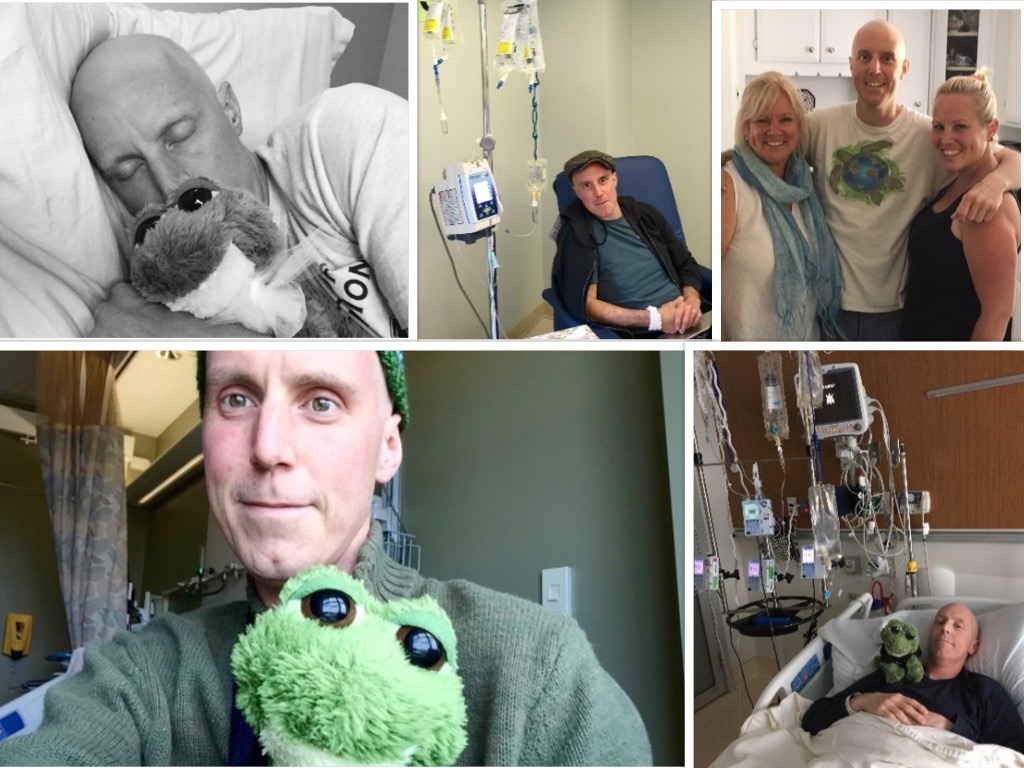
I thought of trauma as something that held someone back, something that was fixed in a specific time/place. I thought it was an event that never released its talons, rendering someone helpless & forever there, reliving the past events. I didn’t want that. I am embarrassed to admit I thought I was too strong. The idea above, that of strolling into the clinic and strolling back out after a few months, was how I saw myself. After the completion of my second stem cell transplant, and I was a few days away from being discharged, my oncologist said, “Well, you’ve really trooped through these!” That was me, the warrior. I only let my guard down in front of a few select nurses. I held my tears back until I was in the bathroom, supposedly showering; I’d turn on the water and then sit there crying. At night, I would slip into weird, psychedelic dreams, from which I would wake up moaning, curled into a fetal position, clutching my stuffed animal with such force my fingers would ache the next day.
This is fear. This is pain. This is trauma.
I see the label of PTSD as synonymous with being stuck somewhere in the past, reliving it over and over. The truth is, I have barely, if at all, even begun to let myself do that. To relive and work through an event(s) of significant trauma, pain, sadness & anger is, in fact, stronger. When an alcohol swab sends someone into a tailspin, into a place of panic because of the memory it holds, it is evident that something needs to be addressed, something needs to be unpacked.
I have been told that life post-cancer treatment is the most difficult; it is when the real work begins. It is when things rise to the surface and demand to be addressed. If not, they will have their talons firmly fixed into their prey, and one will be held there forever, somewhere in the past.

I’m not going to die, at least not yet.
When my oncologist said, “There is some swelling around the former tumor in your head. This might be the tumor waking up, but we’re not sure right now.”He then mumbled something else, which now escapes my memory, as things do when you’re told such news. Then I mumbled something in response, neither of us wanting to address reality, just mumbling a language that we both agreed upon but neither spoke fluently.
I had several days to mull this over in my mind. It was the longest several days of my life. I played out every possible scenario, walked them all to the end of my imagination, and then started with a new possibility and led that one down the same road. A tumor that had potentially “woken up” and presented with edema (swelling) around it.
Sure, here is the revised text:
I found myself constantly thinking about death. Despite being told that my body could handle more chemotherapy, I questioned whether I really wanted it. After undergoing extensive chemotherapy, did I want to endure more? In addition, I was still dealing with numerous chemotherapy-related issues such as neuropathy, tinnitus, dizzy spells, extreme fatigue, memory problems, slight speech impairment, nightmares, anxiety, and depression. Could I really handle more? Moreover, would additional chemotherapy be effective? Would it only prolong my life without actually curing this disease?
The day before my MRI, I sat on our porch, basking in the beauty of the world around me. The gentle buzz of bees filled the air as they industriously collected pollen from the vibrant flowers. Watching their instinctual knowledge of which blooms were nearing their end was fascinating. I was struck with the realization that we are on a ceaseless quest to evade the inescapable fate of mortality – even more so, the recognition of it.
I truly and honestly looked at death in that glorious sunshine on the porch amidst the bees and butterflies. It wasn’t some philosophical idea, some existentialist pondering, but a cold-hearted fact of what I thought was fast approaching. For the first time since the beginning of all this, since my seizure in Chicago to the most recent comment made by my oncologist about a tumor possibly waking up, I felt okay about it. I felt Okay about the possibility of dying. More importantly, I felt at peace with it.
Even now, writing the words is hard to fully express. Words fall so incredibly short. It is not that I was resigned or apathetic. It wasn’t that death was a welcomed reprieve from the madness of my life that, when it finally arrived, I would ask, “What the fuck took you so long?” It’s that death, the possibility of dying, the likelihood that it would arrive soon, graced me with a profound inner peace, one that I have never before felt in my life.
I didn’t want to move. I didn’t dare shift my gaze out of fear that this would disrupt the sensation and overall feeling I was currently blessed with.
“Hi Jeremiah, this is Dr. _; it looks like the swelling is due to necrosis, a cellular death that can occur after radiation. We’ll just keep track of it; I’ll schedule you for an 8-week follow-up. I don’t think surgical resection is needed, but I’ll put you in touch with a neurosurgeon, and they can go over that with you.
… and that’s it, necrotic tissue causing swelling.
There is a lot of work to be done now. One year post stem cell transplant allows for little breathing room, but that’s plenty for me — that’s more than enough. The real struggle now is with my mind and heart; the PTSD, anxiety, etc., will just take time and patience and love — self-love especially. The level of peace, however, and the acceptance I felt on that day, and still feel now, will go a long, long way in my emotional & psychological recovery. In using the metaphor of one of my latest posts regarding my feeling of helplessness & exhaustion being like the crashing waves under which I’m struggling to stay afloat, I can touch the sea floor now. Also, the land is clearly visible, and the tide finally works in my favor.
I measure time in interesting ways now. A row of trees (“green giants”) were planted in my backyard roughly two years ago. As they grow, like most trees, they send these vertical shoots (for lack of a better word) straight up, and then those, in turn, begin to fill out with horizon branches. They have not only sent up their shoots, but they have also begun to fill out. This is the intention of such trees; they are used as a natural wall. They are close to becoming impenetrable.
I think about when my dear friend visited. They put cream on my hands; it was a lovely gesture and made me feel safe and secure. When they came to visit, we went to get gelato. My hair fell out. They noticed it on my pillow but didn’t want to say anything, but I knew. When I left Chicago, I took their suitcase. It had a little Travelocity gnome on the handle. When I returned home to Maine, I left the suitcase in my room and lived out of it. Not that I couldn’t settle into my room in my mother’s house; I just didn’t think I’d be here long enough to have to. It wasn’t naivety, just wishful thinking and the assumption this would be over and done with by mid-summer. The suitcase was there, just resting in my doorway. I would wash my clothing and put them back in the suitcase, folding the pants and shirts neatly so they would fit. The little gnome smiled up at me, bidding me to take off, to go boldly out there, wherever there was. Slowly I unpacked, however. I washed my clothing, folded it, and began to fill my drawers. Then the suitcase was put in our basement, the little gnome still there, hanging off the top. That was over two years ago.
I want a 9-5 job. I want to go out on the weekends. I want to point the finger at someone or something. I ate organic food for the majority of my life. I was a vegetarian, didn’t touch GMOs, and tried to eat locally when possible. I drank green tea and coffee — but only organic, of course. I was raised on a farm in Vermont — I was an earth-loving flower child before earth-loving flower children became trendy and commercialized. I meditate regularly and exercise 4+ days a week. So why am I still fighting this this fucking disease?
Yes, that’s right, fuck. Fuck this, fuck that… fuck!
There’s shame in all this, too. As with my diet and lifestyle, how on earth did I get cancer, considering how I tried to be diligent (almost militant!) about the choices I was making? Or is that guilt? I am not sure I fully understand the two: shame and guilt. Do I feel ashamed when I let out the pain and anger from this ongoing battle? Or is that guilt? Do I feel guilty that I feel as though I am burdening someone with it all this? Or is that a shame?
We have a tendency to glorify these people who go through cancer with some sort of sage or guru or saintly-like bravery and stoicism. The talks and books, the inspirational speeches, and blah blah blah. But that person who marches through it all doesn’t exist. Yes, they do, but I can guarantee they cracked, broke down, and screamed. Yes, the inspirational speeches are full of beautiful sentiments about this or that, about how cancer was “the little friend I needed.” The majority, though, I’m assuming, are like me in the sense that they can’t right themselves long enough to step away from the looming shadow that is cancer.
My oncologist said I should get a job. I’m not sure if that was a joke or not.
My other oncologist said, when I had ongoing back pain recently and asked for an MRI (it turned out to be an inflamed disk), “that’s the trouble with doing scans, it seems you always find something wrong.” Excuse me? Fuck you.
Those green giants have indeed filled in. They have made a lovely wall. Inside that wall, on my side, there are plants, flowers, and endless beauty for the eyes to behold. I will admit my gardens are beautiful. Our gardens are beautiful. I spent endless summers crafting them when I was at home from school or had free time from work, etc. When I lacked stamina due to treatment and willpower, my mother took over and put her unique touch on them. But I’m not there, not fully present on our side. I am standing with my friend’s suitcase, with the little gnome on the handle, ready to travel, trying desperately to get beyond the wall of green giants. I am certain that on the other side is a 9-5 job, weekend drinks, and conversations that don’t feel like a burden to others. On the other side, hand massages are simply hand massages and not about squelching intense fear that transcends words.

Sometimes, I feel as though I have a very clear idea of what I want to write and what ideas and emotions I’m trying to convey. Other times, I don’t know where to begin and hope that fumbling along will eventually string together enough thoughts to create something solid. This is the former. However, the idea is clear but the words haven’t yet formed.
Recently, I have wondered if this is all worth it. By this, I mean the cumulative fear, stress, and anger that have spanned the last 2.5 years of my life.
With cancer, there is no reprieve. I always wonder if something is lurking. The experience with the recurrence took me so off guard. Now, I always wonder what’s there, just under the surface? What’s going on within me?
In a way, I have become very childlike, existing in this world where shadows are larger than life and wondering about my health every second.
The scans I had 3 months ago were clean. (I will have another round in early August.) The knowledge of clean scans permits me a little time to feel good, safe, and breathe. Then the show starts all over again. The build-up begins weeks (if not months) before the actual test dates; sleepless nights, raw emotions/emotional outbursts, heightened sensitivity to noise or sudden movements, and irritability. There is a pervasive feeling of dread that blankets everything. It’s not so simple to label it as depression; it is too multifaceted. (By the way, I take antidepressants and anti-anxiety medication. In addition, I also take a daily regimen of herbal remedies and supplements to combat all sorts of things mood-related.)
This is my existence, and I have honestly been wondering if it’s all worth it and if I can hold on. If I can hold out for that one day when I’ll awake, the nagging fear, the chronic anxiety, and endless worrying will have slipped away in the night.
In June (2018), when I saw my oncologist at Mass General, they asked how I was doing. I felt more and more comfortable with them and knew they were asking on a deeper level (i.e., not just inquiring about fatigue levels, appetite, etc.). I said, “I feel hopeless.” It is a word I hadn’t used much before, if at all. Hopeless: despair, desperate, forlorn, pessimistic, resigned… these words don’t describe who I am. Who was I becoming? What had all this illness done to me? The weight of that word fell upon me.
For me, a state of hopelessness is reached rather gradually. In considering my journey, in relative hindsight, it is akin to wading out into a body of water — just one step, then the other, and so on. I think the longevity of my journey was a sort of cresting wave; the initial diagnosis, the recurrence, the stem cell transplant. Everything consumed me in between the various tests that took place, the preparations, the scheduling of this or that. I had little time to even consider what state I was in. Naturally, there was great sadness, frustration, etc. I never thought these emotions would culminate in hopelessness, or perhaps they were slipping under the radar. The cresting wave broke; it fell upon me. The body of water, the floor of which I could just barely touch amidst everything, was no longer there. Try as I might, I couldn’t touch the bottom. Then, another wave broke and another. I surfaced and looked for the shore, but the swells were too great, too high. All these moments of fear or anxiety, anger or sadness, amounted to a state of hopelessness.
For those unsure of what I’m saying, I will be blunt; I have often wondered about ending my own life. Also, for those who are also wondering how or why I would go through years of cancer-related treatment only to contemplate taking my own life — it is not, nor will it ever be, that simple.
As I said before, I’m holding out for that day when I will wake to even the slightest hint of normalcy.

I can’t help but look back. It is torture, I know… but I’m still trying to figure things out. If I keep repeatedly playing things in my mind, something will pop up, make sense, and be clear.
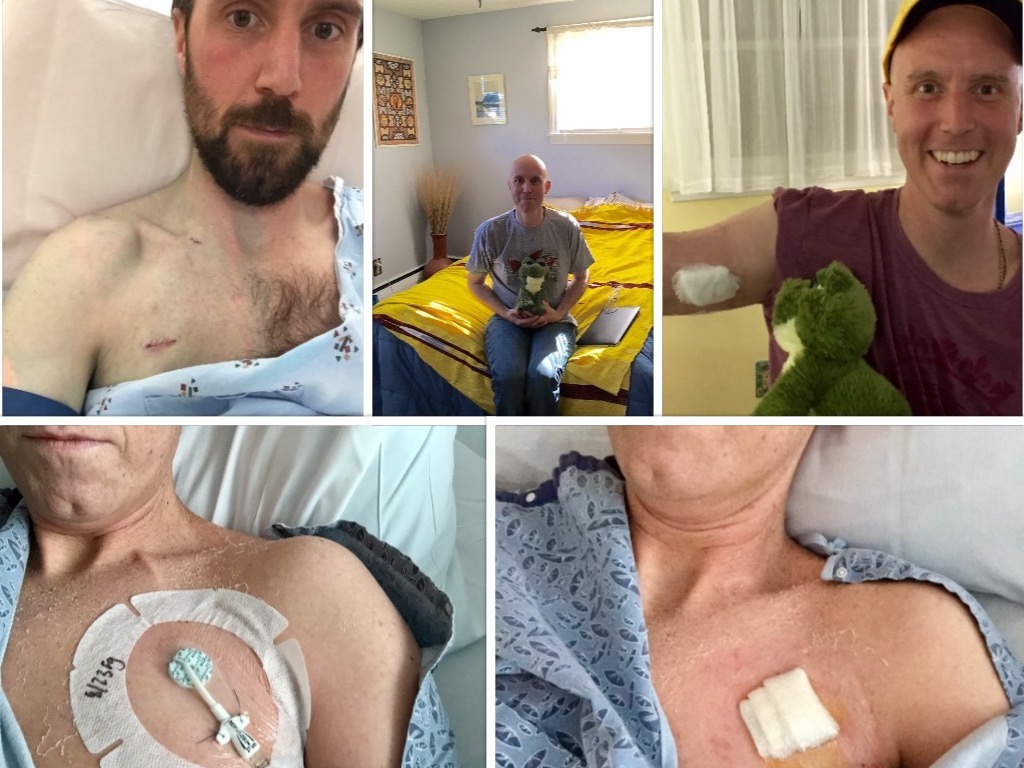
This photo (4/4/16) is after being discharged from the hospital. I had my orchiectomy, was diagnosed, had my apartment packed up, and was about to return home to New England for treatment. How did I manage all this? I didn’t notice until looking at the photo that I was still wearing the bracelet from the hospital.
Things change so quickly.
My eyes are so tired in this photo. I looked worn out and worried – naturally, I was. I wanted to smile for my girlfriend, it was her birthday. Considering life’s drastic change, I wanted to act as normal as possible.
I am not sure why I return to these images. Maybe it is the stark contrast between the two; a casual day at the nature museum was only a matter of days before my life fell apart.
What am I seeking here? What do I hope to find in the words written upon my face, within my tired eyes?
I notice my left hand is gripping her shoulder so tightly. Is it because I’m leaving? Is it to thank you for being there for me, coming to the emergency room, and staying with me there for days? Is it that I’m trying to hold on with all my strength because this is the last refuge, the last fragment of normalcy that I will have in a long time?
I will turn these questions (and many more) over and over in my mind. There has to be reason within them… they have to make sense.
 healing is a circular path