Expressive writing

Stress, trauma, and unexpected life developments — such as a cancer
diagnosis, a car accident, or a layoff — can throw people off stride
emotionally and mentally. Writing about thoughts and feelings that arise
from a traumatic or stressful life experience — called expressive
writing — may help some people cope with the emotional fallout of such
events. But it’s not a cure-all, and it won’t work for everyone.
Expressive writing appears to be more effective for people who are not
also struggling with ongoing or severe mental health challenges, such as
major depression or post-traumatic stress disorder.”

It sounds like I am beating a dead horse when I talk about “getting over” things. In many ways, and I do recognize this, I am. It isn’t that I’m obsessed with this idea, or beating myself up… it is simply that I am trying to come to terms, accept, move onward.

My fear is, and this too might be glaringly obvious, I worry about getting stuck there. Perhaps this is why I’m so keen on stepping forward and into the present.

I ruminate. I think and overthink and re-think… I try to work something out, see it from every angle and point of view. This has served me well and has helped in many ways. However, in regards to cancer and cancer treatment, I worry that it might be too great a focal point.

The above quote, published by Harvard Health, interests me. I fancy myself a wordsmith, even though my spelling and grammar are rather questionable (thank you neurotoxicity!). With writing, especially that which isn’t fiction, I grapple with subjects and, as with my other rumination skills, pick at it, dissect it, scrutinize it.

What I’m beginning to understand, and this quote really gets to the heart of it, is that my trauma from these many experiences had over the past two years, might be hindering me from working through something and thus letting it go. (Perhaps I am even overthinking this…)
A reminder of the physical journey

Graphic Image Warning: The following photos contain post-surgery images and may be disquieting for certain viewers.

When I initially faced a recurrence of the cancer I thought was gone, I noticed how the faith I had in my own body seemed to slip away.

It was easy enough to feel uncertain about my physical being after decades of perfect health, only then to face an advanced cancer diagnosis. This level of instability, of uncertainty, intensified greatly when, feeling as though I was slowly regaining my emotional and psychical equilibrium, to be told, ‘a nodule on the right lung has grown.’

One thing is certain, I must merely look at the hurdles, obstacles, and setbacks thus far to begin to regain this sense of faith in myself, in my being, physical, emotional, etc., even on a week-by-week basis, the ground gained during these “rest” periods, is indicative of how willing my body is to heal, to try…

I have had too much on my mind recently to consider the resection of the lesion in my brain that took place towards the end of April (2017). in the grand scheme of everything, this is so recent; it feels like yesterday that I was awaiting the surgery set to take place the following day. However, looking back at everything since this operation and how much has come to pass… it feels like a lifetime ago.

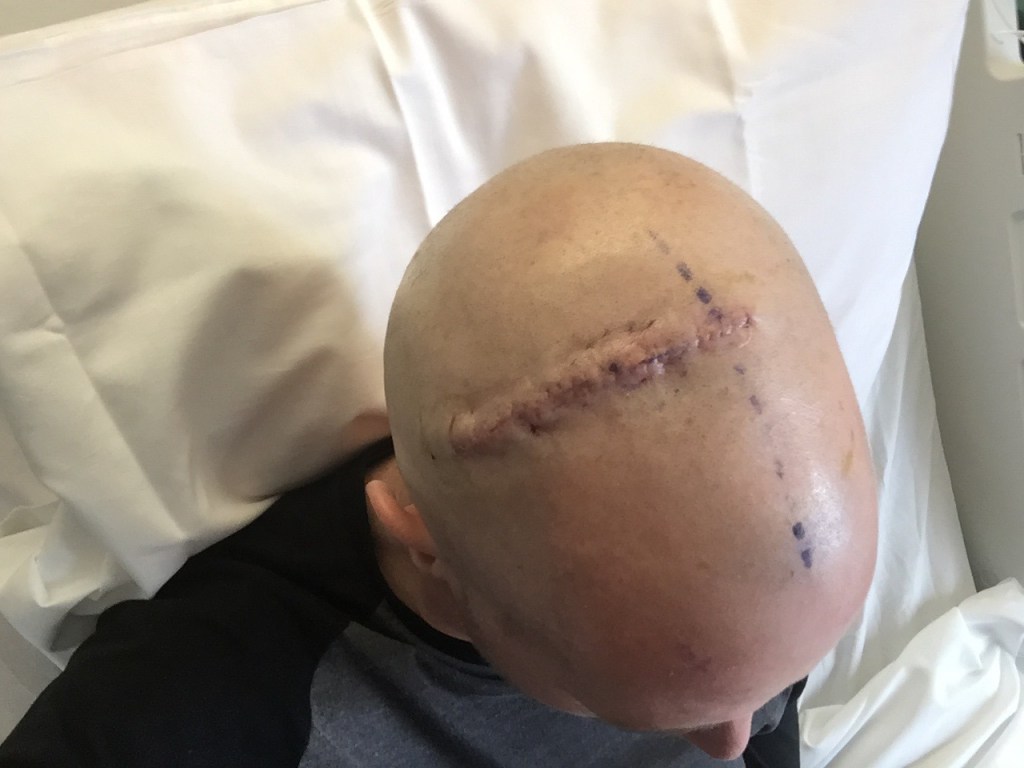
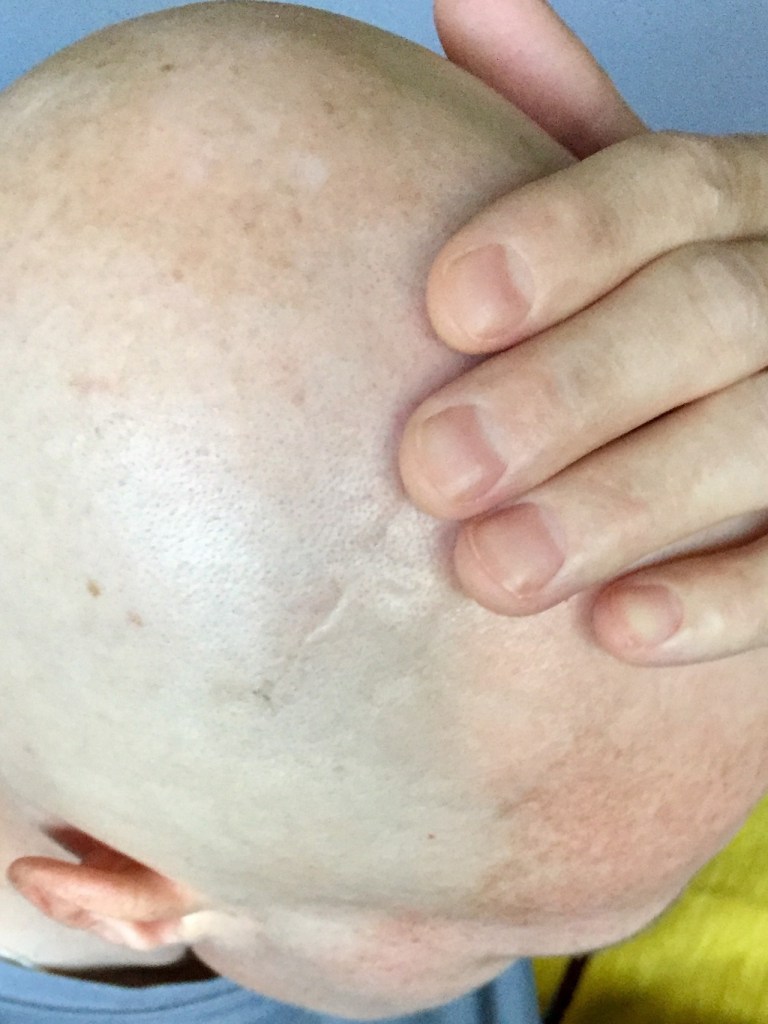
My sister recently asked for an updated photo of the scar from the surgery. She was here during the operation and remained for a few weeks afterward to help in any/every way possible. Since her return to the West Coast, she has been keeping tabs on the healing process. To her, this is a clear sign of my physical ability to heal and recover. With so much to do, I wasn’t really considering it and, in fact, was steadily moving onward to the next task, the next form of treatment, etc.. the scar itself was another reminder of a setback I faced in this lengthy ordeal, and I was happy to move on and get back on track.  

Today, when documenting the scar for her, I couldn’t help but pause and study the barely visible line running down the side of my head. In this moment, it was the first time i saw it with a sense of awe and gratitude. No longer was it an indication of a setback or a crude reminder of yet another hurdle in the path. But rather an indication of the healing process and a reminder of the physical journey to regain that sense of center.

Sweet, late August Maine air

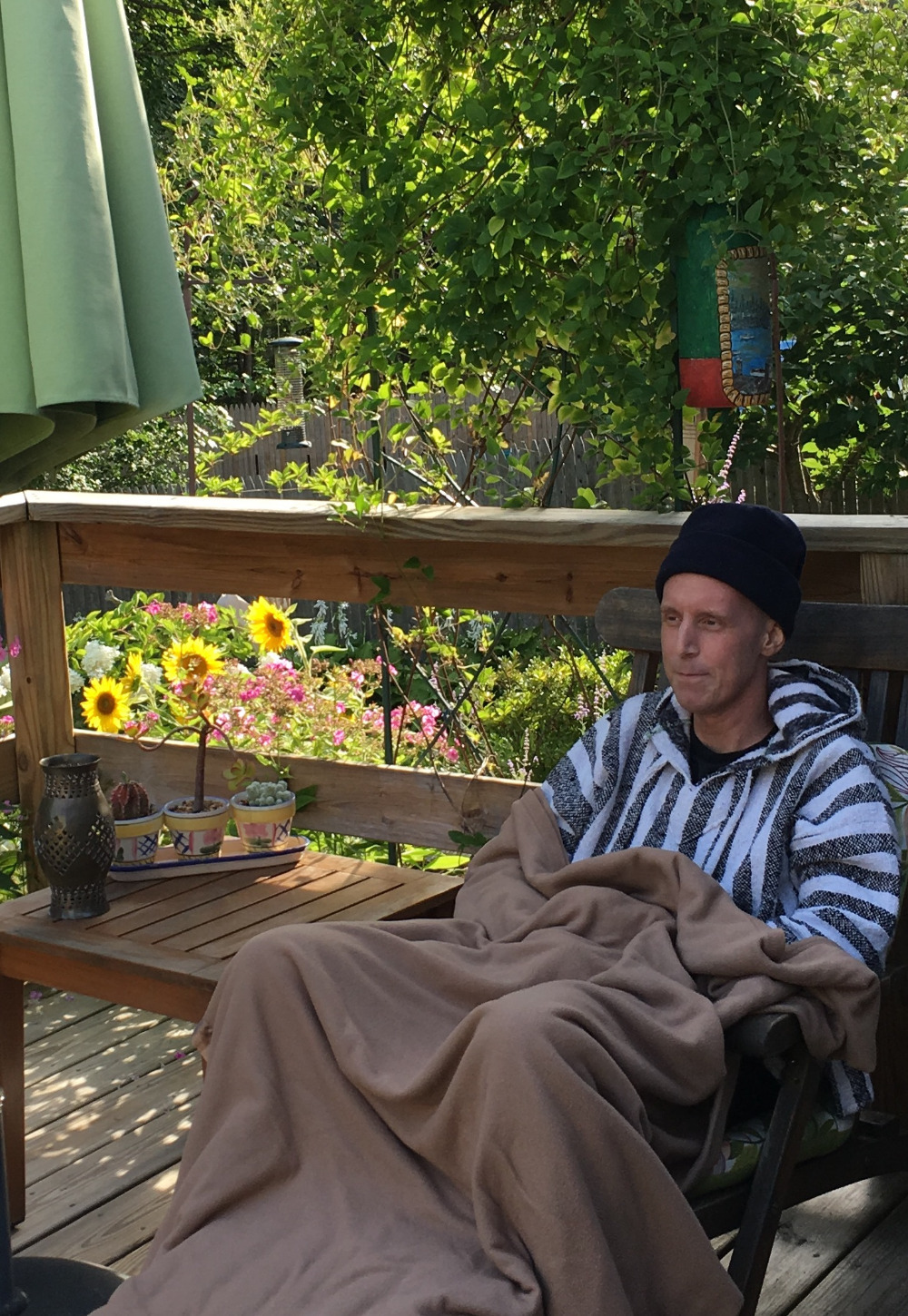
Tomorrow, Aug 25, 2017, exactly 3 weeks from the day of admittance, I will be discharged! Well, this is the hope, and as of right now, as long as a fever doesn’t appear out of nowhere overnight, I should be home tomorrow evening. I want to fall asleep listening to the crickets breathing in the sweet, late August Maine air.

Over a week ago, when I wrote about the ability to, once again, enjoy a cup of tea, I thought that I was on the mend and that the worst of this transplant was drifting away into memory. I was very wrong. When all my counts finally bottomed out, I was in the worst possible state — for days. I assumed this transplant would be much like the past, but I just kept feeling worse and worse post “day 0” (the day I received my cells back). There are several reasons why this transplant hit me harder: different chemo regimens, shorter recovery/rest time between transplants, etc. All I know is that I hope never again to be even close to some of the horrific states I was in over the past several days. One night, I was not sure of the time; I found myself curled into a fetal position and moaning continuously. Another night, I asked the night nurse if I was dying. I shudder to think of anyone in this state of mind or body.

If everything goes according to plan and I am discharged tomorrow, I will return for follow-up labs (blood work) and a few other tests in about a week.

But, for now, this appointment is very far from my mind. Right now, I merely want stillness, rest — deep, nurturing rest. 

…”breezed” through

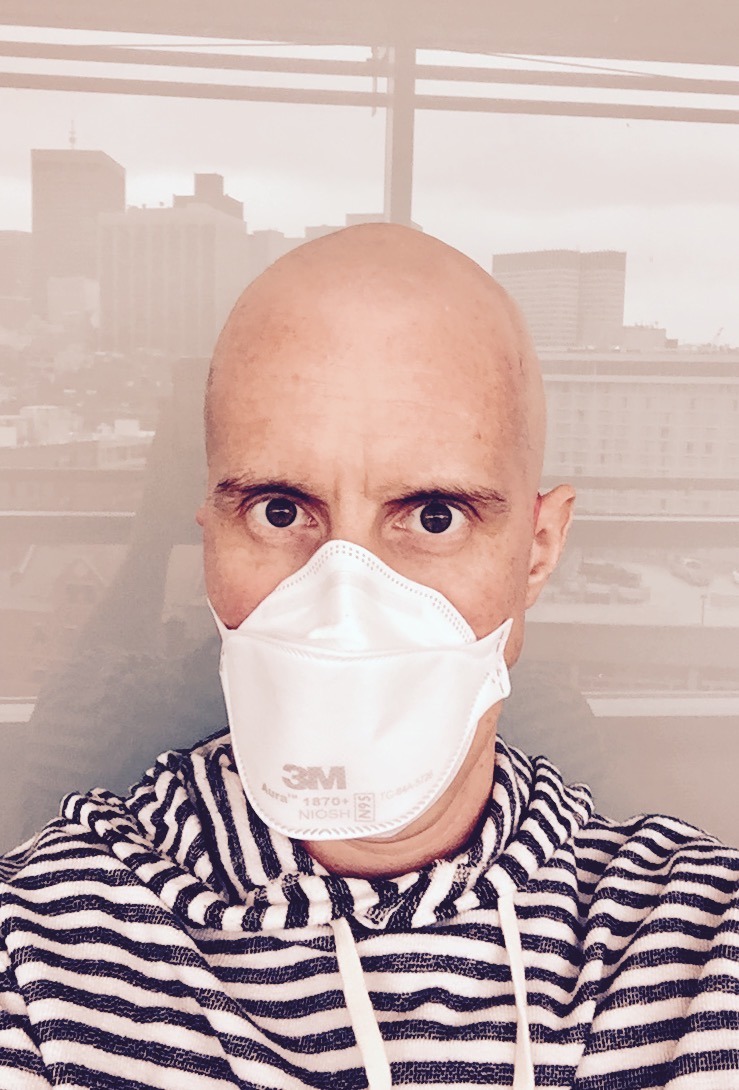
I had a follow-up meeting with my oncologist at Mass General yesterday. Labs were drawn, and blood work shows that things continue to climb upward. I still need to be careful, refrain from going into public places, and wear a mask. I am (just today, July 14, 2017) one week post-release from inpatient care, so it makes sense.

Things were trending upward, so the oncologist was happy. They think I’ll be admitted for round II in the first week of August. They want to see me again in two weeks, and the blood work then will give them a better sense of where I’m at. As for now, I’m under strict orders to rest and get ready. We spoke briefly about the regimen used in the next round. It isn’t set in stone, but one thing they’re confident about is utilizing an agent with a solid/proven track record of good CNS (blood/brain barrier) penetration. Having already had two mets in that area, they want to ensure that whatever regimen is used can access this region. The options are pretty horrific in terms of toxicity. I left the meeting a little frightened about round II as I was guaranteed to feel this round more intensely than the first. Which, according to the oncologist, I “breezed” through. 

High-dose chemotherapy with (tandem) stem cell transplants

Where and how do I begin explaining high-dose chemotherapy with (tandem) stem cell transplants? I have been considering how I should go about describing the process. However, I wasn’t even sure I understood it correctly.

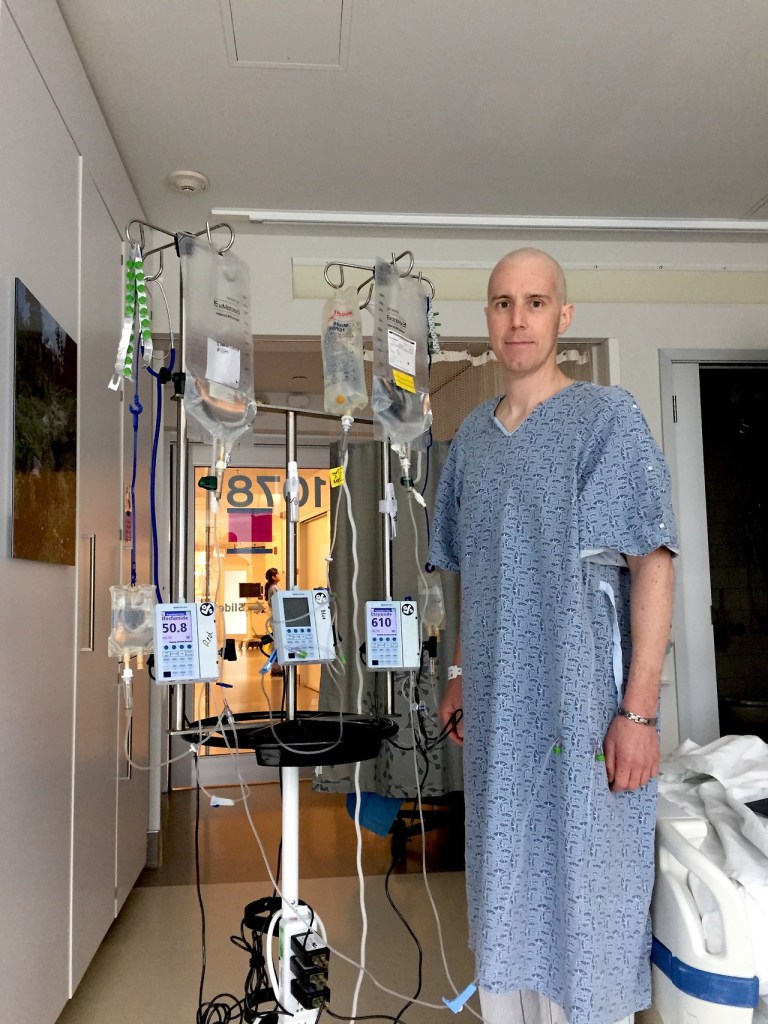
In my case, and this might be the same for other patients, I am not sure, but upon admittance, the clock starts at “day -5” (day negative 5). so “day 0” is when I return my stem cells. Days -5 — 0 are, as you might have guessed, chemo days. By this, I don’t mean normal outpatient days that, in my case, lasted several hours, depending on the regimen. No, I am talking about round-the-clock infusions, IV bags of chemotherapy drugs that run for 24 hours and then are switched out for new bags that run the same length for days and days. The intention, with such long days filled with heavy-duty chemo, is to destroy the current stem cells/marrow & annihilate the existing cancer and then replenish my system with untouched (by high dose chemo) stem cells from which my body will reconstruct itself literally from the ground up.

Along with the continuous stream of chemo, I have also been receiving liters upon liters of fluids. This is to prevent any damage to the liver, kidney & bladder. However, it is often uncomfortable, and, according to the nurse, I am currently retaining 8lbs/3.6kg of excess liquid. Needless to say, I feel uncomfortably bloated.

Between days -2 and 0, I will just be receiving mesna, a chemo protectant, and more fluids to continue to flush my filter organs. 

2nd round

The Collection

I spent the last five days in the hospital. During this time, I was receiving a continuous flow of IV antibiotics in an attempt to nip whatever was lurking in the bud to stay on track with an MGH/stem cell transplant. This didn’t go as planned when the fever spiked, and I missed the stem cell collection scheduled for Wednesday.

That afternoon (on Wednesday), while still hospitalized in Maine, the oncologist whose care I’m currently in at MGH called me. At this point, it seemed apparent that my fever was a result of neutropenia as well as from the filgrastim injections ( http://www.neupogenhcp.com/).

The blood drawn for cultures hadn’t, after 48 hours, indicated a blood-borne infection. The oncologist at MGH was convincing & practically demanded that I get discharged, drive down to Boston that afternoon/evening, and make the 07:00 Stem cell collection already on the books for the following day (Thursday, June 8). to me, this sounded reckless. I didn’t want to be in the hospital longer than needed, but I also was fearful of the big, germ-filled world waiting to sneeze on me and send me back to the ER. I feared that, should this happen, should my fever spike force me to the hospital for another 5 days or more, this would further delay the actual transplant. (something that has been postponed already due to cancer-related issues!) his fear was a different side of postponement & delay – that the small window of opportunity after the nadir (which refers to the lowest point that an individual’s blood cell count

will reach as a side effect of chemotherapy) & the peak reached as a result of the injections, would close on us. He was worried that if I didn’t make it Thursday to collect and thus left only Friday, we were taking a massive gamble as most people need at least two days to collect all the stem cells they will need for a transplant. If I were to wait until Friday and NOT gather all the cells, we’d have to finish on Monday and hope the injections were still assisting in generating the needed stem cells. It’s not only the shots that assist in this generation of cells! The whole reason for undergoing the monstrous round of chemo/etoposide was to send the body (after nadir) into white blood cell count overdrive! Add daily shots to the mix to assist this, and boom – massive (daily, maybe hourly?) jumps in cell counts.

So what did I do? I got discharged (June 7) and made the trip to Boston.

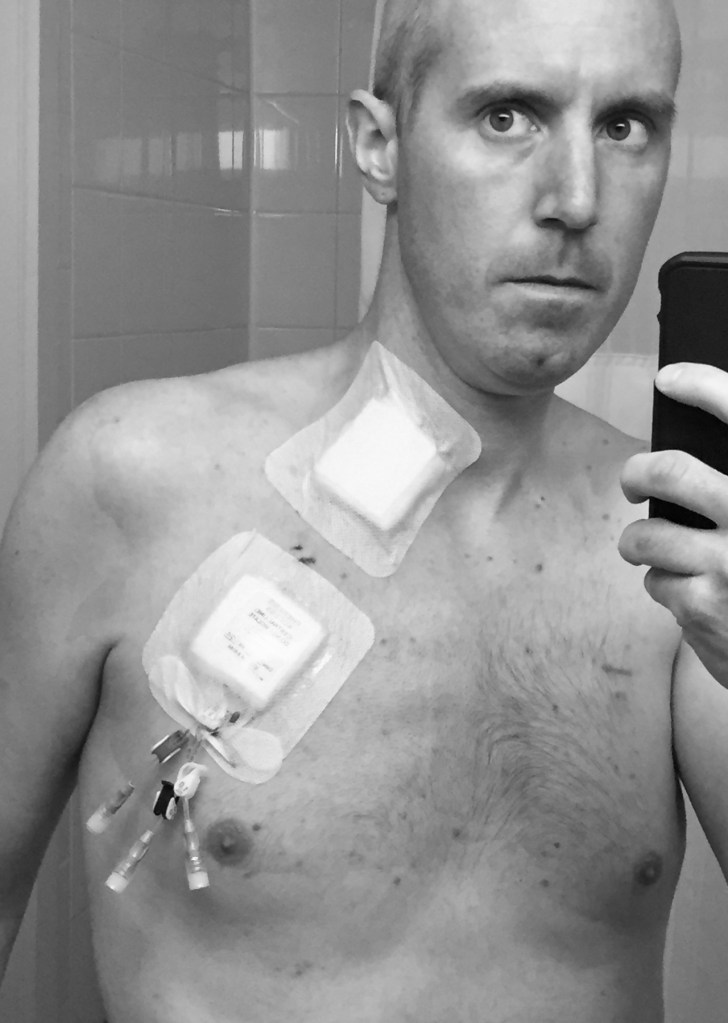
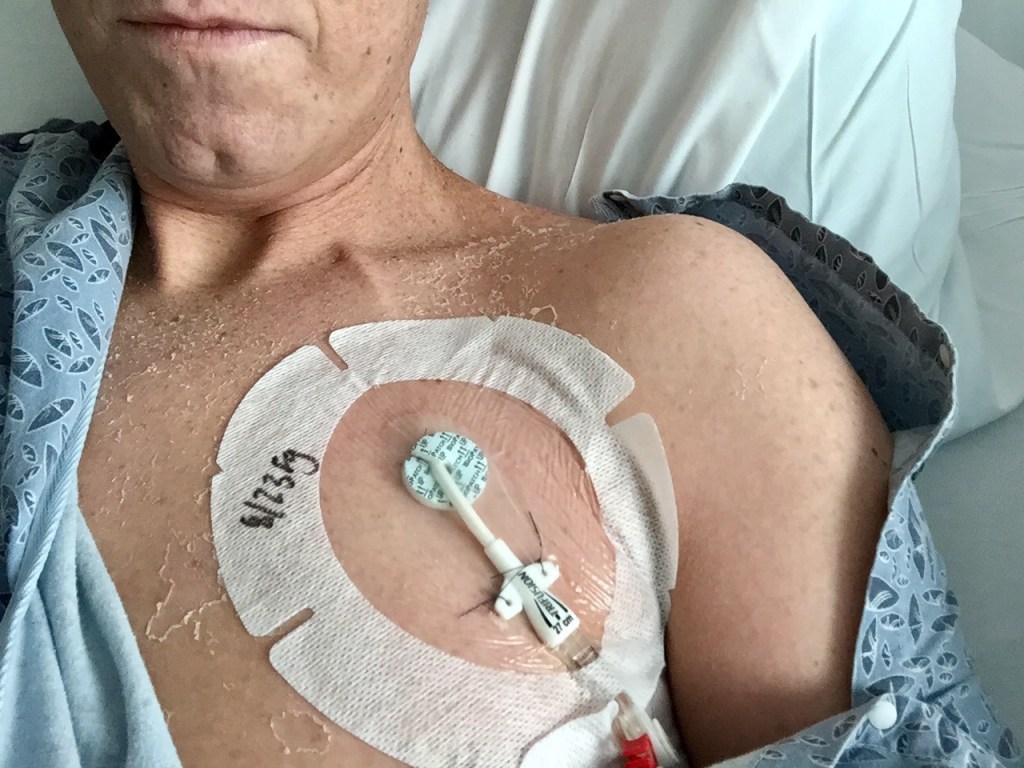
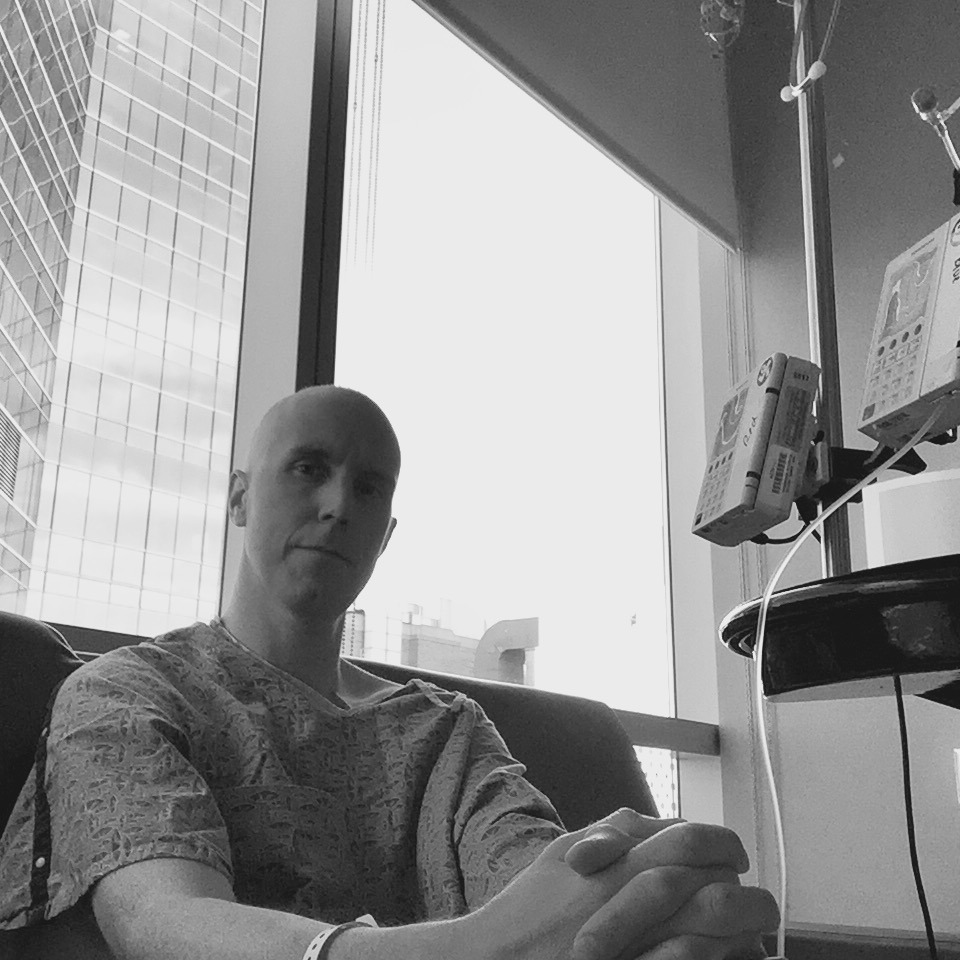
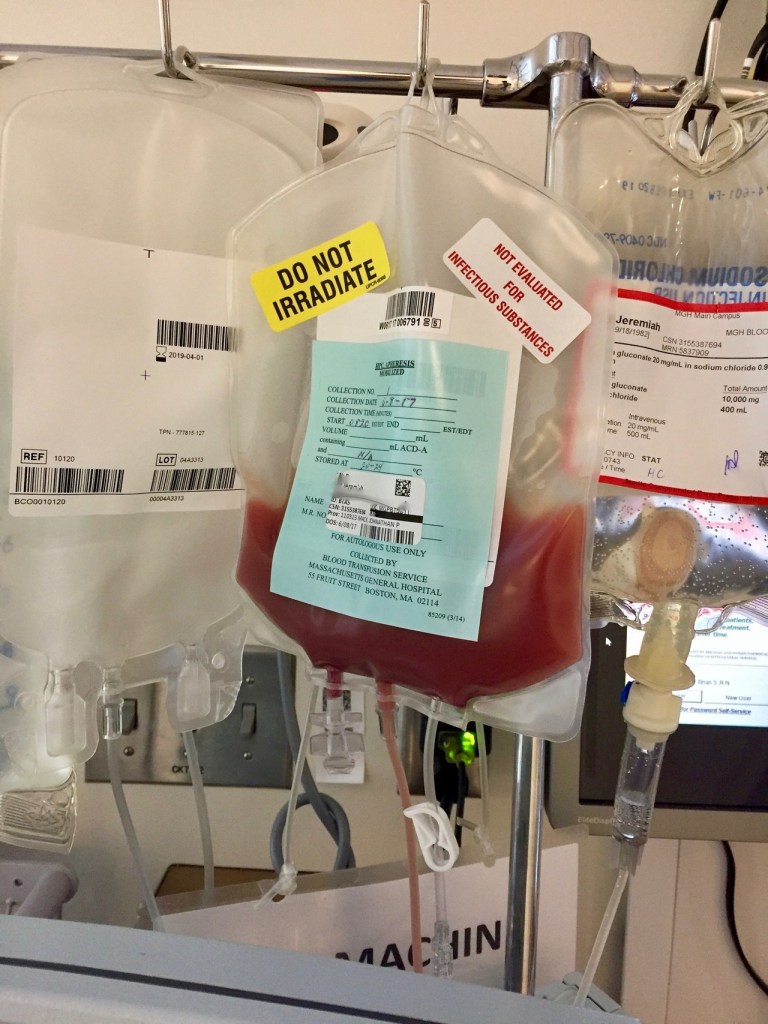
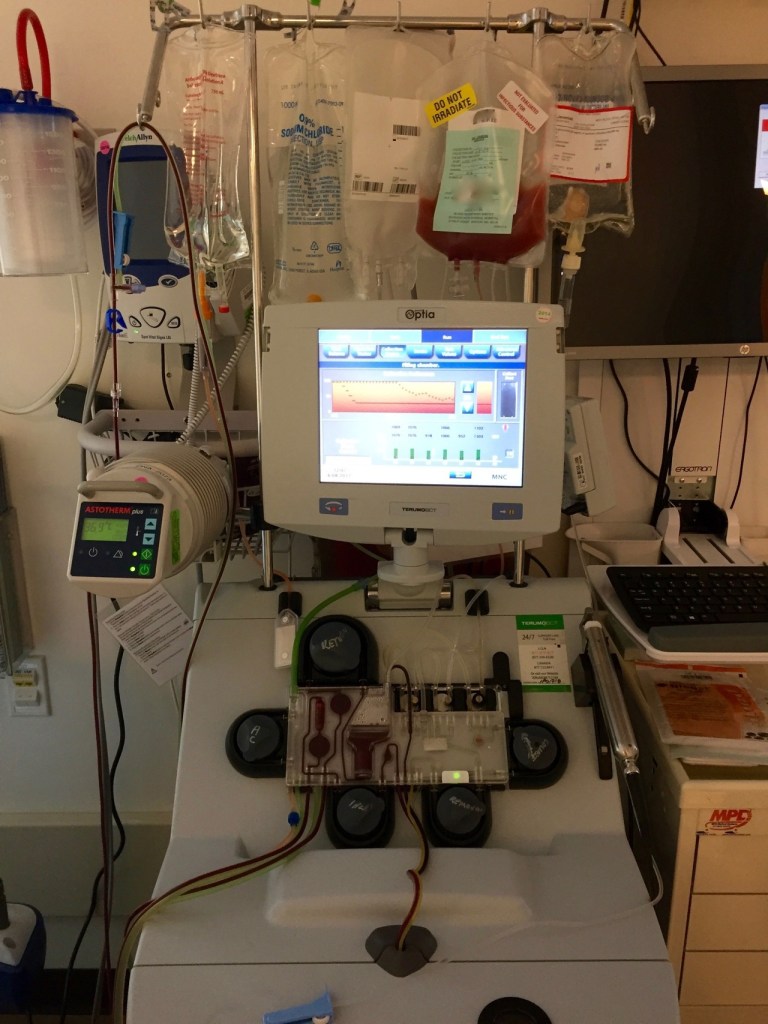
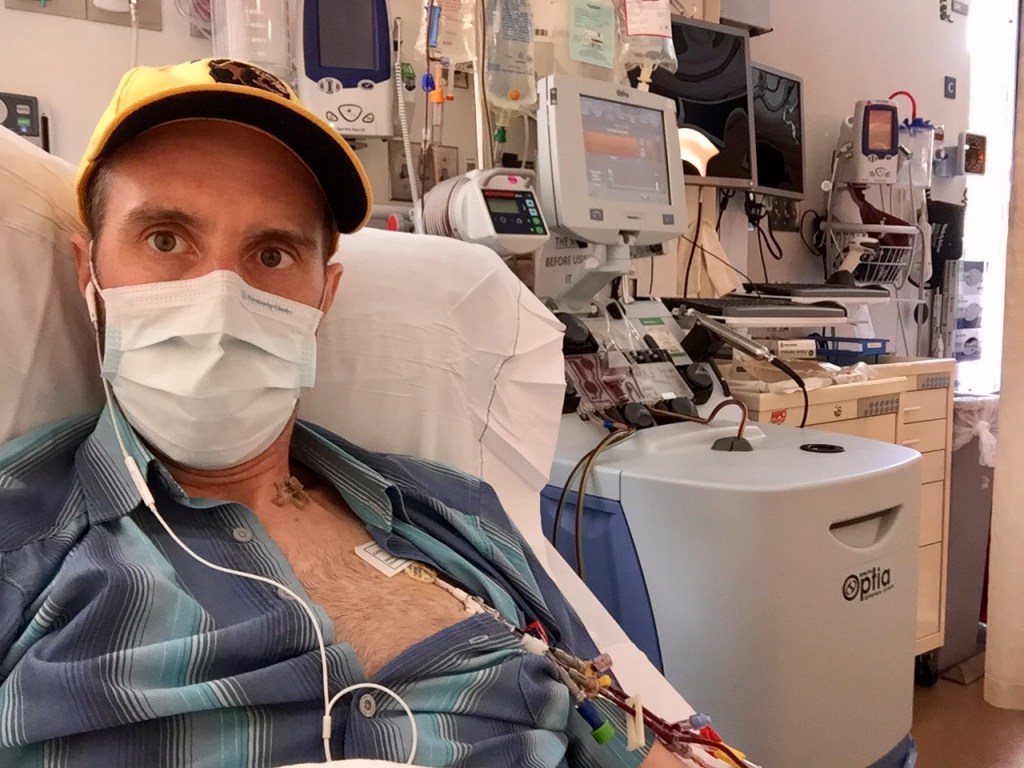
Today, June 8 (2017), at 07:00, I walked over to Mass General Hospital for collection. The process took several hours. My triple lumen pheresis catheter (seen in photos, the line coming out of my chest) worked perfectly!

When I was finally free, I took a much-needed stroll around the area to get fresh air and sunlight. I was awaiting a call from the nurse practitioner to tell me whether or not the collection was successful or if I needed to return the next day to finish up.

The plan worked, and, though one day off schedule, they gathered all the cells needed in one session.