
i waited for you in the park.
when you arrived,
you held me,
and your cold nose pressed against my neck.
you nuzzled me,
and our skin quickly
adapted to one another;
mine cooled, or yours warmed
i’m not sure.
i was happy and
excited about what we might become.
the sun and an early spring day
marked the passage of time
and life moving forward.
these were early days—before
waiting became an annoyance,
before illness,
when i didn’t understand what
holding my breath truly meant.
the anticipation of test results slowed time,
and hours in the treatment chair
felt like lifetimes.
after my first seizure,
when the illness forced my world apart,
time shifted.
you found me
coming to the emergency room
to gather the pieces.
fresh from outdoors,
from the chill of an early
chicago spring day,
remembering this:
your cold nose
pressing into my neck,
i can still feel it as time slowed.
and why can’t these moments
be eternity?
when two bodies
seek a common temperature,
can’t this search last forever?
Tag: testicularcancer
The “What-ifs”

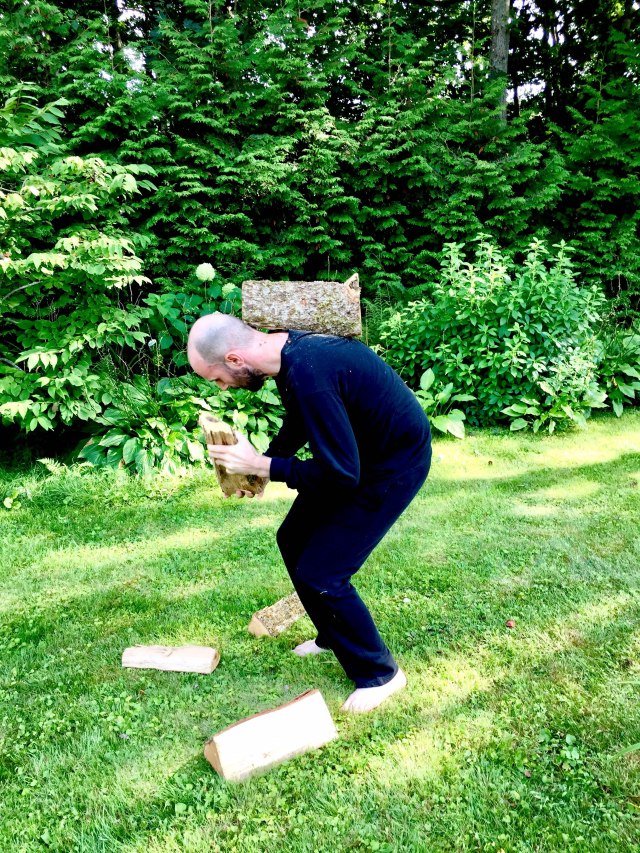
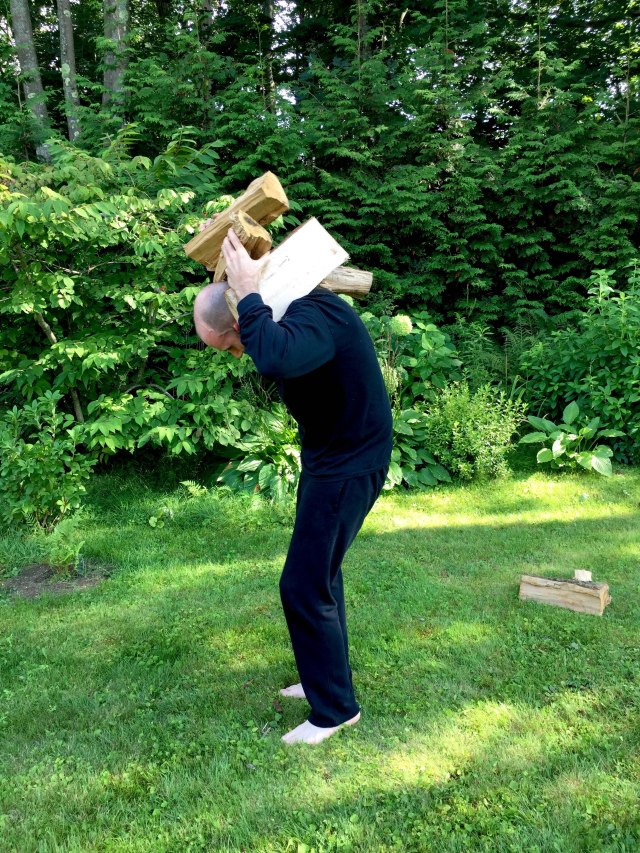
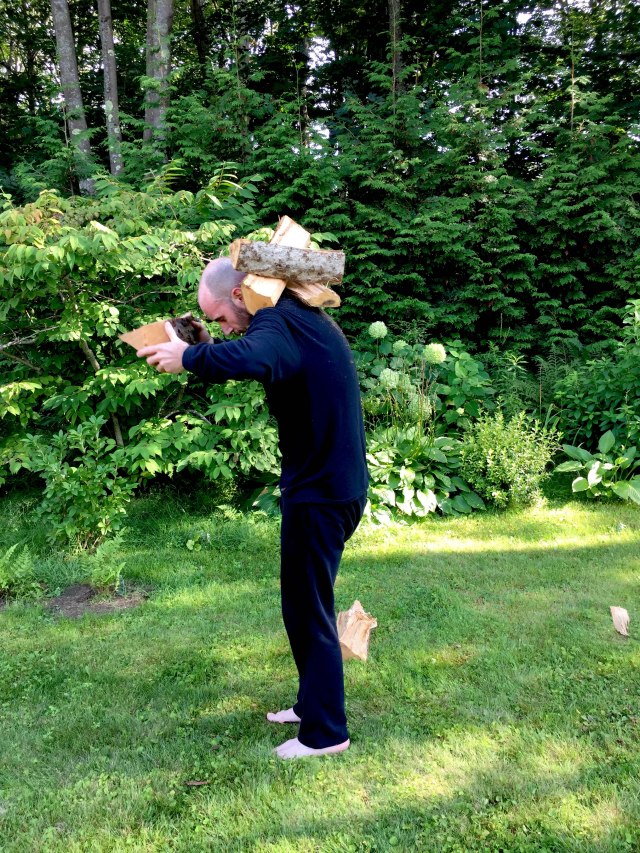
The weight carried,
the what-ifs upon bent backs –
(in) worry and (in) wondering,
“now? if not now, when?”
survivors hold this question;
they live in the moment
of continued burden.
how do I share the weight of gathered
memories?
how do I convey these worries?
I add them singly,
one by one,
layering them,
and bend my back to their weight,
asking,
“if not now, when?”

Threads


My sister purchased sweatpants and a cozy sweatshirt for me during the first few weeks of my initial treatment in mid-April 2016. Initially, I didn’t want to wear them to treatment; I wanted to attend each grueling session dressed in a button-down collared shirt and trousers that blurred the line between dress and casual. I liked to look presentable—I needed to.
I arrived at the treatment clinic directly from Chicago, where I worked on completing an MFA, actively attended daily classes, wrote my thesis and art history paper, and generated visual work in general. As such, I consciously dressed in a way that, I hoped, exuded professionalism and spoke to my qualities. There was, however, another very conscious act; I wanted to maintain this daily dress code as a ‘fuck you!’ to cancer.
My work week was, in fact, a full-time job; I was in the treatment center Monday through Friday from 8 am to 4:30 pm. I often arrived before my oncologist and was in my chair, books, and laptop set up and ready to power ahead and finish an art history paper while they were still mixing up my toxic chemo cocktail. On one occasion, I heard my oncologist ask my nurse, “What is he doing over there?” she replied, “he’s working.” As I said, it was my full-time job; I was going to dress the part, grind away, and flip the bird to cancer.
But treatment took its toll.
The nurse who at one time informed my oncologist I was working was now mainlining me with Ativan because the 40-hour week was causing such severe panic attacks.
“It’s Friday; we expect you to be like this,” she said.
Was that a carte blanche to unhook my IVs and run screaming from the clinic? Perhaps, but I didn’t have the energy to do so. Instead, I requested a blanket from the warmer, curled up, and cried.
The following week, I began wearing my new sweatpants and sweatshirt.
No one took a second look at my attire. In fact, I received more attention when I showed up for treatment dressed like I was going in for a day as a data analyst than when I appeared in sweatpants, prepped for an 8-hour treatment cycle. The clothing I usually would only sleep in became my new go-to look on most days.
But it was more than a look, obviously, and more than physical comfort, which became increasingly important as the weeks dragged on. The ease of shedding one pair of sweatpants for another can’t be overstated when depleted of all energy sources.
Since 2016, I have worn the same few pairs of sweatpants to bed when lounging around the house and even while walking on the treadmill. After each washing, I am surprised that they remain intact.
Recently, when I visited my sister, she saw the state of my sweatpants and immediately ordered new ones. She’s like that; without hesitation, she will act in a way that might be simple but can change a person’s entire day – usually for a lot longer.
When I returned home from my visit, the package arrived within a day with various items, and yes, including sweatpants.
With their arrival, I knew it was also time to part with the old pairs. I folded them neatly, ceremoniously, as if I were going to lay them to rest somewhere sacred and not put them in the trash as I did. When I returned to my room, I saw the new sweatpants and, though I partly expected this, became incredibly emotional. For undeniable reasons, there is an aspect of sentimentality brought about by years of owning something. However, when a particular thing has wrapped you up, encased you, and held you literally in its fibers during your most vulnerable times, its presence surpasses sentimentality. That, paired with the endless generosity of my sister, made giving up the old apparel and welcoming the new bittersweet.
It is human nature to want the reassurance that something or someone will catch us if we fall; if we stumble, somebody will help us. The unconscious knowledge comforts us on some primordial level, that a hand will reach out and grasp us and that we can let go.
After trying on my new sweatpants, feeling that strange pleasure of fabric that is both too crisp and refreshingly new, I understood that the garments my sister initially gave in 2016 were indeed that hand reaching out. Somewhere between ceremoniously discarding the well-worn apparel and snipping the tags off the new threads, I understood that the tiniest gesture holds the most significant importance.
I had to remain in the car when my sister purchased the first set of various items for me. I was too ill to go into Old Navy. I sat curled up on her car’s front seat, craving the comfort of my bed, the relief an anti-nausea medication would bring. Her return with multiple bags containing an assortment of clothing was her way of offering me comfort; it was one of many, but this particular gift came during the first stages of my treatment when I felt particularly rough.
We arrived home, and though it was several years (and another lifetime) ago, I can remember the comfort of my new sweatshirt. Though I have since parted with the pants, I refuse to leave behind the sweatshirt and all the memories, good and bad, that it conjures up.
I move forward in this place
Over the past few months, various events or things have triggered me.
Some are minuscule, such as a sound or smell that will set off several memories. Others are more significant, a bodily sensation, an ache, cough, or the like that provokes a more powerful emotional/psychological response.
I note these reactions, a tactic I use to help ground myself. From there, I can move forward, understanding more about it (the trigger) and my relationship with it. If I can, witnessing myself is the trick; detecting what is occurring before being consumed.
The milestone of the five-year cancer-free mark is not an exemption from fear and worry. Sometimes they peak at the same level they did while amid treatment – periodically even more so.
Nights are difficult. Anyone who has experienced a tumultuous and life-altering event can attest that this is when the little dark fears emerge from the woodwork.
A few weeks ago, I returned from Samsø, Denmark (see the previous update here or blog post on thiscyclicallife.blog). A small island with under 4,000 inhabitants, nestled snuggly off the Jutland peninsula. Though it has several adorable little towns, the 40-something square mile island is used primarily for agricultural purposes. To say that it is a walkers’ paradise is an understatement.
When I am state-side, I often sit with these “little dark fears” only to a certain point. It wasn’t a bold pursuit or some other brave endeavor that granted me the time and pace to do so on Samsø; it happened as if on its own.
One night, awoken by worries and fears, I dressed, grabbed my raincoat, and walked. It was almost a knee-jerk reaction. As I joked to a few people, the beautiful thing about an island is that you can’t get lost; you ramble through fields and upon well-worn tractor paths, and sooner or later, you’ll encounter the ocean.
Every evening I filled my rucksack with: a rainjacket, another base layer, extra socks, a flashlight, a field recorder, and bread, butter, and honey, just in case. Then, I’d begin walking if I woke in the night, regardless of the time and conditions, to discover that the fears were present.
State-side, if my worries and fears become too great, and my audiobook or music doesn’t cut through the mix, I’ll bust out trusty ol’ Netflix. I didn’t have such distractions there. Though I purchased a Danish SIM card for emergencies, I didn’t carry my phone or bring my pre-downloaded audiobook.
Bringing the field recorder was the best decision. I didn’t intend to record myself, but I’d sit on some slight rise or the beach and try to collect my thoughts and gather my ideas while talking aloud – a practice I began while in school as it helped me work out ideas. My words were wandering much in the way I was rambling physically.
I have a project in mind for the recordings. Though what follows are some excerpts and snippets I pulled that I found revealing.
*
I move forward in this place (of recovery)
A beacon pulling / a signal drawing
Being held – here
I have learned to live with the memory of you [cancer], as one does with something that echoed, a thing that came.
The lights of Aarhus could be another world – a gentle glow (western paling sky). Aarhus could be Boston from here – Mass General could be anywhere. I could be anywhere. I am here.
Birds; two, then three, then 4, and 5 (a dance that says ‘we are together in this; we heal together.’)
The Wordsmith
I fancy myself a bit of a writer, a wordsmith. I never had the confidence I do now to write. I was always worried about my grammar and punctuation. More than anything, I was worried about opening up and spilling it all out, letting the floodgates open and setting for a deluge of emotions, feelings, and thoughts that would potentially leave me exposed to criticism or judgment. After diagnosis, I stopped caring. The last thing I would concern myself with was grammar. Next in line, or perhaps going hand in hand with grammar, were the thoughts of others. I was already emotionally raw on so many other levels; I might as well leave it all wide open.
Today I met with my oncologist, and, as I expected, it was decided to “keep an eye” on things. The recent MRI showed hemosiderin deposition in the brain, which isn’t as bad as it sounds. These deposits transpire after bleeding has happened, which can occur after any traumatic injury to the brain. The bleeding leaves behind stains and, in time, is broken down by the body and left behind as iron deposits. This is my basic understanding. There is some question as to whether or not this could be residual neoplasm, leftover cancer cells. This raised the question in my mind as to whether or not this is why my tumor markers are rising ever so slightly. But, as stated, we’re just going to keep an eye on it.
keep an eye on it. keep an eye on it. keep an eye on it. keep an eye on it. keep an eye on it. keep an eye on it. keep an eye on it. keep an eye on it. keep an eye on it. keep an eye on it. keep an eye on it.
This is when the longing to be a wordsmith falls away.
The old and young. Young and old. What a madhouse here. No rhyme or reason at the cancer clinic. I sometimes want to ask, in a clandestine whisper, ‘Hey you, ya you! whatcha in for?’ ’cause that’s what it’s like. I’ve never been in jail, but I can imagine what it is. I’ve been in a different kind of prison for four years, or has it been longer? I can’t remember. That’s the problem with these days that blend into months and then merge into years; they all look and feel the same. It’s worse in treatment. It’s always worse in treatment. Even today, a beautiful day, and I swear it was May, yet I wrote March 24 on my intake paperwork. “So, doc, ain’t I done good?” I ask as he studies my file and randomly looks up at me. “I’ve been good, I swear! I’m free to go, right?” I want something. I am seeking something; everyone is seeking something in treatment or after treatment. Craving the words, “You’re good!” Oh yes, they call us survivors; what a strange name. I’ll know what this something is, what it’ll be once I get my claws sunk into it. “Well, why don’t we keep an eye on it.”
I schedule a follow-up, bloodwork and scans for a later date. But it wasn’t me. I planned them for my body to be aware of my physical being and its course. But emotionally and psychologically, cancer is no longer.
To be clear, emotionally and psychologically, cancer no longer has me.
Follow-up scheduled: COMPLY (Y/N) Y
Current objective: to be and enjoy being? COMPLY (Y/N) Y
Worrying Overridden: COMPLY (Y/N) Y
Outer Stability Seeking: COMPLY (Y/N) N
Inner Stability Seeking: COMPLY (Y/N) Y
(Physical) Cancer Status: Tracking/Monitoring
(Emotional/psychological) Cancer Status: NED (No Evidence of Disease)
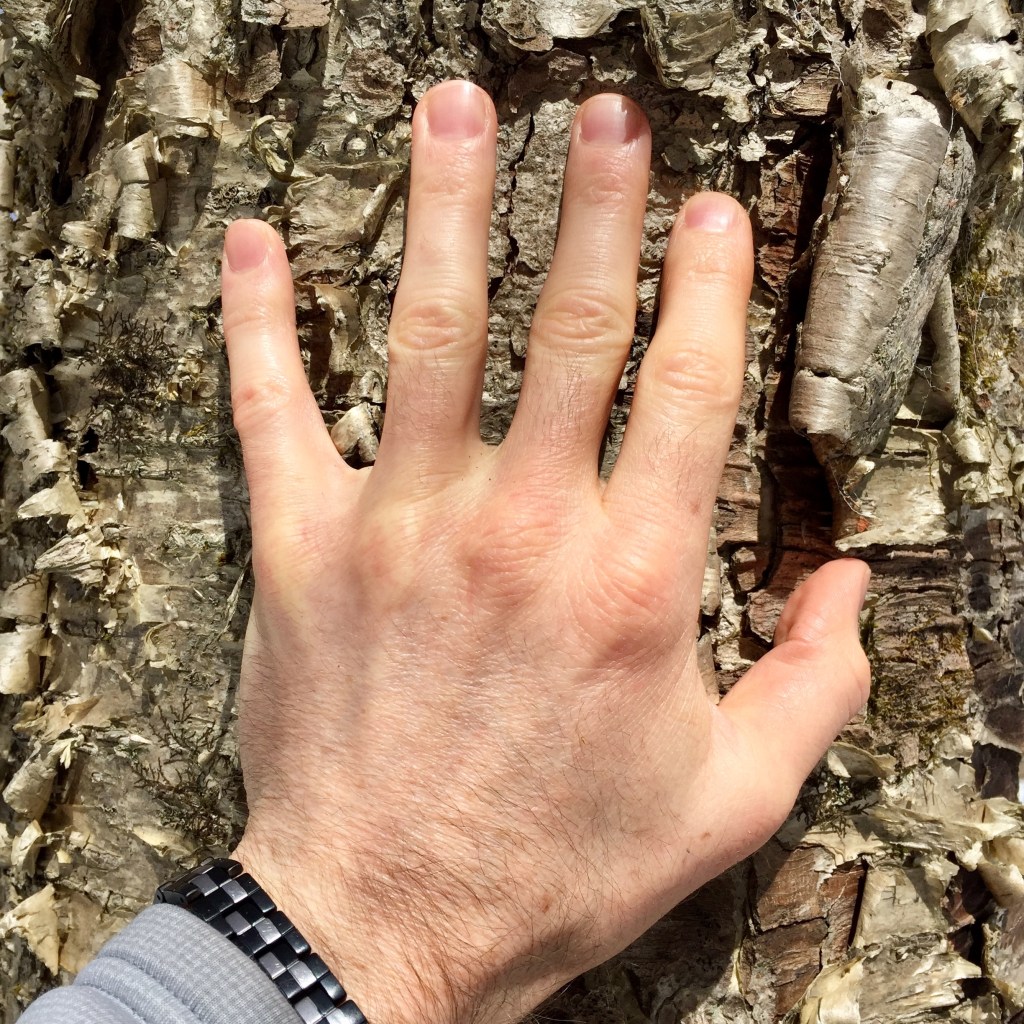
Patience (the ancient tree)
I have dreamt dozens of times that cancer has returned. Not testicular cancer, not necessarily, just cancer in general.
The other night, I awoke, and, having fallen asleep on my arm, it was numb from the shoulder down. This, too, has happened numerous times, but I am always so shocked and horrified that I sit straight up in bed each time, flop my numb arm over my lap, and await as it comes back, as it awakes as well. I hold my breath. In the middle of the night, I sit in the dark, cradling my arm and waiting. When I feel the gentle tingling sensation return, the soft pins, and needles that signify it has awoken, I lie back, relieved. It is then, and only then, that I realize (the) cancer hasn’t returned. Another lesion hasn’t formed in my brain. I don’t need brain surgery.
Incidents such as this are not uncommon. This is but one example…
This fear lurks; I feel as though sometimes it is stalking me. Other times I know that, at this moment, I am cancer-free, it is out of my system and a thing of the past. I am torn between these two worlds of quaking fear and joyful bliss.
I recently had a conversation about this very feeling, about how I feel that I am often shadowed by cancer, that it is pursuing me. I was unaware of its presence upon initial diagnosis. When struck by the recurrence, I was completely oblivious as with the first time. So much so that when my oncologist told me it had returned, I was in denial. Naturally, anyone would be dismissed, as this is the last thing one wants to hear after being treated once. When I was informed, I felt 100%; my body felt so strong and healthy. I wouldn’t believe it – I couldn’t accept that it had returned. Regardless, it had, and both times it snuck up on me and pounced. I blinked, and it was upon me; claws sunk deep, and I was helpless.
I suppose this is just something that lingers. How long is uncertain. Perhaps it will always shadow me. I hope it will do so in such a way that it is not hunting me, or for that matter, haunting me, but a reminder of what has come to pass.
Patience! I need more patience with myself as I move along this path.
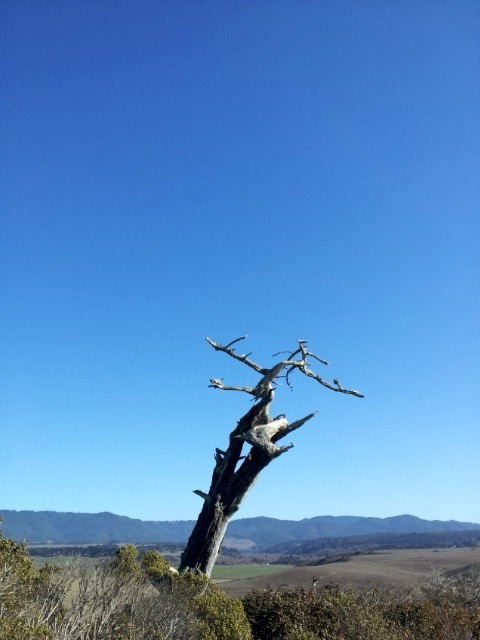
i cannot tell
which is more patient
the tree
like gnarled old fingers
sun-beached and
long since passed
or the days and nights
which move around it
we witness the blue sky
so rich and clear
and mistake our need
we forget tolerance
we say
“get out of the way
you old tree
I want to see the blue sky”
but the tree
is the gentle one
by day
it marks the earth
with the movement
of the sun
across the sky
not rushing it
letting it be
moment by moment
and at night
it stands
almost sentry-like
keeping watch
waiting
it never says
“you are gray today
bring back
your blue sky”
if it is unable
to mark the earth
as a sundial would
it just waits
gnarled and old
like it was yesterday
as it will be tomorrow
Perhaps this is survivor’s guilt.
Our situations were identical in almost every way.
He was diagnosed with testicular cancer. His staging was the same as mine. He, too, experienced a recurrence that presented as a brain lesion and opted for a stem cell transplant.
This is where our paths split apart. Shortly after his high-dose chemo treatment commenced, prepping his body for the transplant, he became increasingly confused and disoriented. After sets of scans were performed, it became evident that, though the heavy rounds of treatment were well underway, several more lesions had presented themselves in his brain. The decision was made to stop treatment and return home, enter hospice care, and be around loved ones. Shortly after he decision was made, he passed away.
Even in writing this, I don’t know where to begin opening up my emotional state regarding his journey and mine and where they veered off and split from one another. I shudder thinking about the fact that my lesions could have multiplied, too. Or, for that matter, the one that did present itself could have been in such an area that it was deemed inoperable, leaving me with more complications than just a stroke and a paralyzed arm. (“Just a stroke…”) What damage could my tumor have caused had it been slightly to the left, to the right, etc? Was I naive to postpone my 2nd round of salvage chemo and head out to visit Dr. Einhorn in Indianapolis to get a second opinion? Was this delay dangerous in such a way that… it’s too much to think about.
These questions haunt me. They wake me in the middle of the night. Even more so is one I can’t escape asking repeatedly: why am I here and he isn’t? Why am I alive and he … and he isn’t?
I never understood survivors’ guilt. I had heard about it but never truly understood it. Yes, on a larger scale, anyone who survives cancer thinks about all those who haven’t and, in one way or another, has that feeling. In most cases, guilt might be too harsh, but this particular scenario is apt.
I loop my posts back around. With my last sentences or so, I always seek to return to the overall idea. Is this good writing? I’m not sure. I do so to keep everyone along the way. My writing tends to drift a little far out, so bringing things full circle will hopefully lead people to say, “Oh, now I understand why he wrote…” However, with this post and the subject matter herein, I can’t. How do I bring this back around? What closing line or thought can I inject here? Nothing can sum this up or deliver on one’s need for coherency as none of this makes sense…
Perhaps this is survivor’s guilt. Maybe it isn’t so much about feeling remorse for those who have passed at the hand of this insidious disease, but rather the inability to make sense of it, to articulate it to ourselves and others. As with this post, I want to bring it back around so it feels wholly desperate and there is some understanding to accept the madness of this life and the injustices that rear their heads. But I can’t. Everything is left hanging, nothing but loose ends, dangling strands that I keep tugging at…
Be well on your journey, Alex
June 13, 1994 ~ June 30, 2020 (age 26)
The middle-ground
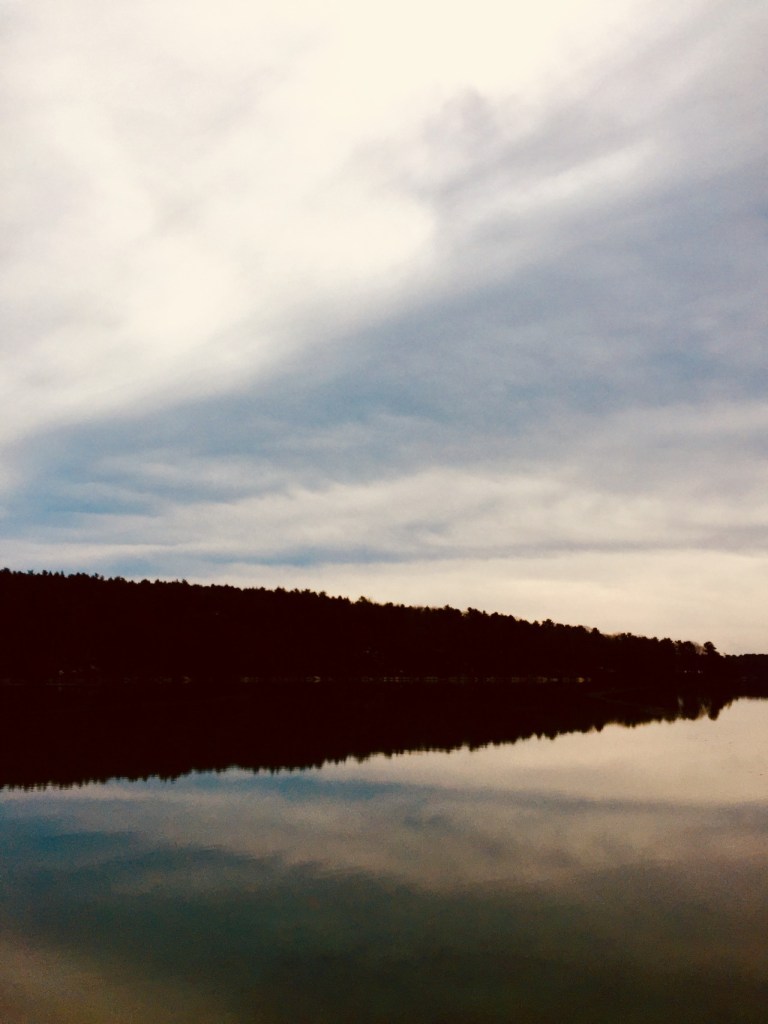
Cancer is a sort of middle-ground between what was and will eventually be. This middle ground is unstable and forever shifting and changing — often daily. As unstable as it is, it also acts as an anchor. With a diagnosis and subsequent treatment, with life revolving around clinics and tests, trying to grapple with the “new normal” post-cancer, as well as the shift in perspective of life when the dust settles, patients seek refuge on this ground.
This middle ground, however, cannot hold, nor is it meant to.
To acknowledge that one is in remission is to become aware that the steps, however frightening, must be taken to move away from the middle ground to step forward. I have kept myself there in this gray area.
I can stay here forever. There is safety here. I’ll live here. I’ll build a life here.
This middle ground, however, cannot hold, nor is it meant to.
As horrifying as they were the circumstances in France rattled parts of me, they forced me to bear witness to the events that had taken place over the years. I was unprepared to handle the deluge of emotions from observing this. The events snapped me into such intense awareness of all that had come to pass, each and every brutal moment of my journey. The emotional scars became apparent. The physical scars radiated, and I could not look away from either or turn my attention elsewhere. My emotional being couldn’t hold out any longer; I was shedding layers, and the feeling of emotional nudity was unbearable. I was losing the self I had been constructing; who was Jeremiah now? This identity was slipping, try as I might I couldn’t hold it. Everything came to a grinding halt; I was literally and figuratively unable to take another step. Brain surgery had to occur during active treatment; there was no question about the procedure. When everything started to rise to the surface, when the layers were dropping away, the physical and psychological acknowledgment of this particular scar was the trigger that sent me into a tailspin.
I have been able to meditate on some of the imagery and hallucinations I experienced during my breakdown. There are some images that, until now, have remained mysterious or so tangled in metaphor that I couldn’t decipher them. One in particular was pulling a hair-like substance from my chest. This unnerved me, and I wasn’t ready to interpret it. I had been building an identity around cancer; it engulfed my entire life for so long that I took on that persona, that of a patient. ‘I have cancer’, I’d say to myself, or I speak about it as though it was current, that I still had it, that I was still in the place of treatment. Neither is true. This gesture of pulling this substance from my chest is so clear to me now, so obvious. I was trying to extract this identity, this version of myself that has since passed. The transient persona that I had outgrown yet was fiercely holding onto. From within me, from my core, I was trying to haul this out, to unburden myself of it. Not to rid myself of the memories, good or bad, nor the lessons learned, as there are numerous — a lifetime’s worth! I was trying to purge myself of all that didn’t serve me, holding me back from stepping off the crumbling middle ground.
I had to return to France; Golinhac was calling me. All this came about there; all that dormant within me rose fully to my attention — glaringly so! In return, I would leave the remanence of this deteriorating middle ground and my meticulously crafted persona. I’d keep the new awareness and lessons from the incidences experienced there and feel a sense of certainty in stepping away.
I put a ticket on my charge card and began packing. Just a few weeks after I left France, a complete emotional and psychological mess, I was going back.
Everyone expressed their concerns. They were worried that I was still very vulnerable and returning so soon, in a fragile emotional and psychological state, would be very unwise. Why, after such a short period of time, would I want to return to the site of my breakdown? To the place where, just a few weeks ago, I was admitted to the emergency room after being found screaming and howling in the middle of a footpath just outside of Golinhac. These questions started building in my mind, too. Why would I want to do this? The entire way to Boston, which on the bus felt like an eternity, I was wondering what on earth I was doing. What was I hoping for? I didn’t know the answer to anything. Even during my layover in Lisbon, I still wondered and questioned everything.
I admitted to a dear friend who has been an incredible support this entire time and someone I feel safe confiding in,
“I don’t know what I’m searching for.”
“I don’t either,” she replied.
This is the uncertainty that keeps a cancer survivor remaining in the middle ground. Not only the uncertainty of life, as explained, but that of oneself, the question of who one is — who is this Jeremiah? How has he arrived here?
I don’t need an identity here. I can stay here forever. There is safety here. I’ll live here. I’ll build a life here.
This middle ground, however, cannot hold, nor is it meant to.
I walked east out of Golinhac with ever-increasing anxiety. I had to stop and gather myself to go on a few times. At one point, I even considered returning home, admitting it was too soon for such an undertaking. But I was still drawn onward and slowed considerably, taking deep, slow breaths with each step. I stopped at a certain point, put down my pack, and started emulating the gesture of pulling the hair substance from my chest. Gently, slowly, without the frantic haste of my hallucination, I mimicked the action, one hand then the other in a rhythmic fashion as though softly pulling one long, continuous thread from my chest. The action became ritualized in its repetition, fluidity, and symbolism, bringing a deep sense of peace. I envisioned dismantling the persona that had been constructed around cancer, the identity that no longer served me. Bit by bit, as if pulling a single thread that unweaves a tapestry, I unraveled an identity. I simultaneously entwined a new Jeremiah, no longer the patient, yet holding the memories and lessons – the same thread yet a different weave pattern.
I stood still in the silence of the location and continued taking long, slow breaths. Dusk arrived, and with it, a chill. I retrieved my pack and walked westward back towards Golinhac.
The peace I felt there has remained. Returning to France, which consisted only of four full days, left me feeling as though I had undergone years of psychotherapy. It isn’t so much that I am thankful for the breakdown itself, as it was terrifying, rather, that I am thankful for that which it revealed to me and the metamorphic shifts that have since followed.
This is not to say that I have stepped entirely from the teetering middle ground, but I have one foot firmly planted on the other side.
I can build an identity here, one that is linked to (the) cancer via memories and life lessons and not one that is torn between two worlds, two worlds that ultimately hinder the desperately needed stability required for reconstruction.
Epilepsy Monitoring


My first anti-convulsant med helped keep me seizure-free for over a year. As the seizures started, it was slowly increased in dosage to no avail. My neurologist changed that medication out for another, which has seemingly stopped working, too. Each medication has reduced the frequency of my seizures; however, I have experienced two severe episodes in the last few months. Each time, I tumbled pretty hard. The second time, I fell several steps and eventually went to the ER, wondering if I had a cracked rib. Thankfully, neither incident caused much harm. The wound, however, is more emotional and psychological. Yes, my entire torso might have been covered in bruises, but the real damage is in my psychological state. I want to move forward, and it seems the only real thing preventing doing just that is the seizure activity. I can manage the anxiety, kind of. The fatigue requires a good midday nap. The seizures are detrimental. My neurologist suggested that I enter an epilepsy monitoring unit (EMU) to understand the brain activity further and see if we might find a way to manage the seizures. He had mentioned this in the past, too. Initially, the thought of being inpatient (yet again!) in a neuroscience ward where I would not only be monitored 24/7 by a team of doctors and techs trying to induce seizures sounded horrific and barbaric. However, with the increase in activity, it seems the best option is to undergo monitoring to comprehend the root cause of the brain activity. Perhaps this will entail surgery or some other form of intervention. Right now, that is very much a mystery. The only thing that is understood is that this is hurting my emotional healing and recovery.
A Return

I ventured to the woods the other day. These were the woods wherein my seizure occurred last March.
My mother waited in the car. I had to go alone. I needed the time to be there, process, and allow whatever might arrive.
The season had changed since my last visit. The snowmelt was no longer pooling here and there along the trail, and neither was the chilly bite in the air that remained for some time, even after spring’s arrival. The summer passed without a visit, and I was too frightened to be in the woods — particularly these woods. I was worried a panic attack might trigger a seizure.
When last there, the trees held tiny buds awaiting the perfect, though often invisible, moment to arrive. They had blossomed and were beginning to turn, on the verge of exploding with such vibrant colors as they do so beautifully here in autumn months in New England. Had it indeed been so many months since I was here?
I felt annoyed that the seasons had passed so quickly, but more so that fear had prevented me from returning here — to MY woods. The day was overcast, and I thought it might rain. I was alone with just my thoughts and memories.
After maybe a ½ mile, I rounded the bend in the path and came upon the place where my seizure occurred. Before this, when I walked in, I tried to stroll and be calm, though I could tell my heart rate was increasing steadily; a thin layer of sweat sprouted on my forehead even on this relatively cool day. I nearly turned around and headed back to the car, to the safety it represented, to my mother, and to the security she conveyed.
Ever-present change is more evident in the woods than most anywhere. This may be why I love the woods; perhaps this is why I am in love with the woods. In March, when I last visited them, they exposed themselves openly. The barely present buds left them almost entirely bare, letting the eyes easily pass through the thickets, thin conifers hoping to grow as tall as their brethren, and a few deciduous trees here and there that seemed out of place. Then, in March, just off the footpath, the untrodden snow still lingered, allowing the shadows of the trees to fall upon the ground, shifting with the daylight. These skeletal structures made them appear even more vulnerable. Soon, they will again return to this place of nakedness, letting their leaves blush and climax in such a way I oft wonder if one is worthy enough to witness it. The autumn rains, winds, or the process of the seasons will again reveal the depths into which one can peer… if one is so inclined.
I have not let the woods teach me anything. Instead, I let them teach me everything and then discarded this knowledge. I’m too damn stubborn to accept the reality and pure honesty of it; Nothing. Remains. Constant. Everything. Changes.
It took me several months to return to the woods, to MY woods. I almost forgot their ability to adjust so quickly to change and what message this might hold for me should I be a willing pupil ready to accept the wisdom I desperately seek. I held onto everything cancer had taken away from me; I roped in everything I could think of, from my first seizure in Chicago to the most recent setback, and said, “This is why I can’t return to you!” The woods seemed like the most logical entity I could blame; after all, who else could I point the finger at?
The woods graciously accepted my anger and sadness, my bitterness and tears. They held no hard feelings. When I walked into them and found the location of my seizure, a soft breeze moved through the branches, showing signs of the fast-approaching season. The gentle wind amongst the trees spoke softly, never demanding to know where I had been. Instead, as the wind tossed the branches, they said, “Welcome back, we’ve been waiting for you.”
I lit some sage, pulled the tendrils inward to my being, and then pushed them away to the woods, trying to cleanse something inside me.
 healing is a circular path