
A few days ago, I decided to check my temperature. I was sniffling, probably due to seasonal allergies, but I was also concerned I might have a cold after taking my temperature, which rested nicely at around 98.6F. I took out an alcohol swab to wipe the end of the thermometer.
Immediately after removing the single-use swab from the packet, the pungent aroma wafted. Shaking almost uncontrollably, I made my way unsteadily to the foot of my bed. There, I continued to tremble, a jittery sensation as though I had consumed too much caffeine. My body warmed, almost a flushing feeling. My knee-jerk reaction in such a situation is to reach for an Ativan.
I was worried I might be too unsteady on my feet, so I chose to remain seated. My reaction, which I now understand to be a “trigger,” was activated by the smell of the alcohol swab. I felt nauseated while sitting on the edge of the bed, but I tried to calm myself by focusing on my breathing and posture. I’ve been practicing this mindfulness technique with the help of my therapist in such situations. Although I have Ativan as a backup, I don’t want to rely on it constantly. I managed to breathe through the intense anxiety, and slowly, it began to dissipate. However, it was followed by extreme fatigue, as usual.
While at Mass General, I had my temp taken regularly, every time vitals were taken. After this, the nurse on duty would wipe the thermometer. It was sterile, just like everything else in my isolated room. So great was the need for precaution that for both my transplants, I saw only the eyes of the nurses, doctors, and visitors as surgical masks shielded their faces. It is tangential, but it does illustrate the necessity for sterility and the regular use of alcohol swabs and other such disposable cleaners.
I have had numerous experiences such as this: legs shaking while at a clinic, nausea during routine blood work, and extreme panic while in an MRI machine. The list goes on and on and on…
I have strayed away from the term “Post Traumatic Stress Disorder,” though I am not sure why. In many ways, I thought it was reserved for people who had experienced events that were far more traumatizing. I also didn’t want to label it, especially that one. I didn’t want to see myself as traumatized. I didn’t want to be in that place. When I was first diagnosed, I hoped to go to the clinic for a few months of treatment and then return to my everyday life. Admitting that I was traumatized would mean needing more treatment, not physical therapy, but rather addressing the ongoing effects of cancer once the initial battle was over.
My psychologist and I have spent numerous hours both addressing aspects of trauma, how it looks and feels, etc., and also skirting the subject altogether. We’ve danced around it, so to speak, but also avoided entirely that which has been glaring at me, lurking, waiting for me to address it and growing larger each day I didn’t.
I thought of trauma as something that held someone back, something that was fixed in a specific time/place. I thought it was an event that never released its talons, rendering someone helpless & forever there, reliving the past events. I didn’t want that. I am embarrassed to admit I thought I was too strong. The idea above, that of strolling into the clinic and strolling back out after a few months, was how I saw myself. After the completion of my second stem cell transplant, and I was a few days away from being discharged, my oncologist said, “Well, you’ve really trooped through these!” That was me, the warrior. I only let my guard down in front of a few select nurses. I held my tears back until I was in the bathroom, supposedly showering; I’d turn on the water and then sit there crying. At night, I would slip into weird, psychedelic dreams, from which I would wake up moaning, curled into a fetal position, clutching my stuffed animal with such force my fingers would ache the next day.
This is fear. This is pain. This is trauma.
I see the label of PTSD as synonymous with being stuck somewhere in the past, reliving it over and over. The truth is, I have barely, if at all, even begun to let myself do that. To relive and work through an event(s) of significant trauma, pain, sadness & anger is, in fact, stronger. When an alcohol swab sends someone into a tailspin, into a place of panic because of the memory it holds, it is evident that something needs to be addressed, something needs to be unpacked.
I have been told that life post-cancer treatment is the most difficult; it is when the real work begins. It is when things rise to the surface and demand to be addressed. If not, they will have their talons firmly fixed into their prey, and one will be held there forever, somewhere in the past.




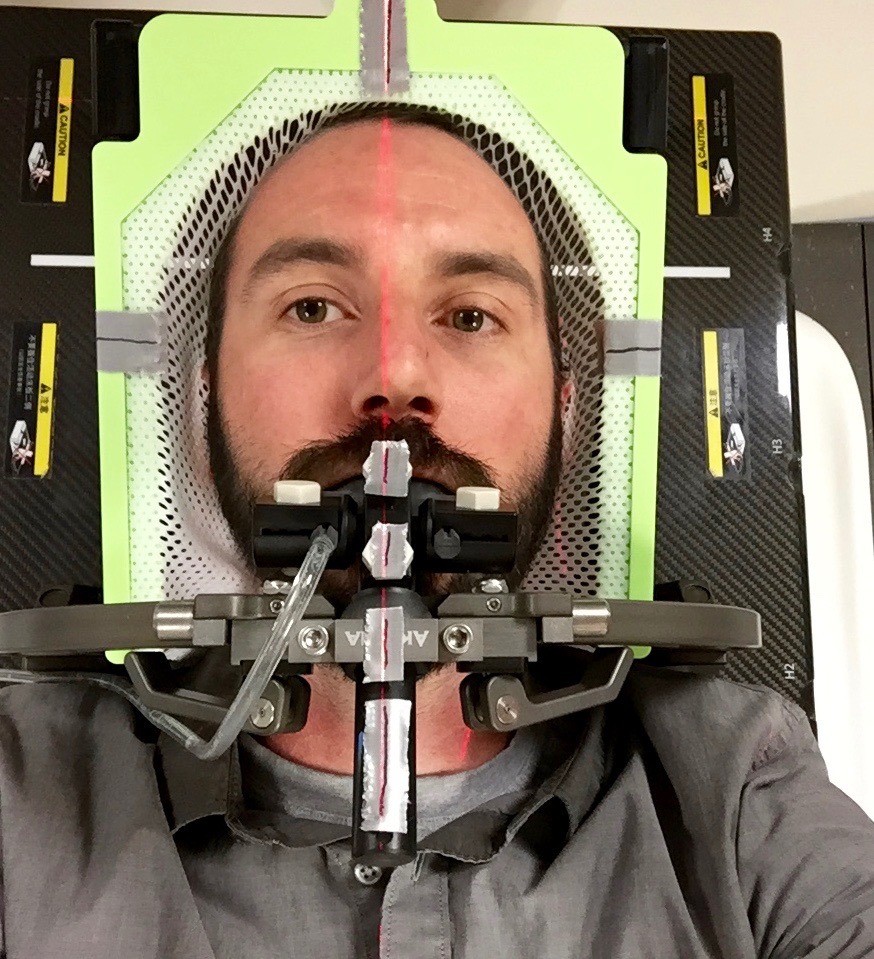
 healing is a circular path